

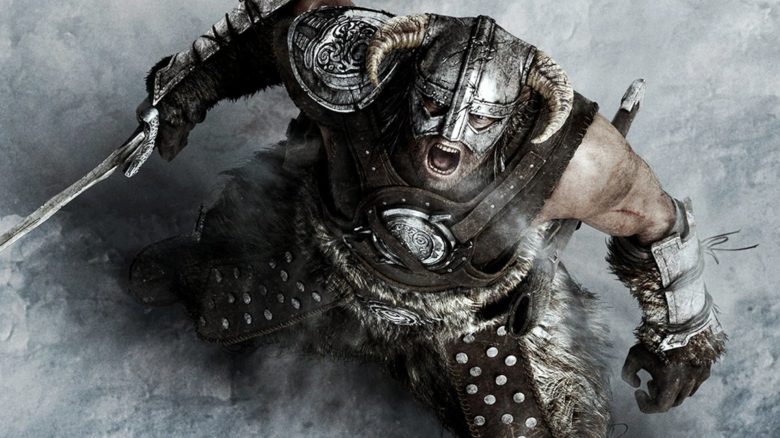
The role-playing game “The Elder Scrolls: Skyrim” was released in 2011 and is still, for many, the example of a mystical open world filled with much to discover: above all, an underground city of the Dwemer fascinated many. However, open worlds have lost much of their earlier appeal in recent years and are now seen as a pretext to rush players through lifeless areas full of side quests. A developer of Skyrim explains the problem and what separates the world of Skyrim from the world in Starfield.
This is the thesis on open world: The page “Rock, Paper, Shotgun” has published an article discussing the changes in open world games and the increasing criticism thereof. The thesis is:
- In the past, the open world was an unknown place full of adventures, stimulating the imagination and filled with mysteries. It was about discovering uncharted lands.
- In recent years, the open world has increasingly become a place where players are kept busy with as many uniform quests as possible.
We reported on MeinMMO on Sunday, July 7th, about how the head of The Elder Scrolls Online sees it through the example of The Elder Scrolls III: Morrowind.
There is nothing left to explore in today’s open worlds
This is what a developer of Skyrim says: The developer Nate Purkeypile has worked on Fallout and The Elder Scrolls Skyrim. The underground city Blackreach in Skyrim is his.
He says about open worlds: The worlds today pretend that players enter as “explorers”, but the open worlds today don’t feel like there is anything to explore:
[There is a lack of] the feeling of not really knowing what is over there, and being surprised – you don’t really feel like you’re exploring the world when you’re not really surprised.



With larger teams, the chance to make your own favorite thing was lost
Why is that? The developer says it’s due to how large developer teams are today. If 1,000 people are working on a game, you would need to implement controls everywhere, require stronger planning, and tighter organization, with a focus on balance everywhere.
With Skyrim, it was still more intimate, and you could express quirks and ideas:
Back then, we were about 100 people, and there was a lot of trust in the team, where you could just take something and make it your own. Just like Blackreach – that wasn’t on any plan. We did it as a skunkworks project on the side, and people saw it and said, oh, that’s really cool – I think we should keep it. And to this day, people tell me it’s one of their favorite projects because they go into that deep, dark dungeon to find something we never talk about. It’s only vaguely hinted at, but it’s a surprise.
How is it today? On a modern game like Starfield, about 500 people worked in 4 studios, Purkeypile explains. There is still individual storytelling and cool places, but it’s much harder at such a size to bring in one’s own ideas.
This seems to fit a trend we are currently observing on Steam. Because it’s not the massive games that are currently successful, but often it’s hyper-specific games targeting a narrow audience. Often, these are games developed by a very small team or even a single person: Steam: 2 brothers worked for over 20 years on a game that made them millionaires – One bought his dream car

Your opinion is important to us!
Do you like the article? Then let us know!