

A study involving people of different ages concludes that emojis in text messages are perceived differently. It is suspected that the correct interpretation of the smileys depends on several factors.
Nowadays, emojis are indispensable in text messages. They are often used to emotionally enhance the content of a message.
A study on emojis (via Plos One) now suggests that their perception depends on different factors. The interpretation of an emoji can vary depending on age, gender, and background, contrary to what one might think.
Age may influence the interpretation of emojis
What kind of study is this? Researchers from the University of Nottingham have tried to find out under what circumstances the recognition of emojis is negatively affected.
For the study, over 500 men and women aged between 18 and 84 from the UK and China were surveyed.
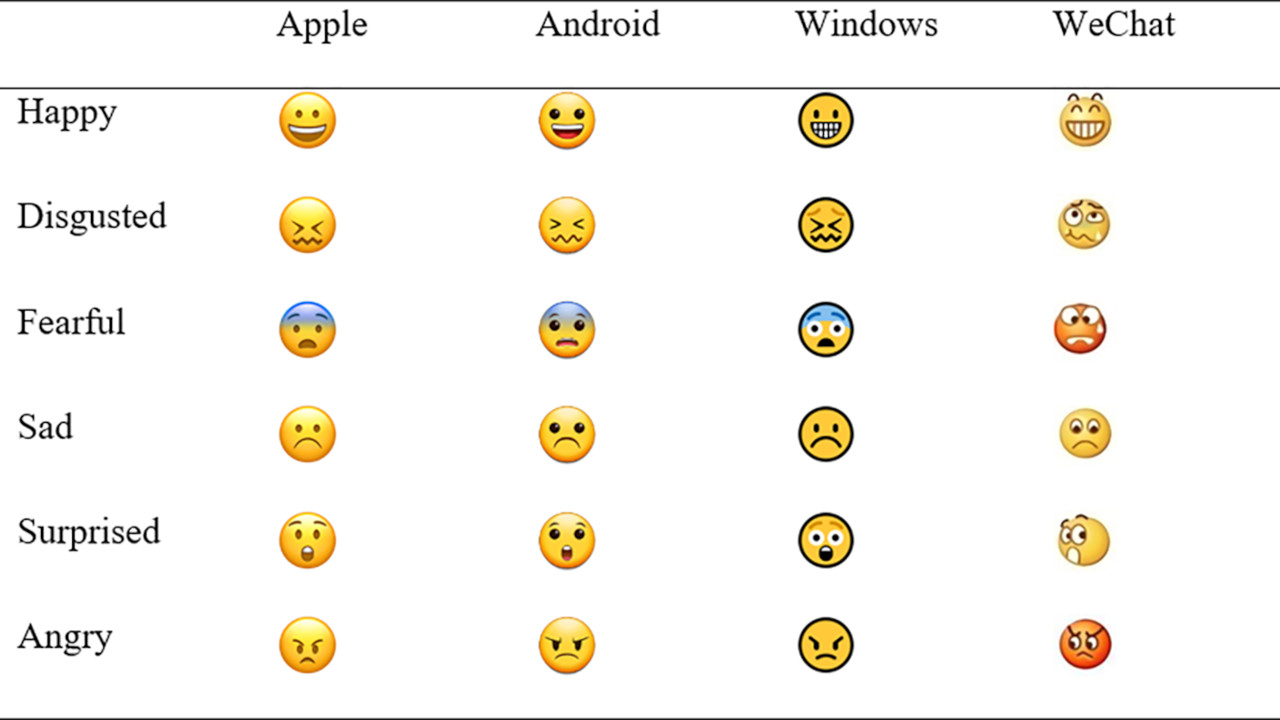
For their experiment, the researchers selected 6 specific emojis. They limited their selection to the designs from Apple, Windows, Android, and WeChat to minimize visual differences between the chosen platforms.
The participants in the study were asked to assign these emojis to 6 specific labels. These were: happy, sad, angry, surprised, scared, and disgusted.



What was the result? In the task of correctly interpreting the emojis, the researchers differentiated between the demographic factors of age, gender, and cultural origin.
British participants were generally more familiar with the emojis than the participants from China. Regarding the special case of WeChat, the researchers speculated: “Even though Chinese people use WeChat much more often than people in the United Kingdom, they may still not be regular users of WeChat emojis.”
Regardless of nationality, they found that especially older participants often had difficulty naming the correct label.
Younger participants found this task significantly easier. Additionally, women performed better than men when it came to correctly interpreting the emotions of the smileys.
What negative impact an emoji can have is illustrated by this case of a young student: A 10-year-old student finds the Apple nerd emoji offensive and has started a petition to have it changed

Your opinion is important to us!
Do you like the article? Then let us know!