Steve Jobs introduced a new computer at the Macworld Expo in 1999: The Power Macintosh G3. This modular system is still considered remarkable today. Apple itself moved away from the modular design years later.
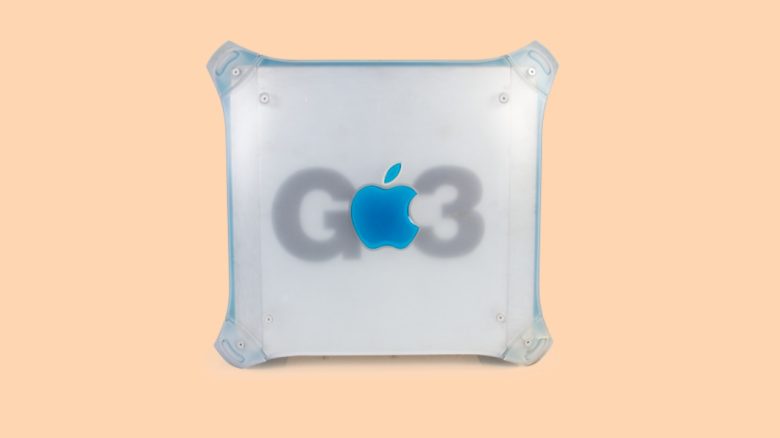
What exactly did Steve Jobs present back then? Steve Jobs appeared at the Macworld Expo in San Francisco in January 1999 and introduced to the world for the first time a new computer: The Power Macintosh G3 in blue and white (known in English as “Blue and White G3”).
The special thing about this device was not only its striking design but also the high modularity of the computer. Especially the casing of the Power Macintosh G3 is known today for its easy expandability: The side panel could be opened with a simple gesture, granting very user-friendly access to the components. This door or flap was considered a small revolution back then, as the new computer could be upgraded more easily than most systems at the time.
This is especially a major difference compared to modern systems. Many system manufacturers like HP, Dell, or Apple themselves now sell PCs that rely on proprietary components, which are hardly replaceable or soldered in.
The Power Macintosh G3 was considered a small revolution back then
What kind of computer is this? The Power Macintosh G3 featured the “Blue and White G3” model with a striking blue-white case and transparent elements. However, the remarkable aspect was the previously mentioned modularity. Behind the opening side panel, users had direct access to all PC components: four RAM slots, several PCI slots for expansion cards, and easy access to hard drives and other components.
The technology seems outdated from today’s perspective: Inside was a PowerPC G3 processor (up to 450 MHz) and a fast 100 MHz system bus. It also supported up to 1 GB of SDRAM, and for the first time came with 2 separate USB and FireWire ports, as well as an ATA hard drive controller.
What significance does the computer have for Apple? The G3 was the first to utilize the “New World ROM” architecture, which supported the operating system Mac OS X and thereby accelerated and simplified hardware and software development at Apple.
Apple abandons modularity in 2013 and returns in 2019
The Mac Pro models (often referred to as “cheese graters”) were classic tower PCs. They were very modular: Users could easily swap or upgrade RAM, hard drives, graphics cards, CPUs, and PCIe cards themselves. Apple sold these until 2013.
From 2013/2014, Apple adopted a new design, known as the “trash can” model (officially Mac Pro 2013, also called “Trashcan”). The problem: The very compact design was hardly upgradeable, only RAM and SSD could be replaced with significant effort, but no other components. Apple wanted users to connect expansion cards and other components externally via Thunderbolt.
Only in 2019 did Apple once again introduce a Mac Pro in the classic tower design that is very modular again. Users can easily swap or upgrade RAM, SSD, graphics cards, and PCIe cards.



In 2007, Steve Jobs publicly presented the iPhone for the first time. What hardly anyone knew: The device did not work properly during the presentation, and the developers had to come up with a plan to prevent this fact from being revealed: In 2007, Steve Jobs presented the first iPhone: The presentation became legendary, but the device did not function properly