

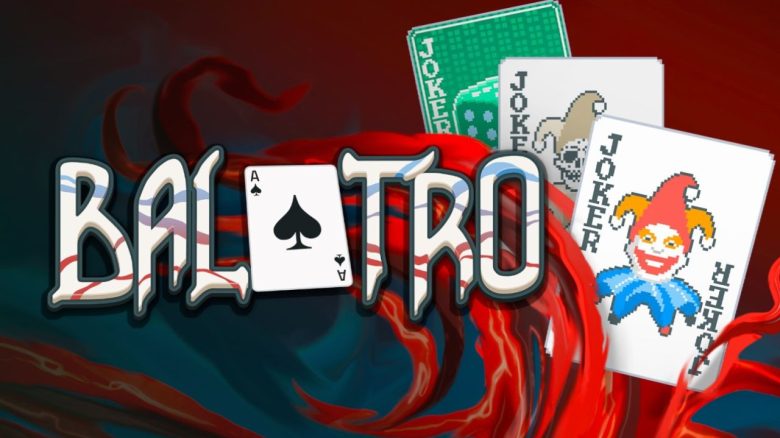
Balatro is currently a new indie hit on Steam, loved by many players. The game takes poker mechanics and transforms them into a deck-building roguelite. MeinMMO author Nikolas Hernes is also thrilled and just can’t put the game down.
What kind of game is Balatro?
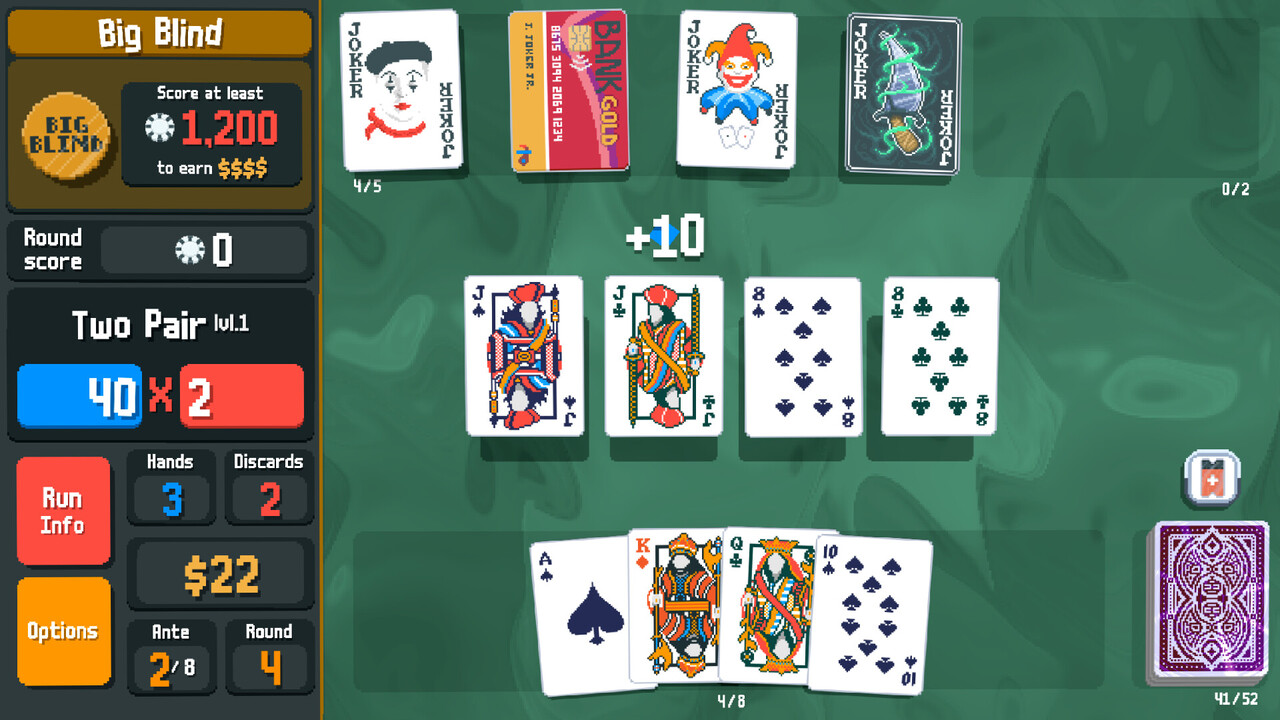
- You need to reach a certain chip value per round
- To do this, you have to play poker combinations
- In each round, you must play higher values, and every third round features a boss that gives you a passive disadvantage
- You can buy passive abilities in the form of jokers in the shop
- With booster packs, you can modify your cards or combinations to earn chips more efficiently and effectively
At first glance, the game looks like regular poker, but quickly, a fast and thoughtful gameplay crystallizes. The game has captivated me for days, and I just can’t put it down, even though I’m losing the whole time.
You can watch a trailer for the game here:
Balatro is Poker 2.0
I’m not really interested in regular poker. I may have played it once in my life, which is why Balatro didn’t initially catch my attention. But the jokers and other mechanics in the game completely convinced me.
You can acquire jokers in the shop after each round. These passive effects influence your combinations and chip values. There are multiplier values and chip values per hand played. For example, a joker can cause each played 10 to increase the chip value and the multiplier value.
With planets and tarot cards, you additionally influence the standard values of the combinations and the cards themselves. This means that within a run, you’ll need to build a setup that generates chips per hand as efficiently as possible. This is reminiscent of roguelites like Slay the Spire or Monster Train.
I was thrilled by this because you can always look up all combinations and their values, and because of the simple numbers of a poker game, I always keep track. Building a setup is not based on invisible numbers that you have to look up in a wiki. You can understand all synergies, and building a setup follows the motto Easy to Learn, Hard to Master
.
Decisions are simple but important
The second point that makes Balatro so fantastic for me is the decisions that you have to make. They are simple but important. In a round, you can play combinations or discard cards to draw new ones. Playing the cards costs Hands
. If you run out of them, the round ends, and you lose.
Here you must decide whether to use multiple discards for a really good hand or to discard weaker
combinations to at least gain some chips back. You have to keep all jokers and other effects in mind, as well as consider what you might draw when pulling new cards.
The other decision comes after each round. You can skip every round besides boss rounds. You also receive something in return for this. It could be booster packs, guaranteed better jokers in the shop, or a change to the disadvantage in the boss round.
Again, you have to decide whether to skip, as you earn money for the shop after each round. Here, you weigh whether the money and the possible shop are worth more than the advantage of skipping.
These are all decisions that you always make with your own build. I really liked this because you still have to keep track here, and you are encouraged to do so.



However, Balatro is difficult, at least at the beginning. Personally, I have not won a run yet, but I love it anyway. Everything goes quickly. There are no annoying animations or cutscenes; you can go from one run directly to the next.
I also personally notice a distinct learning curve after each run, which is typical for roguelites, and this is enormously motivating. MeinMMO author Benedict Grothaus has also written about his fascination for roguelites: I am in love with games that I can only lose

Your opinion is important to us!
Do you like the article? Then let us know!