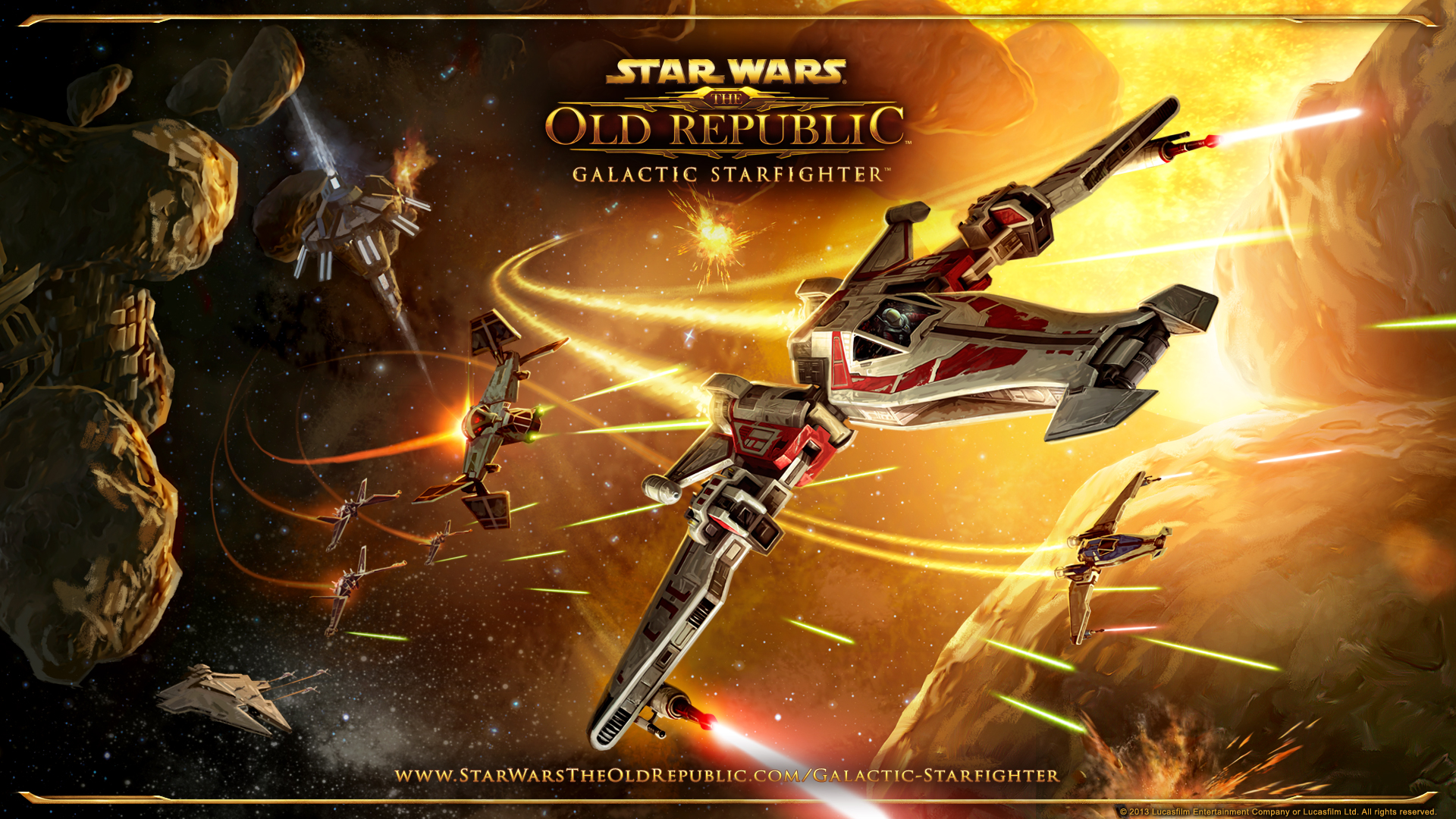
Two years old, the MMORPG “Star Wars: The Old Republic” has already undergone a lot of changes in its short lifespan. The new expansion, “Galactic Starfighter”, was released about 2 weeks ago, and this gives us the opportunity to reassess the game to provide guidance for those still undecided.
The Entrance and Conversations
At the heart of the game’s events is the beginning conflict between the Republic (Jedi) and the Empire (Sith)—but several thousand years before the known films.
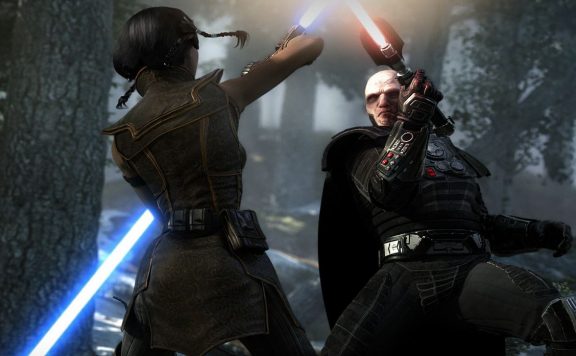
The two mentioned factions are available, each with 4 classes that split into 2 additional classes after Level 10. Whether lightsaber-wielders, Force lightning users, or gunslingers with blaster pistols, the selection is vast, and the classes follow the principle of the holy trinity (Tank, Healer, Damage Dealer).
 Flirting or focusing on the mission?
Immediately after the first login, the game shows its strengths: Each class has its own main story that is fully voiced (just like every side quest!). Each task begins with a conversation during which players can provide multiple responses that can occasionally change the course of the mission.
Do I want to kill the insurgents outright, or should I destroy their weapons cache to force them to surrender? These conversations are especially entertaining when conducted with a group, as all group members can select which response they wish to give. A random decision then determines which player speaks the corresponding line—making each player class a bit different.
I couldn’t help but grin several times when my Cortyn executed a quest giver with a lightsaber despite the rest of the group wanting to spare him.
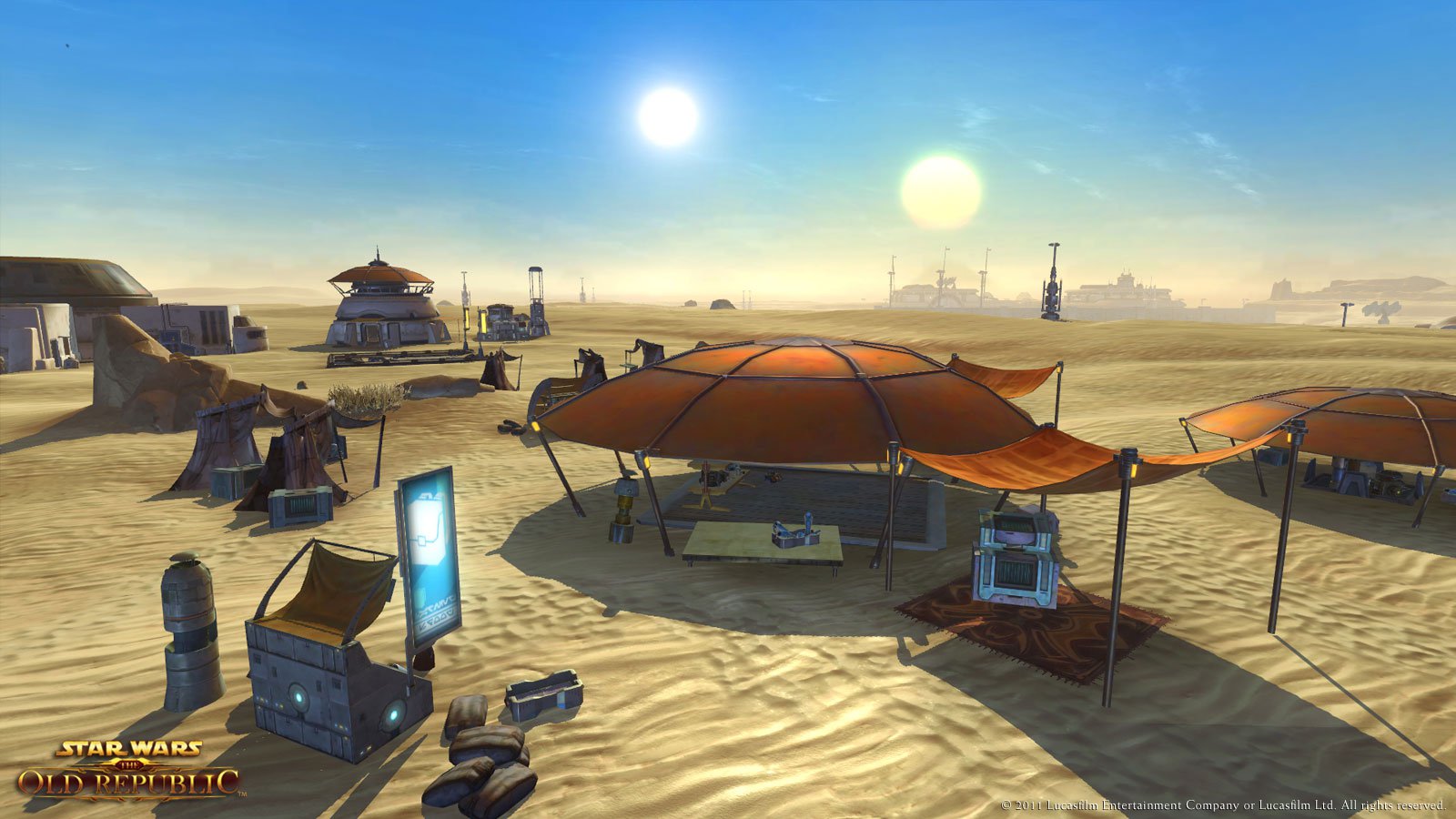
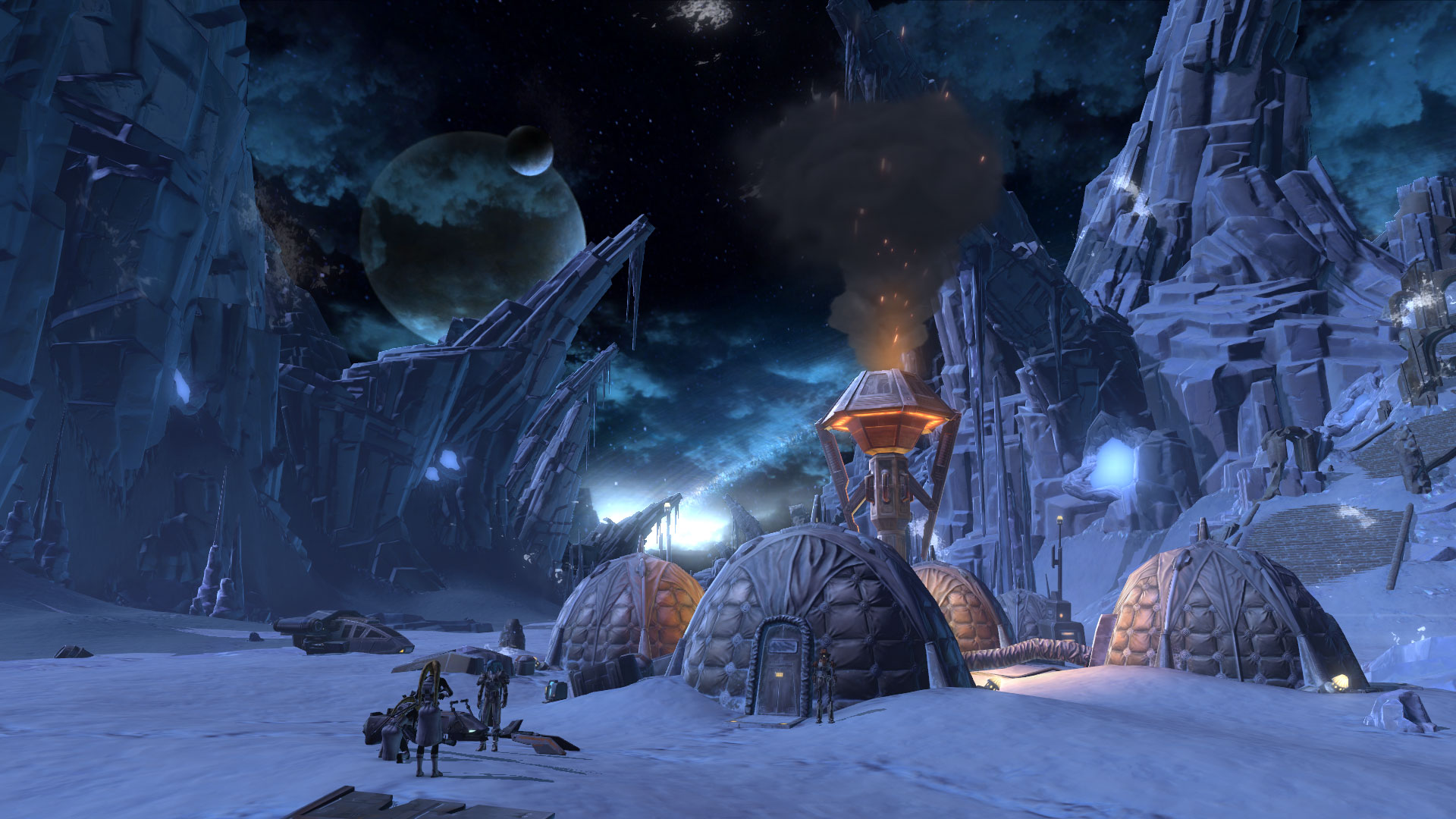
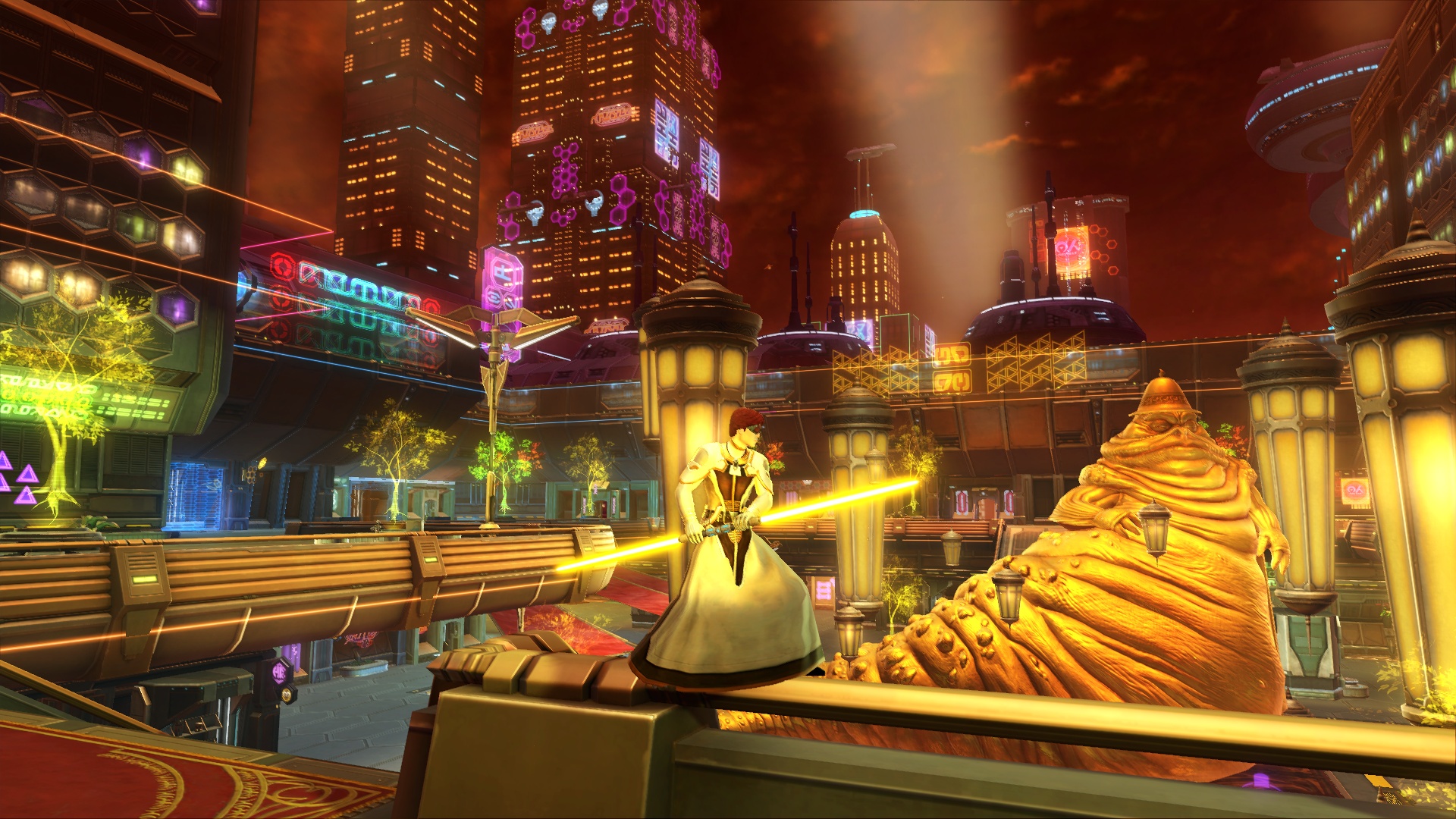
These dialogues are always pleasant to listen to and watch; some planet quest lines culminate in a spectacular fireworks display where entire factory buildings explode. Planet quest lines? Correct. The adventures take place on over a dozen different worlds, from Nar Shaddaa to Alderaan—of course, before a certain Death Star was fired.
-
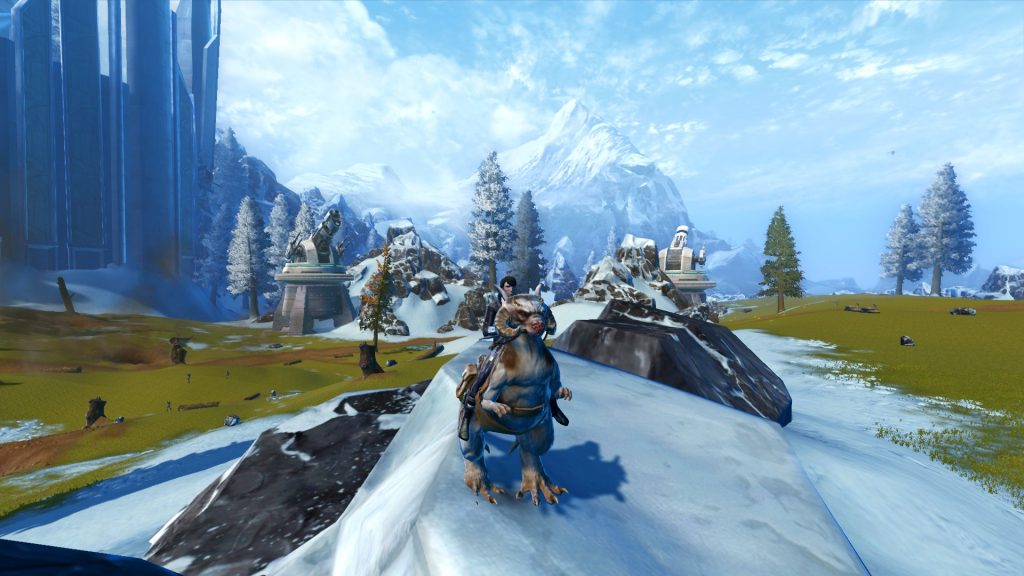
- Mit einem gezähmten Tauntaun auf Alderaan
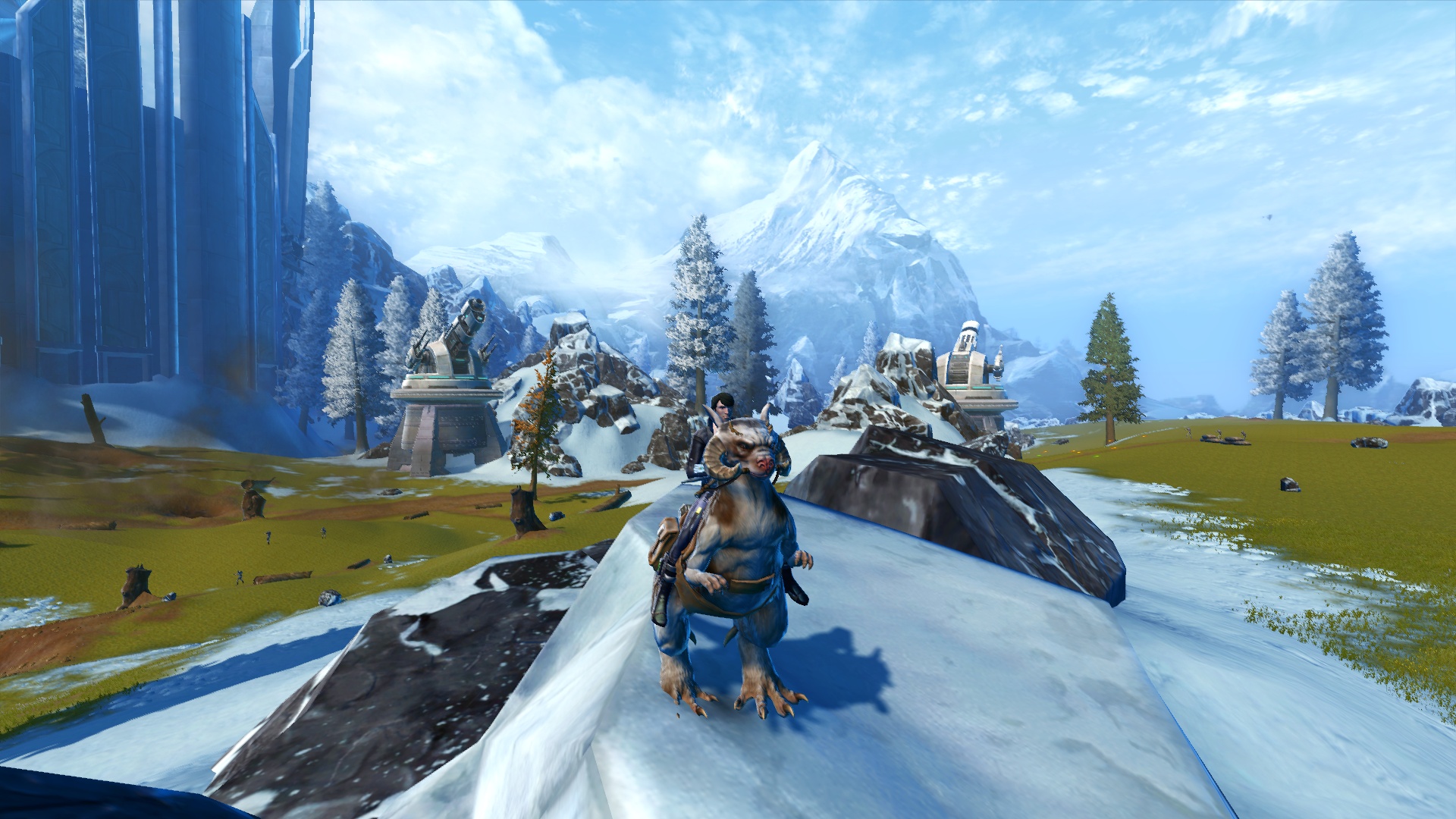
-
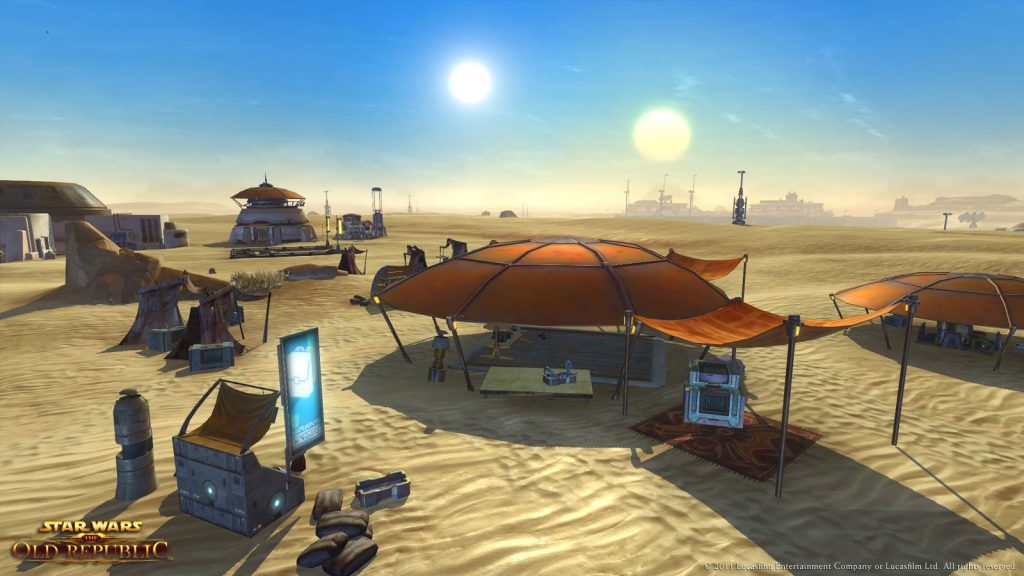
- Auf Tatooine ist es heiß…
-
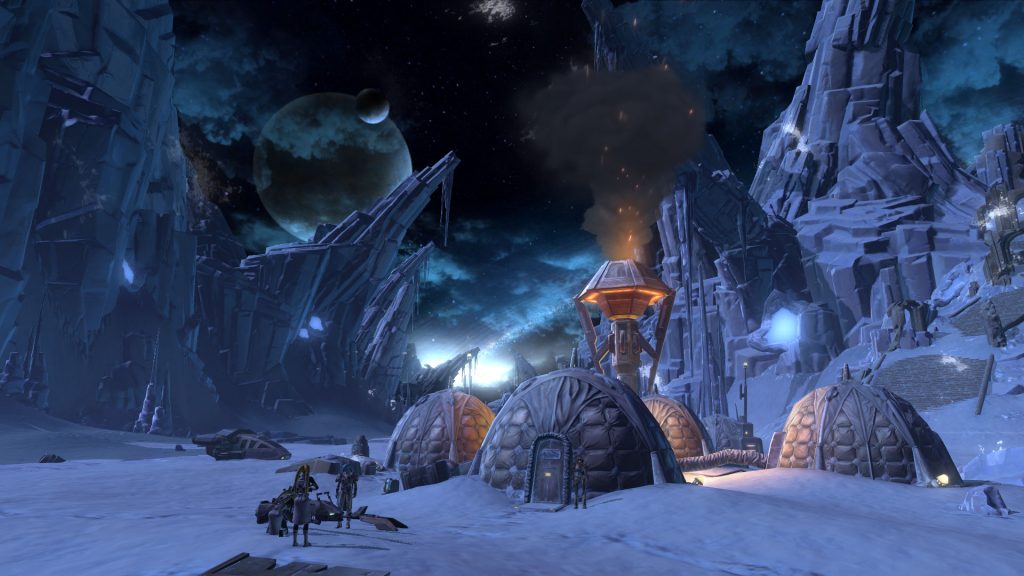
- Auf Illum hingegen ziemlich kalt.
-
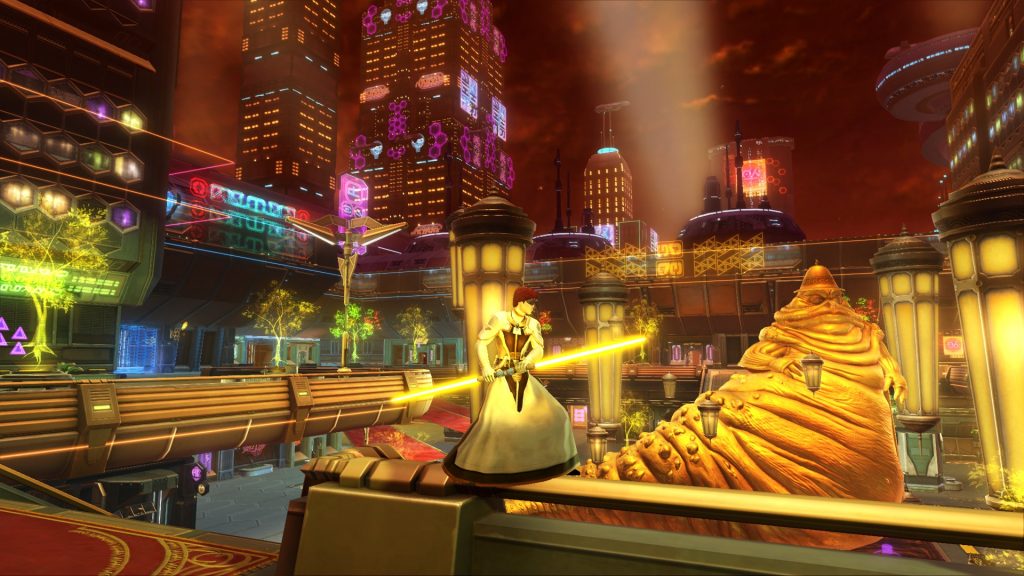
- Nar Shadda: Viel Spaß mit den Hutten!
Quests and Companions
While the many conversations help players better identify with their character and provide a refreshing RPG experience, the overall quest design is the flip side of the coin.
The great briefings cannot hide the fact that most missions are stupid standard fare like “Collect 25 of these!” or “Kill 20 of those!” Real innovations are hard to find here. About every second quest features so-called “bonus objectives” that can be completed for additional experience points, which usually get accomplished by themselves anyway—but these too are rather uncreative.
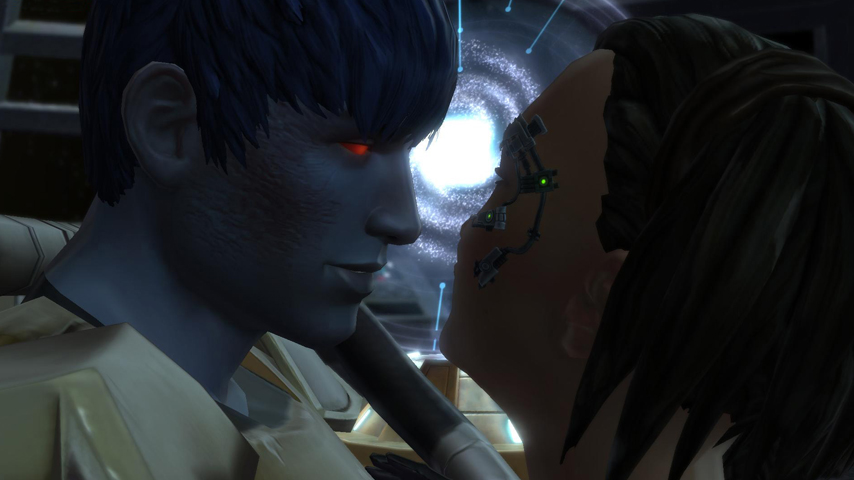 Romantic relationship between master and companion? Find out…
But even when you have no friends at hand, you are never truly alone. A virtual companion can be summoned upon request. Each class has different companions that are slowly unlocked throughout the main missions, each with different abilities.
If I play as a damage dealer, I can summon my healing droid. If I am a healer, I send the tanking behemoth “Khem Val” into the front line. This system allows players to successfully reach the maximum level with any specific build. Want to play from Level 1 to 55 as a healer but don’t want to be slowed down? Here it is possible.
Crafting, PvP, and Space Missions
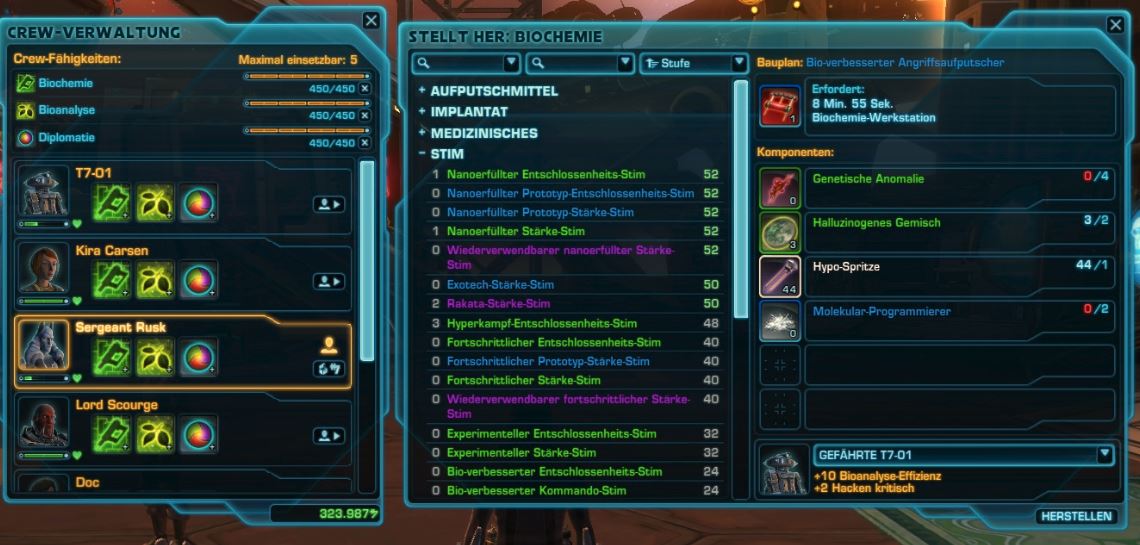 Your companions handle the crafting for you.
The crafting system in SW:TOR works a little differently than what one is used to from other MMOs. Here there are gathering and crafting professions, but the work is almost never done by the character themselves, but rather by their companions.
Companions can be sent on gathering missions or craft items that can then be broken down—only by doing so does one learn more powerful variants of this equipment. However, the professions are not really relevant, as players who primarily level through quests already have suitable gear.
In the PvP area, a lot has changed since launch; the number of available PvP battlegrounds has increased from 3 to 7, and the gap between gear has been narrowed. When entering PvP as a fresh Level 55 character, stats are automatically adjusted so that you only lag slightly behind the best gear. We also reported a while ago about our experiences in the new war zone arenas; more on that here.
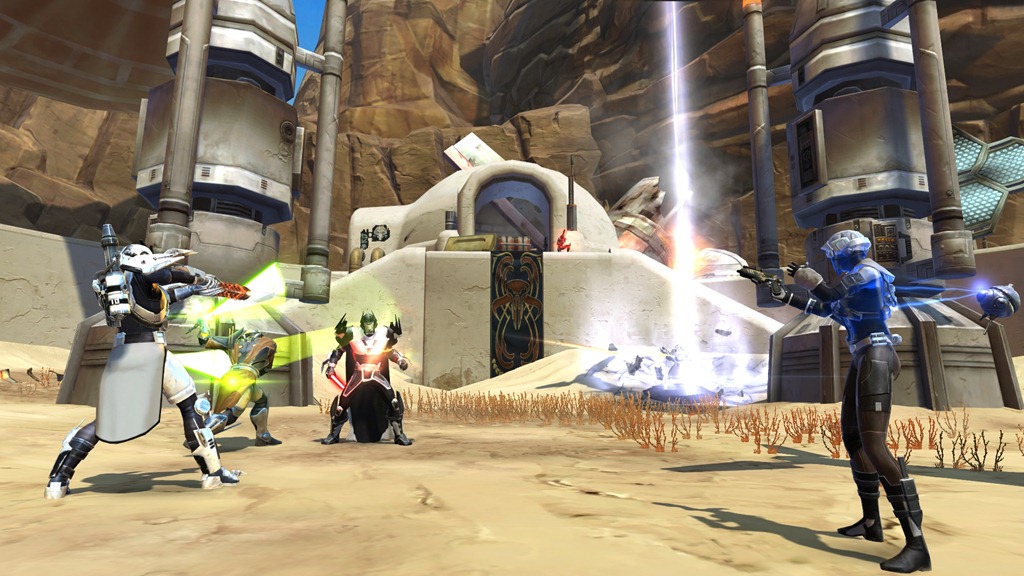 Battles between players are fun in SW:TOR!
But even at low levels, you can already participate in the battles, as attributes are increased and maxed out—not talent points or abilities. Each battle rewards credits, experience points, and victory tokens that can be exchanged for gear—solid, as one has come to expect from the MMO market.
Early in the game, players gain access to space missions. These are a sort of mini-game where you pilot your own spaceship through predetermined routes in “tunnel levels” and eliminate various enemies before time runs out. Unfortunately, this becomes monotonous rather quickly, but the first few rounds are indeed fun and provide experience points that ease advancement to the maximum level. However, it is nothing more than a mini-game.
Eldergame
So what do you do once you finish the class missions and reach Level 55? A point of criticism at launch was the lack of endgame content, but that is largely history now.
Numerous Flashpoints (group dungeons) and a handful of Operations (raids) with varying difficulty levels await hero groups of between 4 and 16 players to take on.
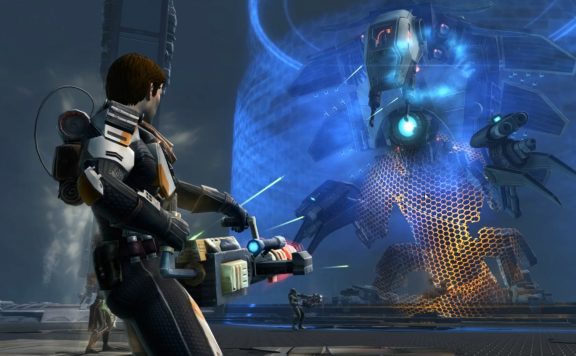
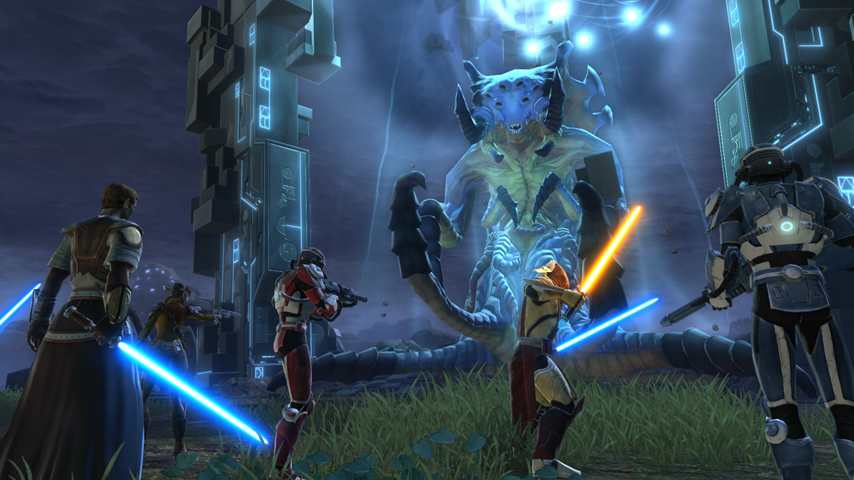 SW:TOR offers exciting operations with unique bosses. Here is the final boss from Horror from the Depths.
Additionally, there is PvP, several daily quest areas like the recently released planet Oricon, and an extensive achievement system.
During their adventures, players collect experience points for their “Legacy”. As their Legacy level increases, any secondary characters can receive interesting bonuses—such as more experience points in PvP and PvE, or a teleport to the home planet. And if that’s not enough, players can try their hand at role-playing. In any case, entertainment is guaranteed for many days.
Galactic Starfighter
Options! So many options!
The new expansion is currently only available for subscribers, but in the coming weeks, all others will also get to enjoy this new PvP variant, though this label does not do justice to the mode.
BioWare has managed to create a game within a game, so complex are the possibilities. You can choose between three different ship classes: the fast scout, the bomb-laden fighter, or the sluggish sniper ship.
For each of these categories, there are several ships that differ in possible equipment and flying behavior. But while we’re on the subject of customization: For each individual ship, you can swap out and replace each component.
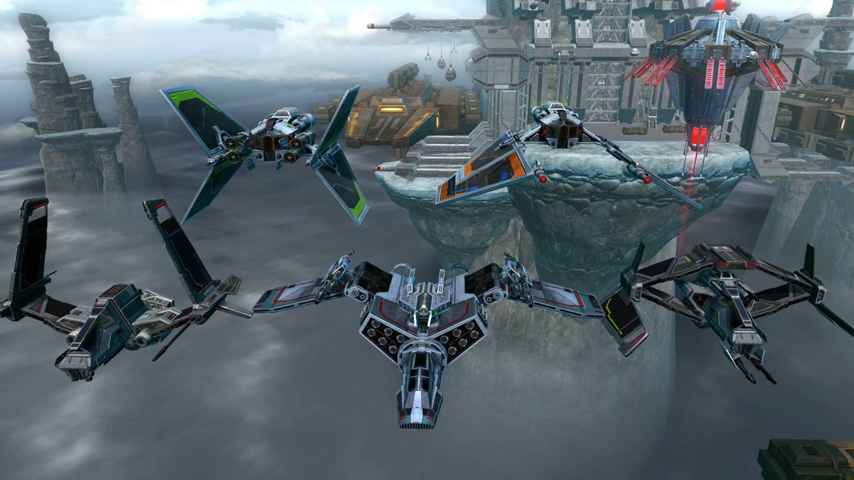 Even with the first version, the ships can be varied and improved!
Do you want a quad blaster instead of a laser salvo? No problem! A reflective shield instead of a quick charge shield? Feasible! As if that weren’t enough, each component also has a small talent tree, where you can customize the properties even further as you wish.
However, the same goes for the ship’s crew! You must also assemble the crew, and depending on who is on your ship, you benefit from additional passive bonuses in battle—or in the case of co-pilots, even a new ability.
Admittedly, the menu with all its settings is extensive and can seem overwhelming at first glance, but investing a few minutes reveals just how organized it is. Such many customization options could hardly be presented more tidily.
The Controls
The introduction to this game mode is the only major downside. While there is a tutorial, you are overwhelmed with so much information that it is difficult to process.
In the end, you sign up for your first space battle and are thrown into the deep end. More than once, I wanted to bite my keyboard or hurl expletives at my monitor.
In the first three matches, you continually fly into various asteroids, touch satellites, and wonder why you aren’t hitting anything or how enemies are executing all these amazing maneuvers.
But now onto the actual controls:
You accelerate and turn the ship using the standard WASD controls, with the precise flight direction being determined by the mouse. You also need to target enemies with the mouse—like in a shooter; the crosshairs must be moved directly over the opponent, but there’s more to it: Instead of directly targeting, our onboard computer calculates a point to aim for in order to hit the enemy if they maintain their current flight path.
Our blaster shots take time and are not magically on the enemy pilot’s hull. Similarly, missiles work this way: You hold down the right mouse button and keep the enemy in view until targeting is completed—but since the enemy receives an acoustic signal for targeting, they will do everything they can to evade your line of sight.
 Target locked, ready to fire, and missed – the opponent evaded with a dodging maneuver!
The number keys 1-4 activate different abilities that we previously determined through our crew and components. We use the space bar to ignite our thrusters for quick movement from one skirmish to another—or to escape from a missile.
But beware!
Both blaster energy and thrust energy are limited and recharge slowly; blind firing and perpetual speeding will be punished; enemies are all too ready to pounce on immobile and unarmed victims.
Speaking of energy: Using keys F1 to F4 allows you to redistribute the ship’s energy to different areas, so you can supply blasters, shields, and thrusters with additional power, which weakens the other two systems. A skilled shooter switches the energy supply every few seconds to effectively utilize both defense and offense.
Currency and Rewards
For each space battle won, you receive ship requisitions, typically between 300 and 1500 per match. You also receive a tenth of that as fleet requisition.
With both currencies, you can purchase and unlock different items: Ship requisition is used to upgrade existing components (the small “talent trees”) or exchange for new components. This currency is specifically tied to a ship, meaning if I play with the “FT-8 Star Guard”, I can only upgrade that one.
The fleet requisition is significantly harder to obtain and is used for purchases that benefit your entire fleet. With it, you unlock new ships or new crew members; alternatively, you can also use it as ship requisition for any ship.
After a week, I had successfully upgraded my first ship completely—not counting alternative armaments. The costs for upgrades feel fair and never seem unreachable.
This is not only extremely motivating, but also quickly creates addictive potential. Just one more upgrade for this blaster, and then I’ll go to bed. That happened more than once.
Balancing and Learning Curve
The folks at BioWare have managed to design the various upgrades in such a way that each one is worthwhile, but you never have an unfair advantage. With skill, you can defeat even the best-equipped ship.
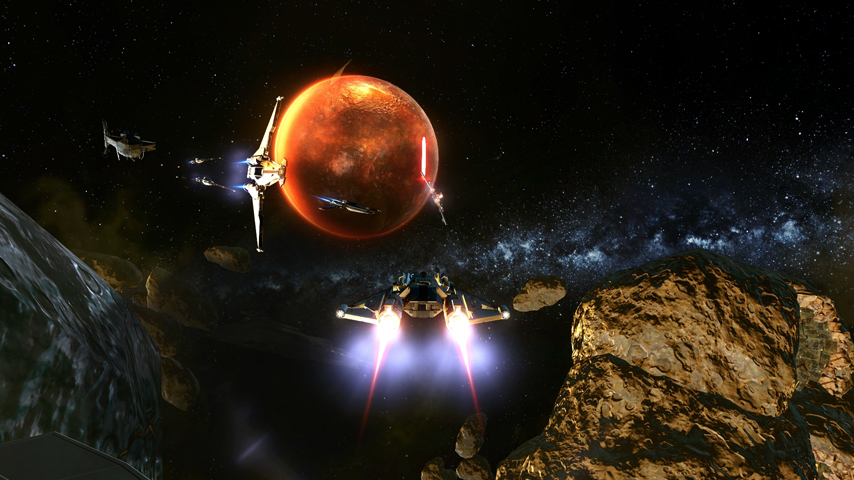 Galactic Starfighter: Practice Makes Perfect!
However, it takes some tough hours to reach that level, during which you often see your own ship explode. If you can get through this tough phase and learn from each mistake, you’ll quickly become a master pilot, faster than HK-51 can say, “You don’t need to show off, Mistress.”
Also pleasing: The ships that can only be purchased through the cartel market do not offer an advantage; they only differ visually. There can be no talk of “Pay2Win” here.
Scope
Although currently only one game mode and two maps are available, the expansion already offers fun for several weeks. The countless unlockable upgrades and the urge to try out new combinations of primary weapons, missiles, and engines keep one glued to the PC for nights.
It is to be hoped that the developers keep their promise and expand Galactic Starfighter with additional maps and game modes, as it certainly has the potential to be a driving force for the game. Until that time, we’ll just protect satellites from the evil republicans.
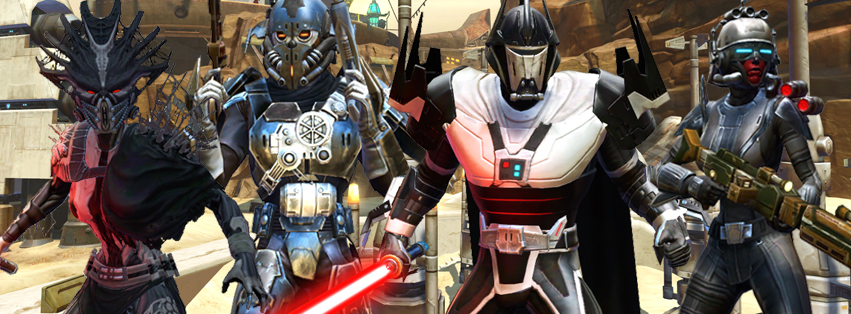 What role will you play in the Star Wars universe?
The Conclusion
Star Wars: The Old Republic has improved in many areas over the past 2 years and now boasts a great space combat expansion as well. Whether you’ll like the overall package can be tested for free at any time. It’s worth it!
 Cortyn: SWTOR makes a good impression even after two years thanks to the revisions, although the graphics now seem quite outdated and struggle to compete with newer representatives of the genre.
Especially players looking for an exciting story can enjoy the game for free—grab some friends and dive into the adventure! Those wanting to experience the endgame content, such as PvP areas, operations, and the new space battles, should consider a subscription.
The latest mode is worth giving the game a second chance; other developers would likely have turned it into a new full-price title.
Dawid: I can only agree with Cortyn here. To be honest, I didn’t expect “Star Wars: The Old Republic” to make such a remarkable comeback after the harsh setbacks in its early phase. Developer Bioware took the hard road and has instead of adding uninspired content on the back burner over the last 2 years, improved the game all around. Kudos!
For interested players, the new entry is definitely worthwhile, but I would even say that former players should check it out again. A lot has changed. What still bothers me is that the worlds are still too sterile for my taste and some dynamic events would not have gone amiss in this regard. Otherwise, it’s a great gaming experience in the far-off galaxy of Star Wars.
Rating Box |
|
|
Graphics: Cool character designs, somewhat muddy textures. Coming of age. – 73 %
|
|
|
Story: Exciting stories for all classes, good staging, unexpected twists. – 95 %
|
|
|
Gameplay: Typical MMORPG fare, solid but lacking innovations. – 70 %
|
|
|
Longevity: PvP ranks, operations, space battles, achievements. There’s always something to do! – 85 %
|
|
|
Social Component: Guilds and group missions invite to play together, but main missions can also be completed solo. – 85 %
|
|
|
Galactic Starfighter: Complex and fun, with a deduction only for the difficult introduction. – 90 %
|
 SW:TOR is free, but frugal players must deal with some restrictions: Free players earn less experience points and can only play a limited number of PvP areas and Flashpoints per week, have only 2 character slots, and each avatar can learn only one crafting profession instead of three, and your credit cap is strictly limited. If you just want to experience the rewarding character story, that is more than sufficient.
Subscribers, of course, have none of these restrictions and enjoy full access to all activities.
But beware: If you were previously a subscriber or purchased something in the cartel market (real money shop), you are permanently “preferred status players,” and many restrictions are eased.
More experience points and an increased number of characters are just two of the many advantages. A complete overview can be found here: http://www.swtor.com/de/free/features