

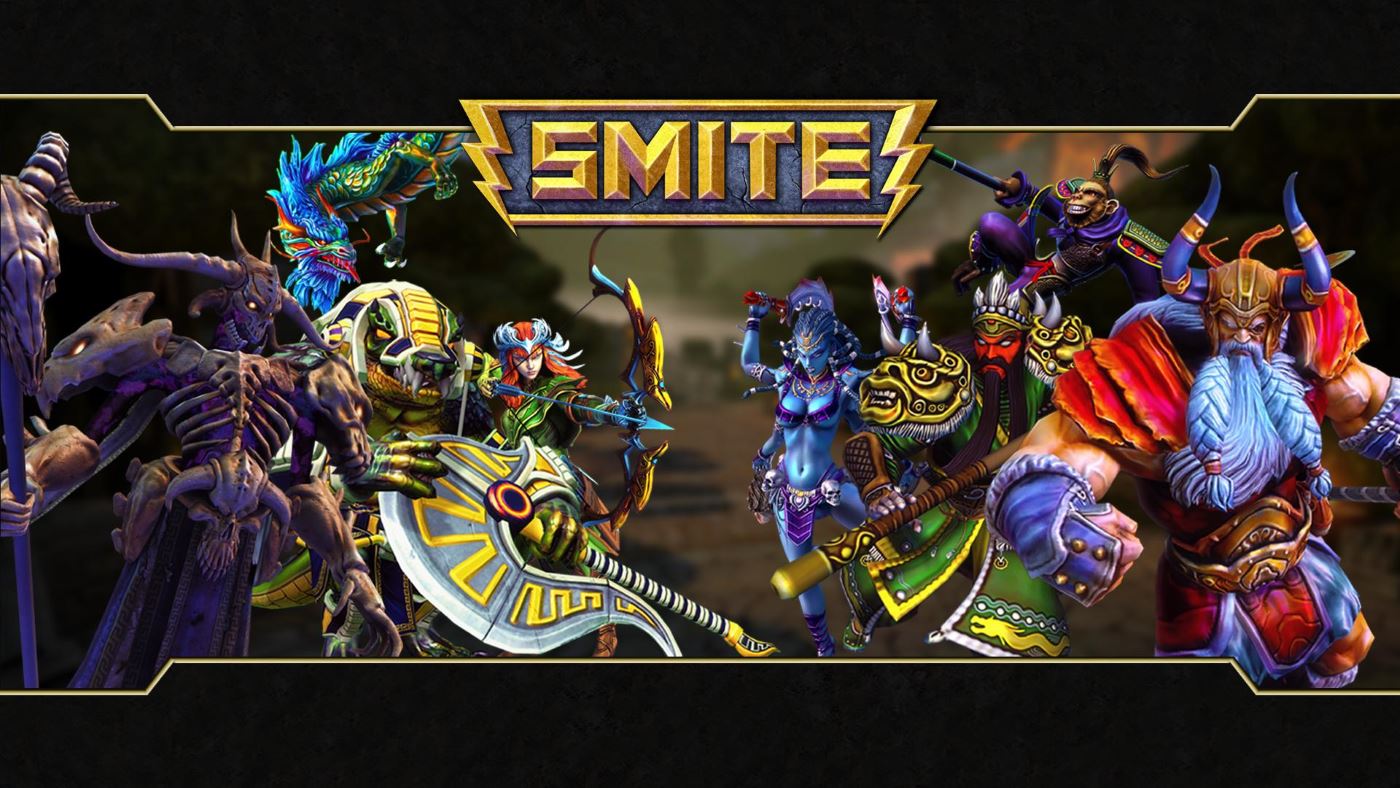
League of Legends, DOTA2, Heroes of Newerth, and Heroes of the Storm are just a few representatives of the “MOBA” (Massive Online Battle Arena) genre, and more are added monthly.

To make myself unpopular directly: I have not been able to get into MOBAs, I tried both LoL and DOTA and stopped after a few matches – the spark simply did not ignite. SMITE, on the other hand, managed to captivate me for at least a few days intensely, and now that my initial hype has subsided, I am trying to evaluate SMITE in a slightly more objective manner in the form of a test.
Summary: What is SMITE?
How does a match work?
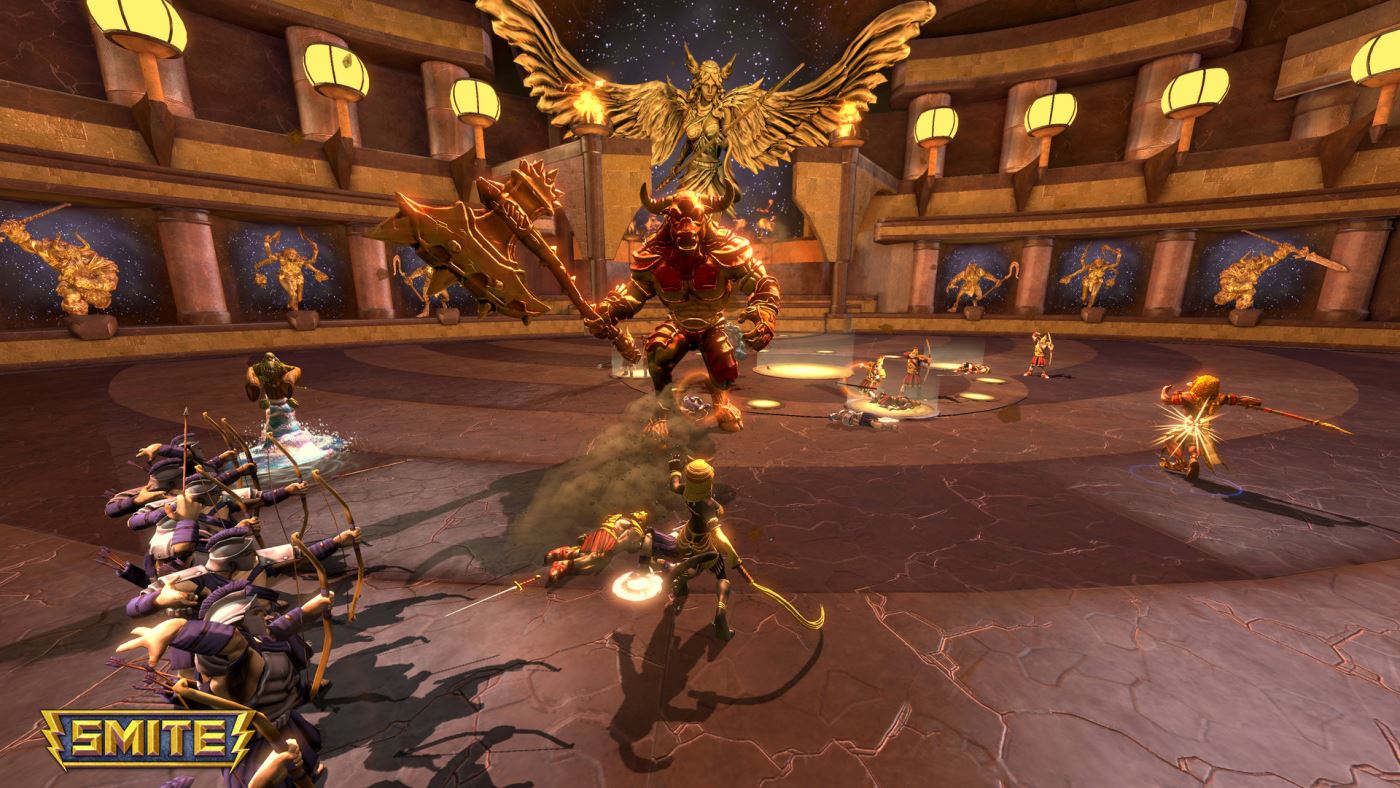
In each round, 2-10 players compete against each other in two teams; in most cases, the goal is to destroy the Titan in the opposing camp to claim victory for oneself. Initially, the Titan is well protected, depending on the game mode, different numbers of towers and Phoenixes protect the Titan, in addition to the minion waves that appear every 30 seconds and, of course, the opposing players.
The task is relatively simply formulated:
- Destroy the enemy towers,
- slay the corresponding Phoenix,
- let your minions advance,
- and eliminate the opposing heroes,
- to prevent them from thwarting your plans.
Defeating enemies grants gold and experience, with which your gods become stronger and can afford better equipment, which can be purchased at your Titan’s base.
Anyone who meets their end will be resurrected in base after a while – while at the beginning, there are only short respawn times of a few seconds, this eventually increases to over a minute, and every second you are in the majority helps to advance further. A round often consists of nerve-wracking back and forth until one side can ultimately claim victory, but very few games last longer than 40 minutes.
Gods, Demigods, and Their Abilities
The various deities can be categorized into several categories, genre-typical tanks, mages, assassins, and hunters exist. Although the classes all follow a basic concept (for example, that hunters mainly deal damage through their auto-attack), each god plays uniquely, with completely independent mechanisms and abilities.
Thanatos, for example, has an ability that kills enemy gods instantly if they are below a certain HP threshold. When an enemy is in this “instant kill zone,” the player hears a faint, beating heart that gets louder. This is pretty creepy but also kind of cool.
Another example of this uniqueness is Aphrodite, the goddess of love. She can first kiss a friendly god, making them her soulmate, granting both players a speed buff. In combat, she can then kiss an enemy god, stunning them briefly with delight and making the previous soulmate jealous – the latter then deals increased damage.
The Entry – Easily Through Practical Help
The entry into SMITE is very easy, as the game provides practical aids. There is a short but completely sufficient tutorial that teaches all the basics, and every game mode has a short video that explains the map’s peculiarities from the outset.
But even more help awaits beginners: If someone tries out a new god and doesn’t know what items to buy for them, they can simply activate an “Auto Buy” function, and the game will handle the purchases automatically for you as soon as you are back in your base and have the required gold. This allows one to focus entirely on their character and its abilities and avoids the risk of sleeping through the entire game in base because one is desperately searching for that one item they just can’t find.
Later, however, one should deactivate these options and create a personal shopping list and buying menu for their favorite hero – this can be conveniently done outside of a match to arrange all relevant items in such a way that they can be found immediately.
Is Everything a Matter of Perspective?
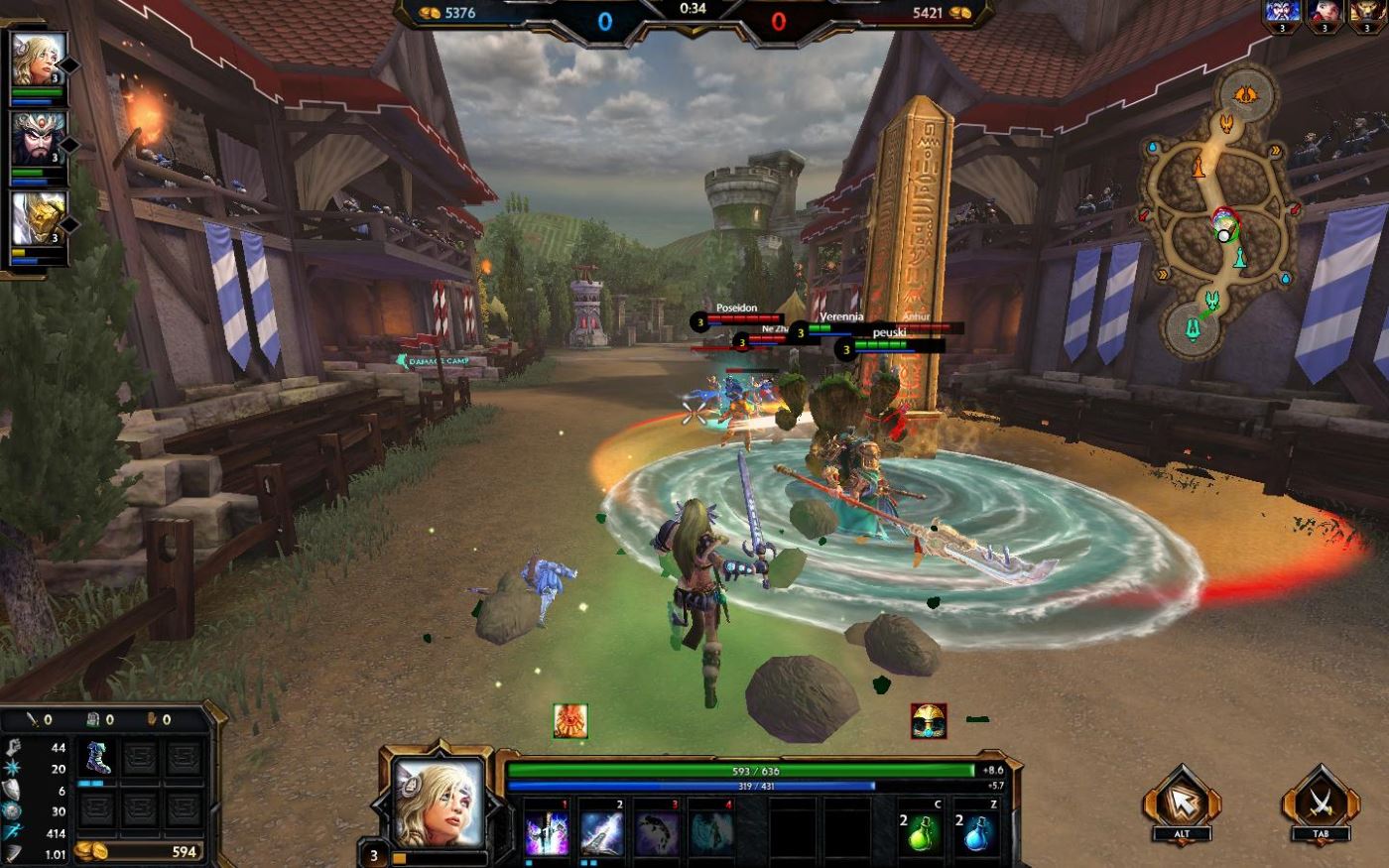
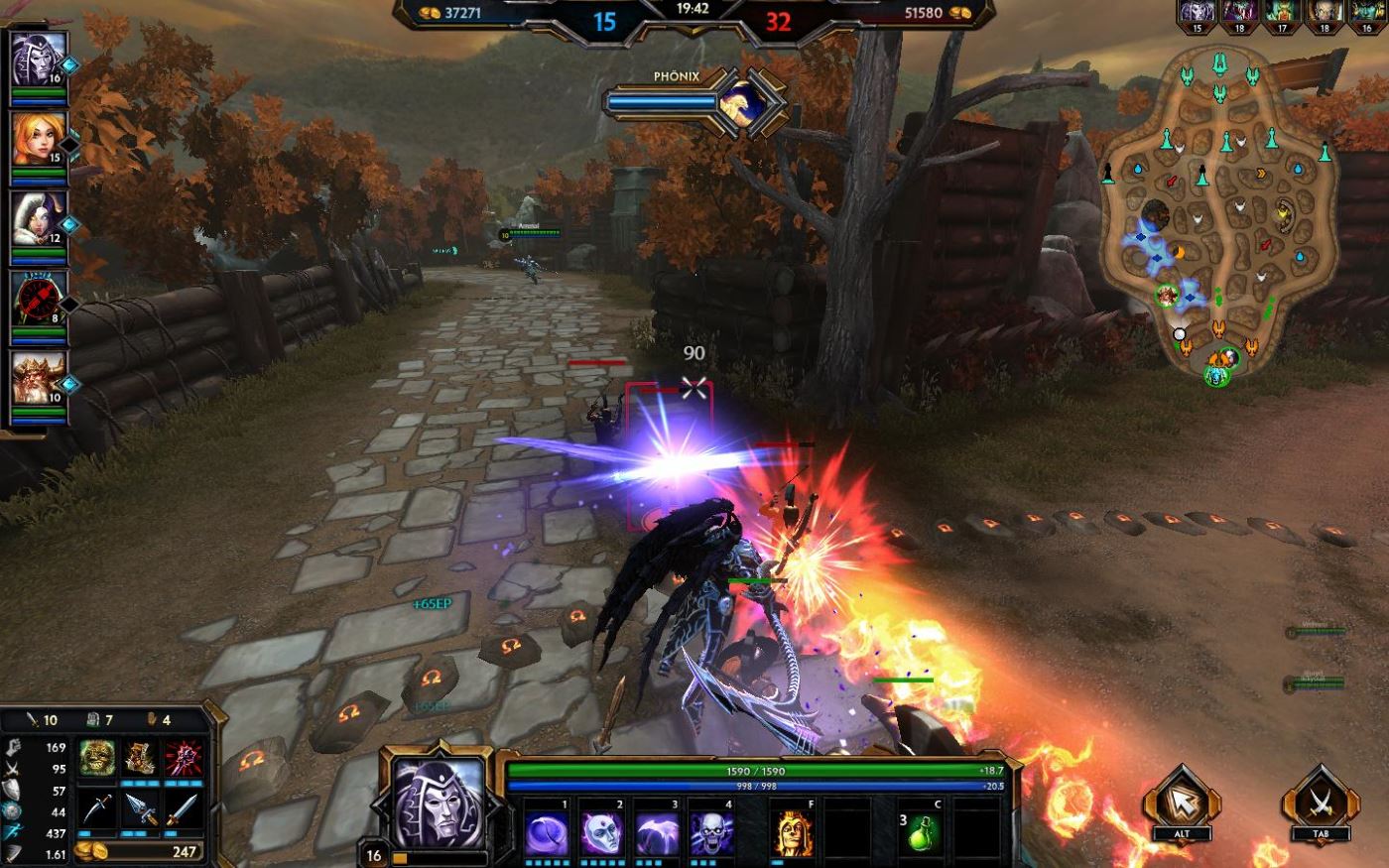
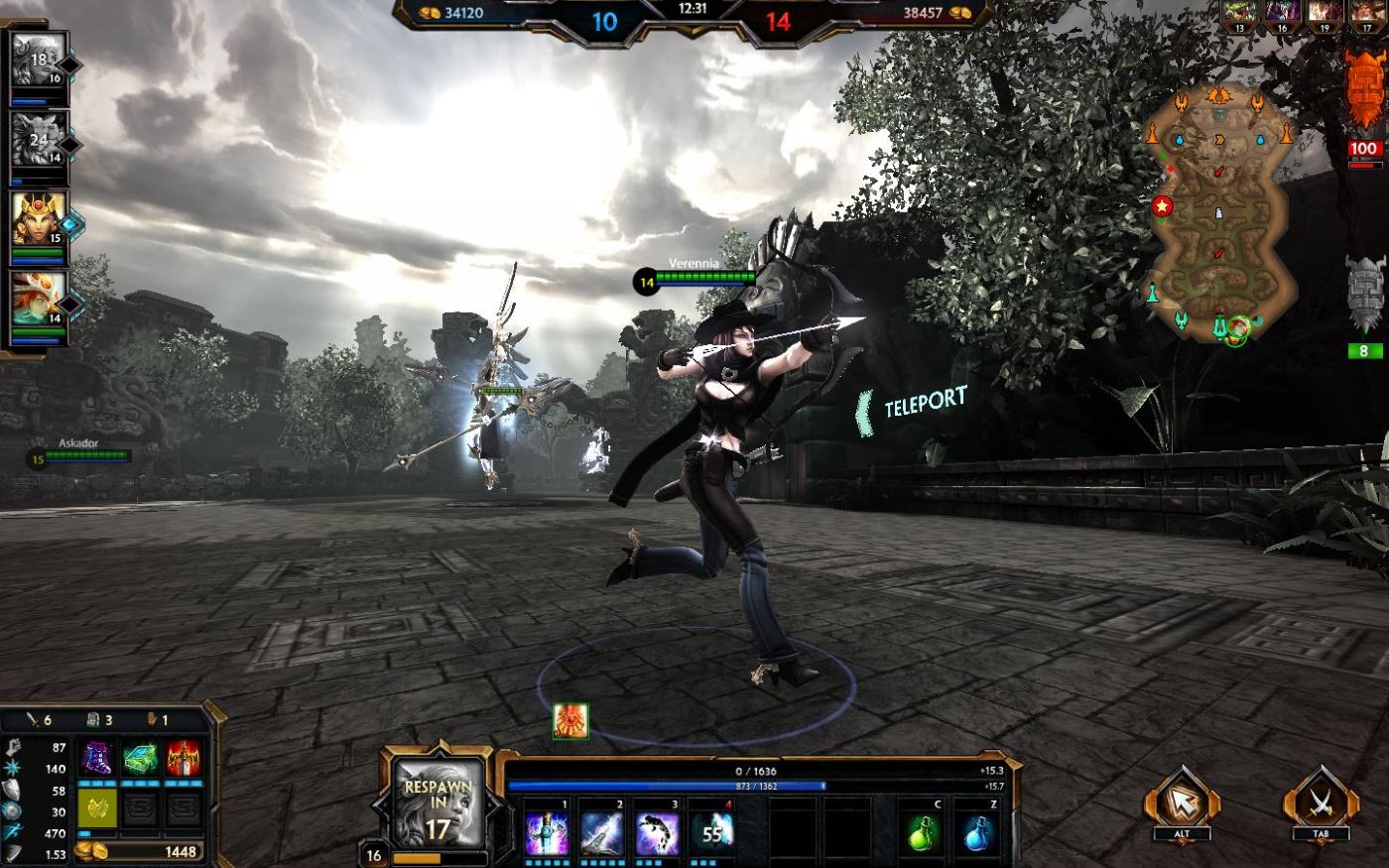
While most comparable games are played from a bird’s eye view, in SMITE, the camera is always right behind the played god, who is directly controlled using WASD and not through frantic left-clicking. This perspective shift itself is enough to evoke a whole different feeling in the game and develop a completely unique dynamic.
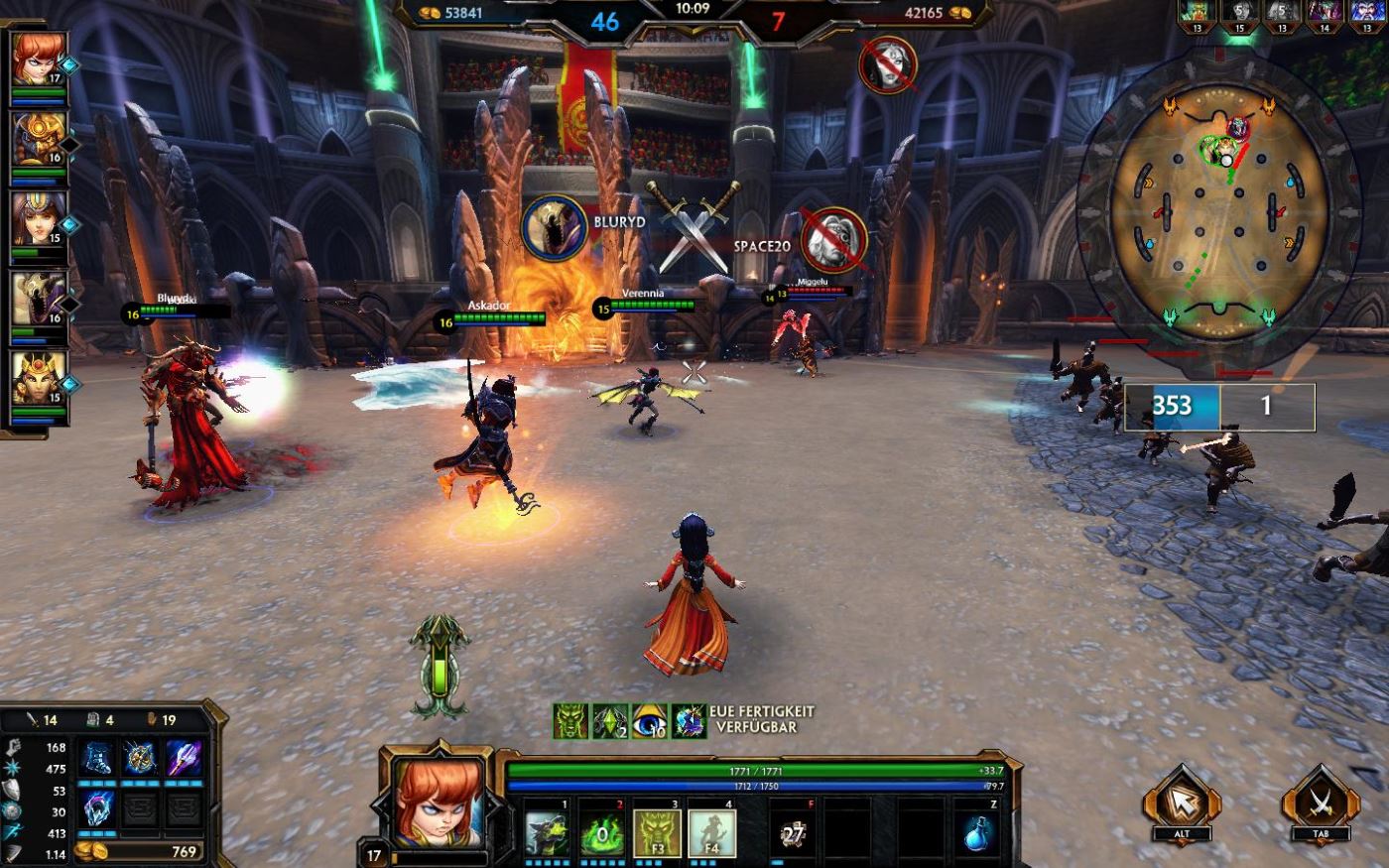
In every battle, you are right in the middle of the action, and the fact that every ability also has to be aimed precisely, and the opponent’s running direction must also be considered, gave me the impression that it is significantly more “skill-based” than comparable MOBAs. It even sometimes strongly resembles WildStar’s telegraph system.
And even though my friends from DOTA and LoL will probably lynch me for my last sentence in the comments: The rear view of the gods gives the game a charm that is second to none. Additionally, a larger view of the characters also means a better graphical representation. All playable gods look uniquely and incredibly good; at least in terms of character design, SMITE also offers something for the eyes.
Best Played with Friends
Newcomers, especially if they’ve never played a MOBA-like game before, should definitely grab two friends and jump into the training mode (Duel: 3vs3) until they get a feel for their chosen gods and can easily send the three computer-controlled opponents back to oblivion (or across the Styx – wherever the gods go).
Only after that should you dare to play against other humans, as there you will probably experience quite the shock and be thoroughly dusted and brought back to reality. Soon, however, you should manage to achieve your first extremely satisfying victories, and by then, it will be clear whether you have become addicted to the drug SMITE or if it leaves you completely cold.
Unlocking New Gods and Level-Ups
In the beginning, you only have access to 9 of the total 57 gods; 5 are automatic and 4 more are part of the rotation that changes every few weeks. For each completed round, you earn both favor and experience points. With favor, you can acquire new gods or alternative skins, while experience points increase your player level – for each level-up, you receive an additional 500 favor.
Typically, a new god costs 5500 favor, although there are a few cheaper exceptions. As the early levels are reached very quickly, it doesn’t take long to unlock your favorite god, but as you play longer, you receive less favor (as level-ups become more rare and take more time). Besides the favor bonus, the level also has a second function, as you can only participate in ranked games and qualify for leagues once you reach level 30; before that, you must settle for unranked matches – especially for veterans from other comparable games, this threshold may be set a bit too high.
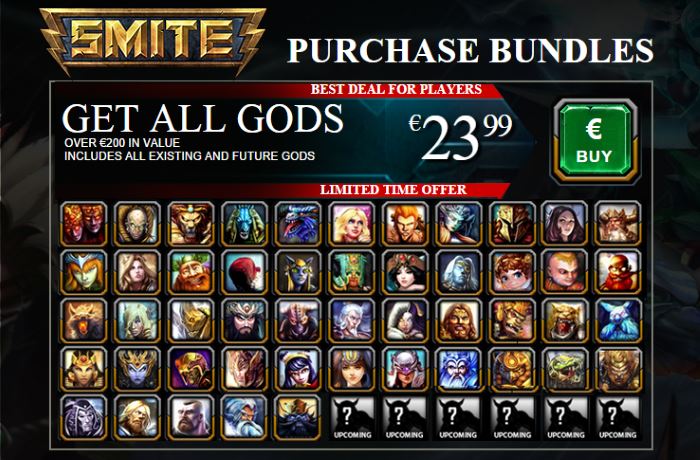
Alternatively, you can also purchase all gods for €24 and support the developers – this offer includes all characters currently in the game, as well as any that will be implemented in the future. Especially nice: If you previously unlocked a god by spending favor, that favor will be refunded (allowing you to use it for additional skins).
The Character Design – Gruesome, Sexy, Simply Good!
As mentioned earlier, SMITE does not rely on purely fictional (this can be debated, but let’s not!) personalities like elves and orcs but draws from the mythological deities of various cultures. Currently, there are seven pantheons represented in the game: Hindu, Maya, Greek, Egyptian, Chinese, Roman, and Norse. There are currently 57 different gods or legendary figures to choose from.
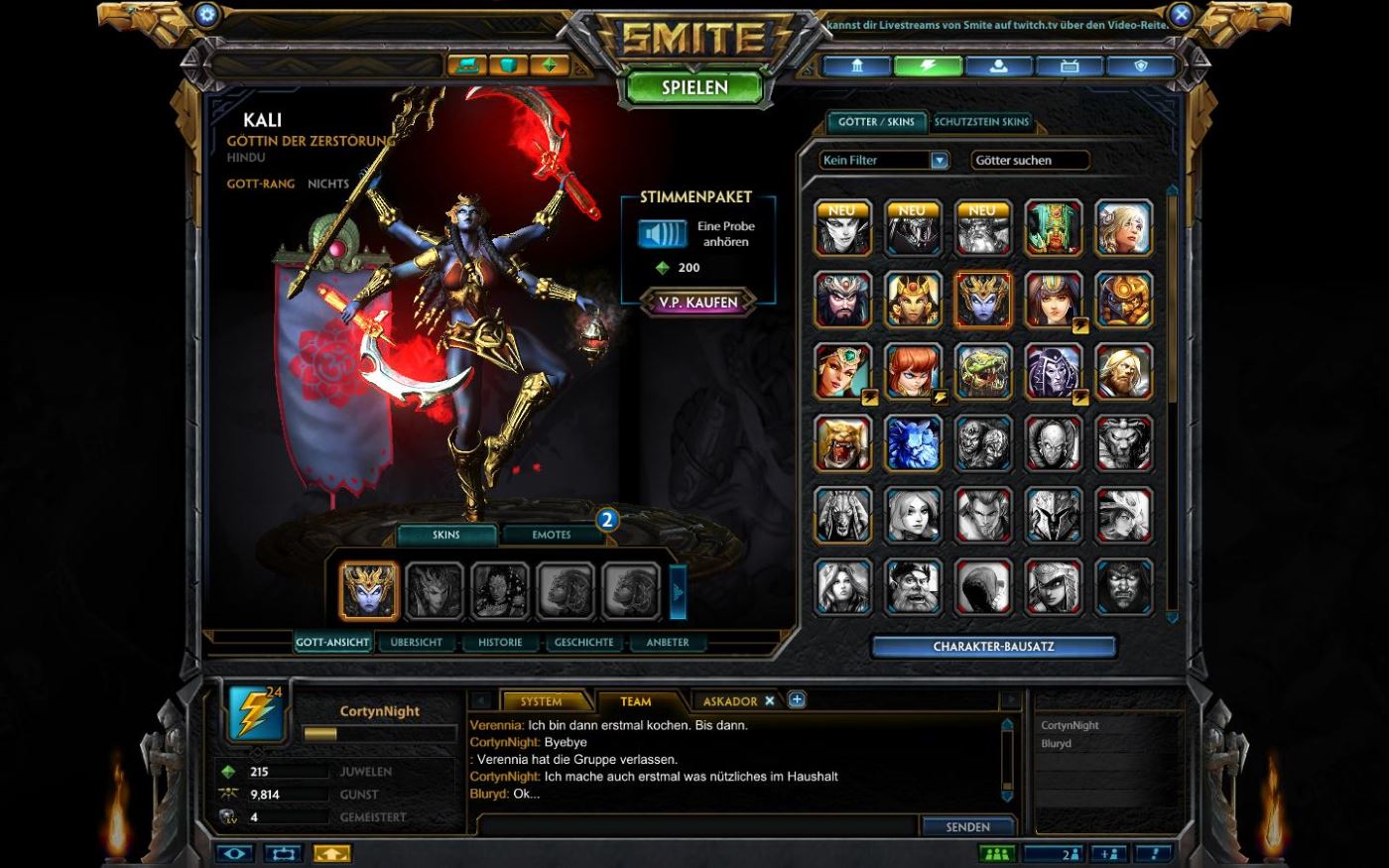
At first glance, one might overlook it, but the developers have put great effort into depicting all playable gods as they were presented in various traditions, and even the individual abilities are tailored to that. All gods clearly differentiate from each other, and especially their voices have really impressed me; I have rarely found the combination of character and voice so fitting as in this game.
Coordination is Everything
For MOBA veterans, this is probably nothing new, but coordination and communication are very important aspects of this game; lone wolves will rarely tip the balance of the game in favor of their team.
Since there is rarely enough time during action-packed fights to type long commands and strategy discussions in the chat, one can give auditory instructions through a very extensive quick selection menu. The key combination “VA1” makes “Attack the left path!” appear in the chat, while “VRR” means “Retreat Immediately!”.
“Just AFK for a bit”
Nothing is more frustrating than when a teammate logs out in the middle of a match, goes AFK, or decides to ruin the game for the team entirely. Of course, this behavior is also disapproved of by the developers, as it completely ruins the game atmosphere in the long term, so there are ways to deal with such troublemakers.
Each account has a “Goodwill” value that starts at 100%. If you disappear during a match, your teammates and opponents will have the opportunity to report the missing player and provide a reason; if this happens often enough, the goodwill value will drop further. To participate in ranked games, this value must be above the 50% mark, otherwise, you cannot even participate.
However, even in the “normal” game mode, you will be punished, as a reduced percentage of the value means you will receive noticeably less favor per match. If someone is not deterred by this, they will be penalized with account punishments such as temporary bans; repeat offenders can have their entire game access blocked – and that permanently, regardless of how much real money they have already spent on the game, a very good measure that has now become standard practice in similar games.
Regardless, you will automatically be marked as a deserter if you leave a match early and cannot participate in any games for 30 minutes afterward – so always play to the end!
Details to Fall in Love With
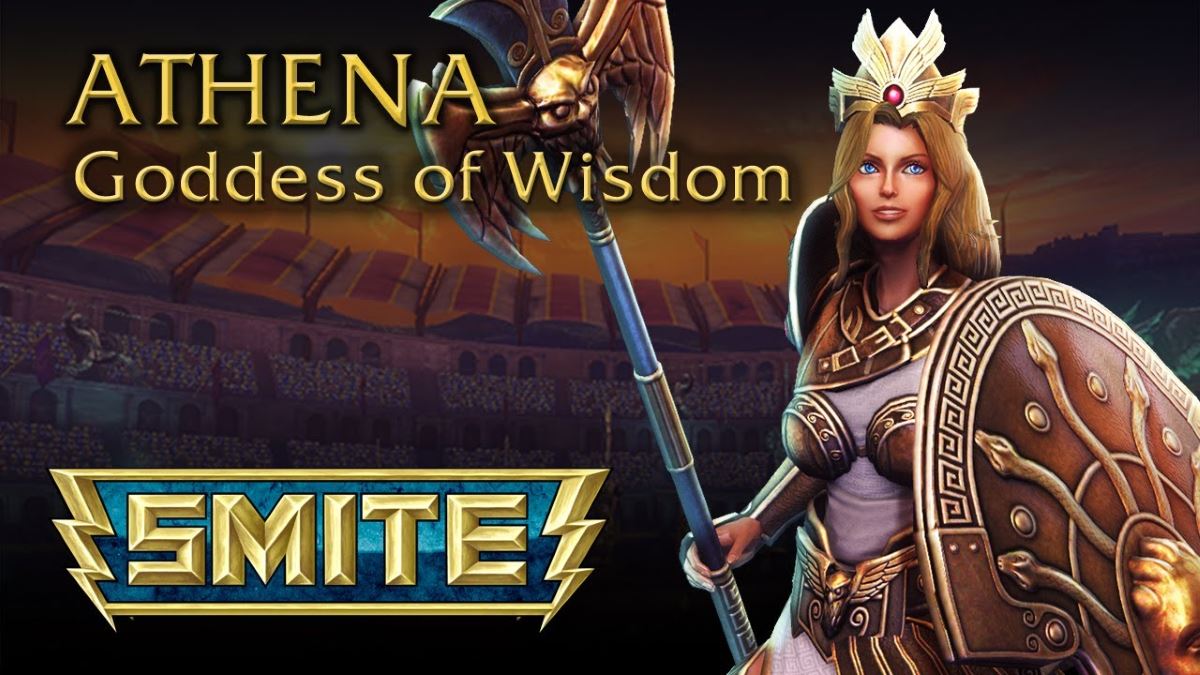
I was particularly delighted by the countless little details that the developers have incorporated. This starts, as previously mentioned, with the very detailed implementation of the traditions into the game world, but it does not end there. Many gods utter interesting quips when they beat one of their mythological companions. Athena, a daughter of Zeus, says, for example, “Do you still love me, daddy?” and that is just one of many possible combinations – I haven’t found nearly all of them yet. An absolute plus is the gods’ jokes (VEJ) and taunts (VET); those who want to know why female video game characters always fight in high heels should definitely listen to Athena’s lines…
Another highlight is the victory/defeat screens after each completed match. Each deity has its own little sequence depending on whether you win or lose. Neith, for example, dances the “Caramel Dansen” in victory, and Scylla lets her tentacle dogs play with a captured minion – although when she loses, she doesn’t quite have control over her dogs.
Real-Money Shop Yes, Pay2Win No
Of course, SMITE also has a real-money currency, which has been dubbed “gems.” Let me say this directly: No item from the shop provides a gameplay advantage that favors someone in a match; all items offered are purely cosmetic.
It is obvious that the developers at Hi-Rez are paying their bills with it, as the possible beautifications are almost endless and can quickly add up. An exclusive skin costs between €6 and €10, and voice packs still cost around €3. Undoubtedly, these special skins look impressive, funny, or incredibly sexy, and also the voice packs can make you smile when you hear the voice of the goddess you are playing in chat coordination commands instead of the generic voice that normally handles the announcements.
That Sounds Good – But What is Bad?
One of SMITE’s biggest weaknesses is the inadequate localization that the game currently has. There is no German voice output, so I am referring only to the plain texts within the game. Those proficient in English will have absolutely no problems, but the German translation is horrendous and at the level of “Google Translator.”
This is particularly noticeable in the ability descriptions, where occasionally there is a random switch between languages. It becomes really bad when the same ability has three different names in three texts; for example, “Broken Weave” turns into “broken fabric” and then into “destroyed weave.”
After a few hours, I switched to the English version in clear frustration; some texts are simply so terribly flawed in German that the content is not even understandable.
Matchmaking Below Level 30 – Almost Non-existent
A significant downside is the matchmaking in the game, as it is, at least based on my experience, non-existent. When you see three players on the opposing team’s loading screen who have already mastered their heroes at level 10 and unlocked the legendary portrait while you are just a level 2 rookie, you can expect quite a beating.
The opponent selection in unranked game modes seems entirely arbitrary, and since this is the only way for new players to earn favor and level-ups, you will literally be wiped out like it’s a jam toast – and you will feel just as powerless.

Everyone Else is an Idiot
I know, I know. When everyone else in the game is unfriendly and has, in your view, “seriously lost their mind,” you are often the disturbing element and just don’t realize it. But I cannot help but emphasize again how terrible it is to play with randoms.
In all the 5-man groups I have had, there has always been at least one person who knows better, insults everyone else, spams emotes endlessly, or goes AFK in the middle of the game and does not return. In no other game have I used the “report player” function as often as in SMITE, and a (subjectively felt) large part of the community reacts allergically to newcomers or people who do not have at least two years of DOTA-logy and a doctoral thesis in “League of Legends.”
There were some exceptions who helped me and gave me valuable tips and constructive criticism, and I thank those players. Unfortunately, their goodwill fades against the seemingly endless trolls, haters, and flamers that have taken root in this game. Just to counteract this, you should always play with at least two friends – it saves a lot of headaches.
How do I play SMITE? You register via the official SMITE page, download the 3.6GB client, and then you can get started.

Your opinion is important to us!
Do you like the article? Then let us know!