


In Romestead, city building meets action-adventure and zombie Romans. MeinMMO author Linda Baumgartl tested the new demo on Steam.
What is Romestead? After the apocalypse, not much is left of Rome. In the action-adventure survival game Romestead, it is therefore our task to rebuild civilization. We do this either alone or in co-op with up to eight players.
Until March 3, 2026, you can try the game in a free demo on Steam. It includes the first two biomes, three bosses, 15 dungeons, and of course the basic game mechanics including multiplayer. Recently, there is even a German translation, which still needs to be worked on in many areas.
Rome after the apocalypse looks quite nice
How often do you actually think about the Roman Empire? Honestly, not that often. Still, the setting in Romestead immediately intrigued me. A post-apocalyptic Rome? With Roman zombies? I have to check that out!
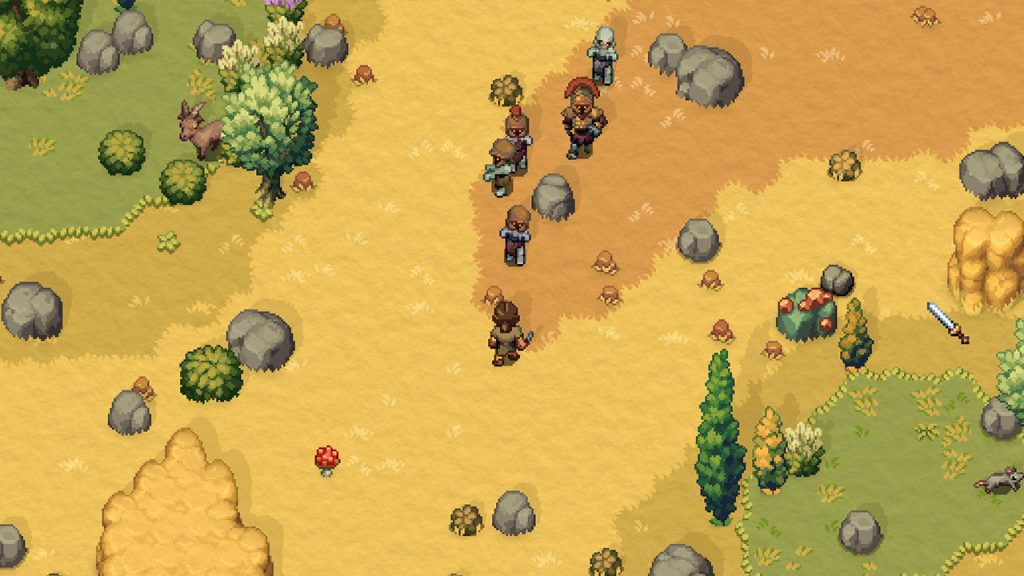
At first, the game greets you with a short intro in which we learn about the fall of Rome. Then it quickly moves on to character creation and the procedurally generated game world. This consists of two biomes in the demo version: a dry plains landscape and mysterious forest areas. Both feel atmospheric and look really good, thanks to successful pixel graphics.
While exploring the open game world, I quickly realize that I am by no means alone despite the apocalypse. At first, I only encounter ordinary animals like wild boars or goats. However, as I venture deeper into the forests, I suddenly come across orc-like creatures. They either lie in wait for me alone or guard promising chests in their camps, from which I initially prefer to keep my distance. There are also cute golems that throw their heads at me. That sounds more brutal than it is, as the heads are made of resources like stones or bushes. And then, of course, there are the Romans. Zombie Romans, who especially swarm over me at night.
Thematically, Romestead delivers what it promises. The game world is interesting and invites exploration – just as I hope for from a good action-adventure.
Building my own Rome
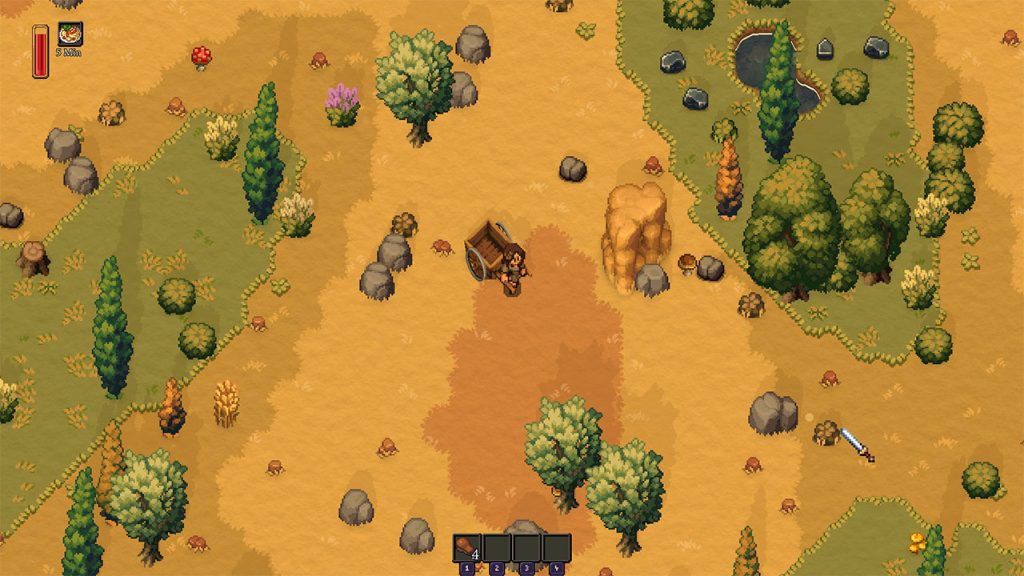
To protect myself from the nightly threats, I quickly decide to embark on building my new home. However, before base building can begin, a few resources still need to be collected. Although the controls in Romestead feel fundamentally familiar, there are a few small peculiarities.
Large resources, especially logs and stones, can only be picked up one at a time by pressing the spacebar. With a left mouse button click, you can then throw carried items away with considerable force. This is not only fun but can also be used to break down resources. For example, you need to throw flint at large rocks to get flint shards.
However, the work becomes much easier with the right tools. Conveniently, these don’t have to be selected every time via the hotbar, as you would expect from most games. Instead, you equip the character appropriately once. Then, a simple left click is enough, and the right tool is automatically used.
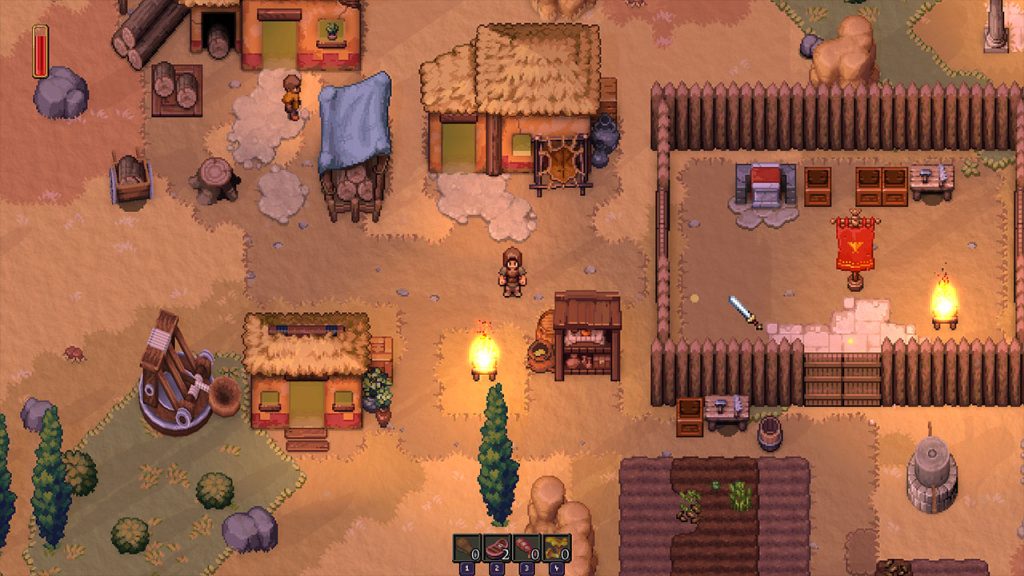
Once you have gathered everything necessary, nothing stands in the way of rebuilding Rome – or at least a small village. In build mode, buildings can be placed, then equipped with resources and constructed through a small minigame.
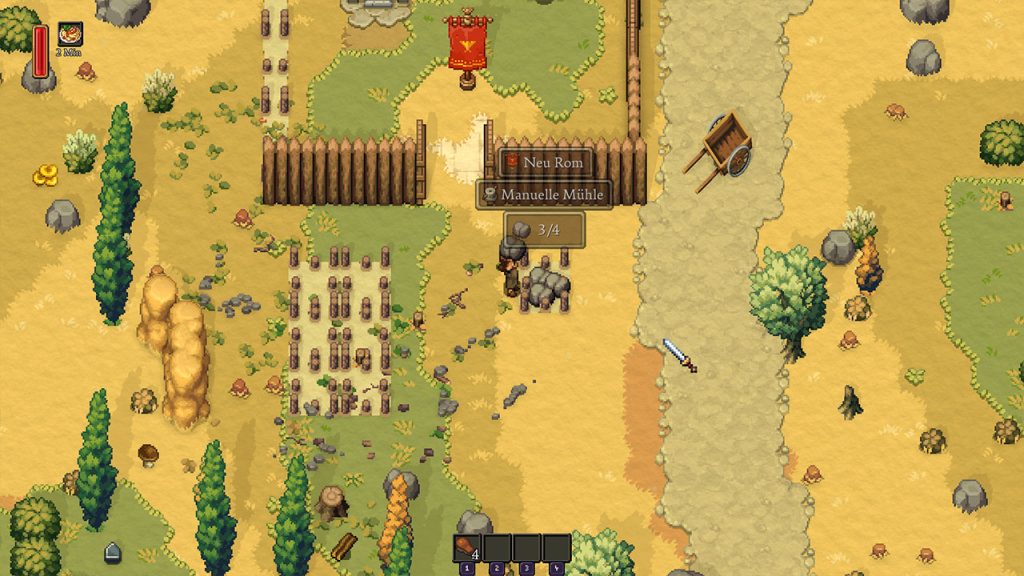
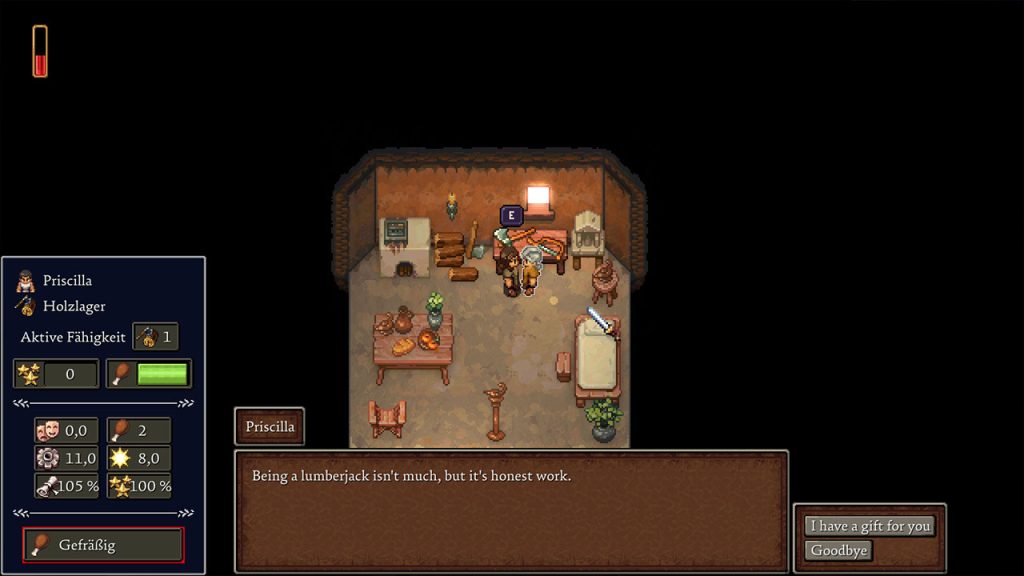
But what is a city without inhabitants? Fortunately, while exploring the game world, you can find some civilians who would love to join our settlement. You just need to have a sleeping place free. Each civilian has certain traits and must be regularly supplied with food. In return, they work diligently for us. For each task, the appropriate building must be built beforehand. For example, there’s the lumberjack, who generates logs for us automatically. Or the leather workshop, where rudimentary weapons and armor can be crafted. Thus, we gradually assemble a proper little town that we must manage and protect from dangers.
In the long run, it doesn’t have to stay at one location. We can even found more settlements and send resources back and forth with transport routes.
Even the gods help me
Right at the start, I encounter another important component of the game. I have a meeting with Minerva, a true goddess. However, due to the fall of Rome, the gods have a small problem. They have lost their followers and thus their power.
It is now up to me to restore divine power. I do this on the one hand by fulfilling their quests. But even more exciting is the altar. Here, I can sacrifice resources – or even undesirable residents – that grant me favor with different gods. Each deity has its own little level tree, in which I can unlock thematically appropriate things. These are primarily new buildings or stats for the character.
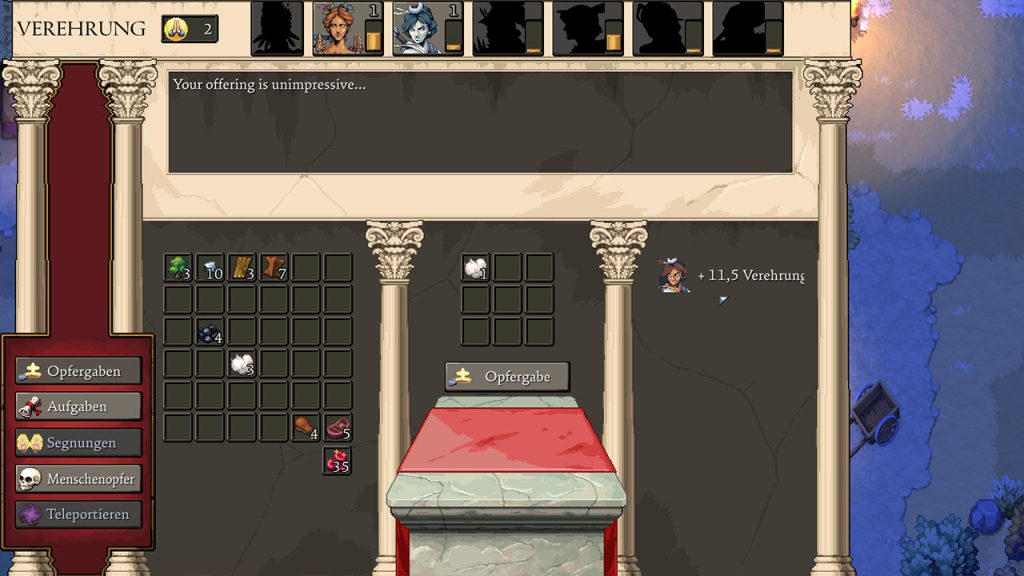
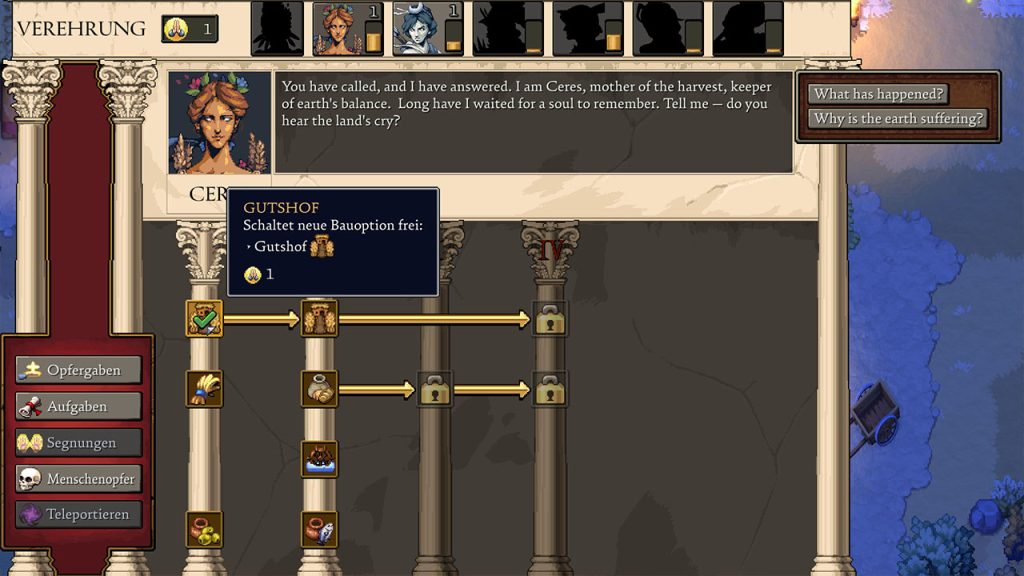
This system really works well. On one hand, it gives me a reason to grind resources on a large scale. On the other hand, it also motivates to explore further and discover the perfect offerings. Because each god has different preferences. So it’s not enough to focus solely on one aspect of the game.
The encounter with an owl makes me a magician
After I have constructed my first buildings and crafted my first equipment, I finally decide to face the first boss of Romestead: a giant owl. Boldly, I throw myself into the fray with sword and shield. Using the spacebar, I try to dodge skillfully to evade the nasty attacks of the fluttering creature. Nevertheless, I don’t survive for long.
During my second attempt, I am already better prepared. I have crafted a magic scroll with which I can shoot lightning. Interestingly, there is no mana in Romestead. Instead, magical attacks cost stamina. In battle, I must therefore be even more frugal with the dodge dashes, which also cost stamina.
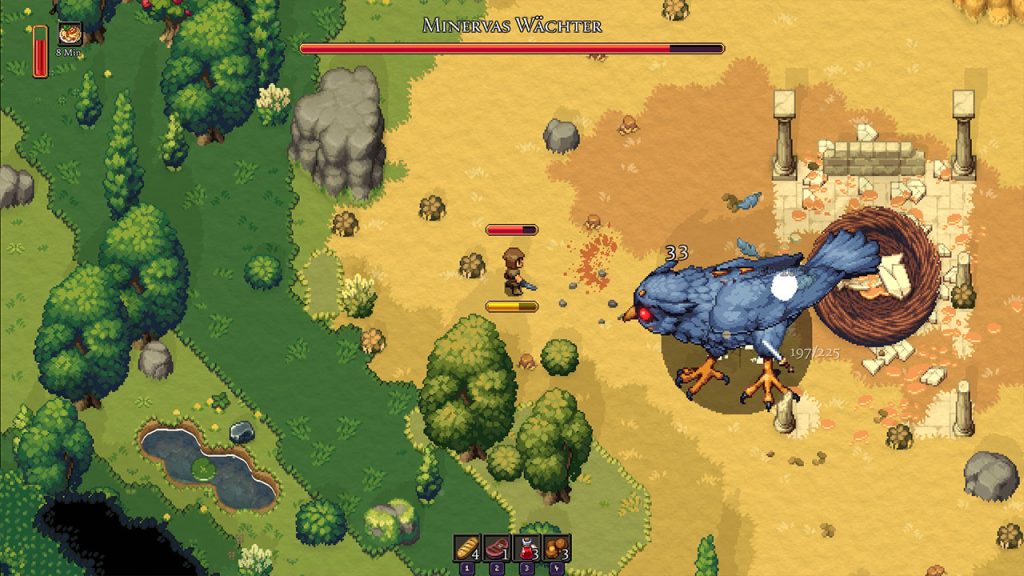
With this method, I am significantly more successful, which is why I stick with the scroll in the further gameplay. Even the zombie hordes can be easily kept at bay this way. Here, the developers might need to work a bit on the balancing.
Overall, the combat system works well, even though it is relatively simple in itself. Complexity is promised by the developers mainly through a large selection of equipment, which is to be significantly expanded in the full version.
But I’ve already enjoyed the RPG elements very much. In addition to the equipment, there is also a classic level tree with which you can further refine your character. Additionally, each skill in the game levels up by performing it. So there are plenty of levers to individually adjust and level the character.



The perfect mix of city management and action
Even in the demo, Romestead was really fun for me. While the game doesn’t completely reinvent the wheel, it still feels fresh. This is partly due to the relatively untapped setting. On the other hand, the game has enough little quirks to make the gameplay feel special.
In terms of content, Romestead strikes the perfect bridge for me between management building game and action-adventure with boss fights and dungeons. Coupled with an interesting game world and beautiful pixel graphics, it results in a great overall package. MeinMMO editor Niko is also excited about a zombie game. While there are no Romans here, there is still plenty of action: The new Resident Evil is so good that I have played it three times already

Your opinion is important to us!
Do you like the article? Then let us know!