

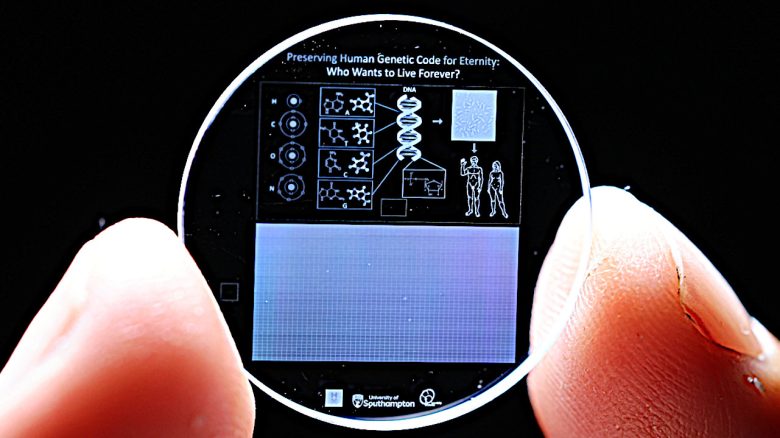
CDs, DVDs, magnetic storage, SSDs – none of that lasts forever. However, researchers are on the trail of the quasi-indestructible data storage of the future.
What kind of data storage is that supposed to be? Researchers at the University of Southampton, UK claim to have packed the complete genome of humanity onto a single data crystal. The amount of data is hardly impressive; it is only about 1.4 GB (via Spektrum).
The key is the 5D process, which makes the storage out of transparent glass (that is, a crystal) nearly indestructible and eternal from our understanding of time – thus the complete opposite of all digital storage methods known to us so far.
Data or storage crystals have long been a cliché in Star Wars: In the lore, there are numerous entries in the fan wiki on this. They would certainly also be a welcome tool in the new Star Wars Outlaws, as anyone operating in the underworld could surely use tiny, extremely durable storage units.
A Storage for Eternity
What are these 5D data crystals? The technology was included in the Guinness World Records book in 2014 (official page about the record). The glass discs, measuring a maximum of about 12 centimeters in diameter, can hold 360 terabytes (360,000 gigabytes) and keep data intact for billions of years. This surpasses all conventional media like flash storage in USB sticks by far (more on that below).
According to the researchers from England, the crystal is also impervious to extreme circumstances, such as:
- Extreme sub-zero temperatures or heat up to 1,000 degrees Celsius, including direct contact with fire.
- Weight stresses of 10,000 times the Earth’s atmosphere at sea level. This is multiple times the pressure at the deepest point of the world’s oceans, the Mariana Trench.
- Cosmic radiation.
The mini crystal shown above could, therefore, potentially bring about a resurrection of humanity aboard a probe far away in the future. If the crystal fell into the hands of aliens who are far more versed in genetics than we are today, they might be able to grow new humans based on the genome. However, on Earth, such storage represents an opportunity to safely preserve the knowledge of our species over long periods of time.
What does “5D” stand for? The five Ds describe the states through which data is stored in the structure of the crystal. Simply put, there are five values that can describe the data: height, length, width, orientation, and their position in the crystal. The latter two are achieved through various adjusted lasers that utilize light refraction in the material on a nanometer level (via 5dmemorycrystal.com)
Current storage media like SSDs, Blu-rays, or traditional hard drives are so-called 3D storage. They store data in several horizontally stacked layers. A CD is a 2D storage, with only one layer, thus only length and width.



CDs, DVDs and SSDs do not last forever? No, all data on storage media widely used today has a limited lifespan. As summarized vividly by Forschungsdaten.info, even in 2020, pressed Blu-rays will hardly be usable in 2120.
The data from stored HDDs or SSDs from a home PC will be lost much sooner. The reason is always the same: The pressed, laser-burned, or otherwise formed structures literally dissolve. You can find more about a conventional USB stick, whose still intact but mysterious content caused a guessing game, in the following article: A Reddit user finds a USB stick on the train, dares to open it, but the contents disappoint

Your opinion is important to us!
Do you like the article? Then let us know!