

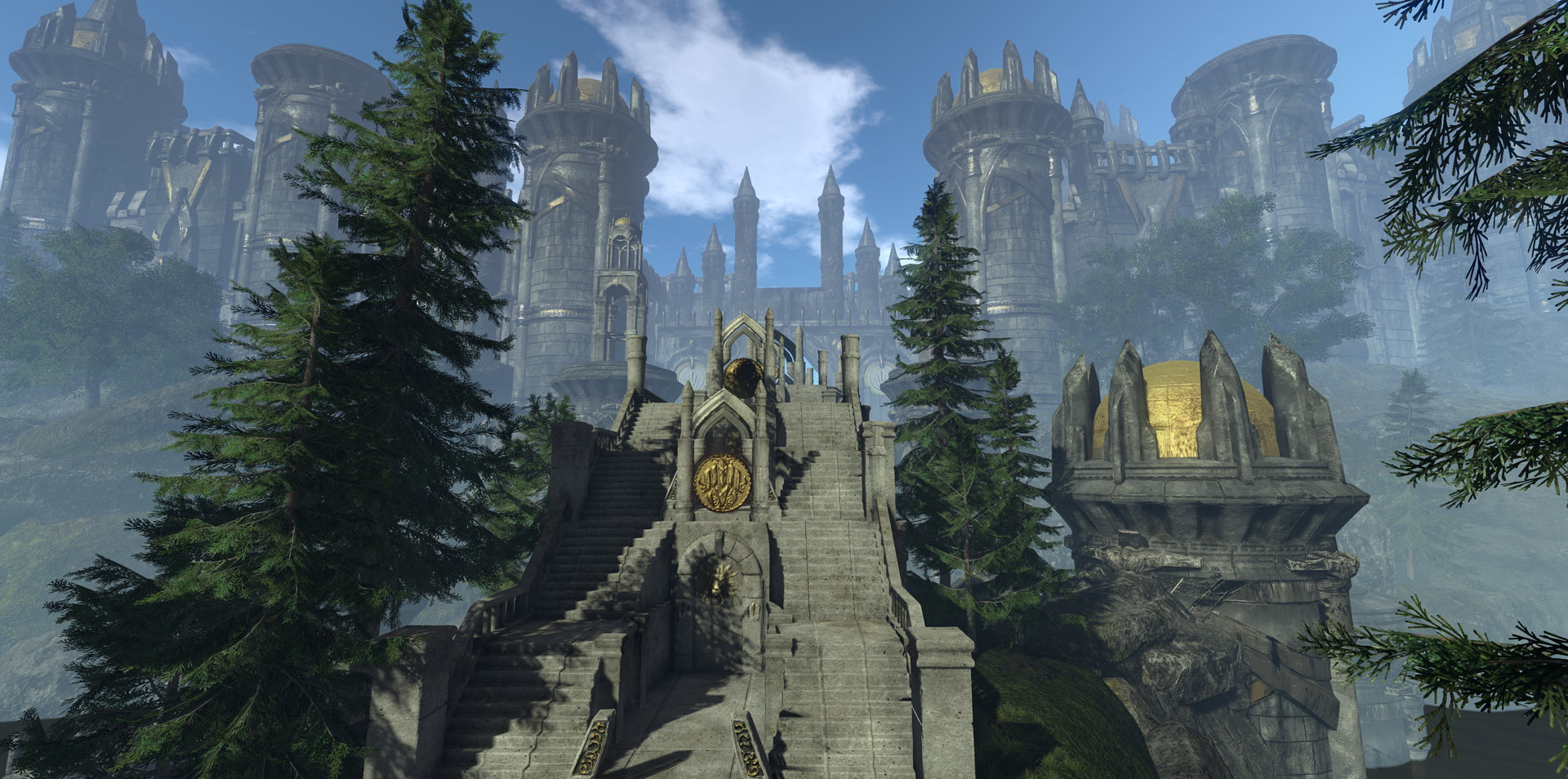
The new PvE MMO Pantheon by Brad McQuaid offers old school ideas in a modern guise and fully focuses on group content.
Several weeks ago, we reported to you that Daybreak Games has officially discontinued its work on EverQuest Next (EQNext). While for some this was sad news, it is a glimmer of hope for ‘old school PvE’ and EverQuest fans, as one project has particularly benefited from this: Pantheon – Rise of the Fallen, the new game from EverQuest and Vanguard creator Brad McQuaid.
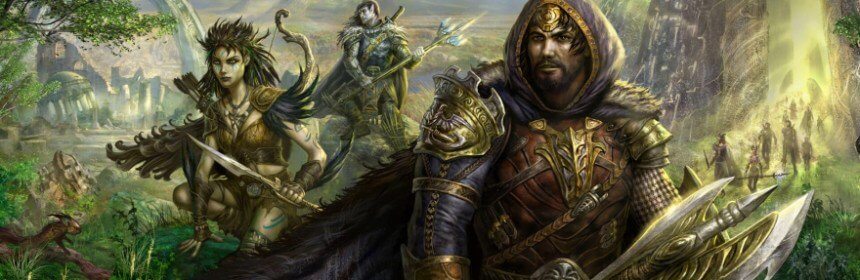
This is despite the failed Kickstarter campaign now back on track and even welcomed five new developers to the team this week, as McQuaid reports.
Old school ideas in a modern MMO guise
During an interview on the sidelines of PAX East, Brad McQuaid explained that after Sony Online Entertainment was bought and renamed to Daybreak, he had the opportunity to buy the rights to Vanguard and revive the game.
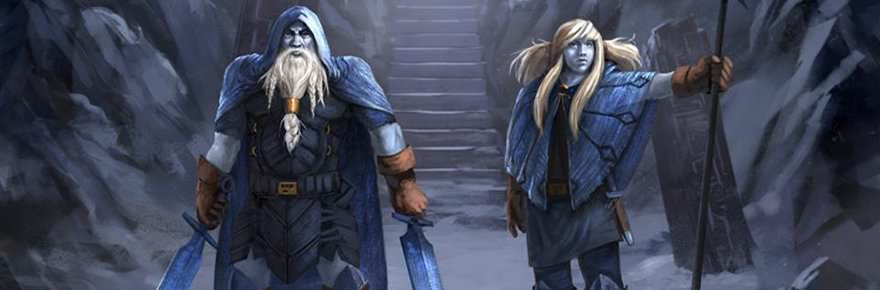
However, he decided against it. Because “as proud as I am of EverQuest and Vanguard,” said McQuaid, “we are in the year 2016 and we feel within the team the urge to move the genre forward and do not just want to revive an old game.” Because even if the Pantheon team brings back a variety of older mechanics and ideas from the first generation of MMOs, the game is not an emulator. “We are focusing on a range of new and innovative mechanics that will make Pantheon a new game, our game.”
The ‘Holy Quaternity’ – from three to four!
At the beginning, there will be twelve classes, nine playable races, and three major cities where players can start. These are located on three different continents, in various zones on which the studio, according to McQuaid, is currently working, with the Unity engine and its asset store ensuring that the team makes relatively quick progress.
The 12 classes of the game are built around the so-called ‘Quaternity’ of tanks, damage dealers, crowd controllers, and healers, the four roles of the class system. In addition to classes that specialize solely in one of the four roles, there will also be a number of hybrid classes. These will be significantly more complex, but also considerably weaker in specific areas. According to McQuaid, the team will keep a close eye on the balance of the individual classes.
The game world itself is also a focus for the team. It is intended to be much more incorporated into the game than we are used to. On the one hand, it will serve as a ‘quest giver’, where hints for new adventures can be discovered, similar to Skyrim and other single-player RPGs. Whether it’s a burned wagon by the side of the road, a note in the pocket of a slain foe, or a random encounter on the way: all of this can serve as inspiration for a new adventure.
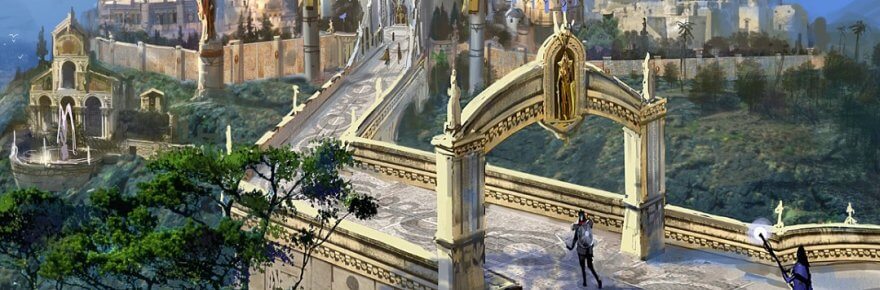
Generally, the world is supposed to offer players a lot of challenges. In addition to weather and climate effects, such as storms sweeping through the landscape, there will also be regions of complete darkness, places where poisonous vapors rise, or areas that drain mana or energy from specific classes, as well as places where using any form of magic is impossible, etc. This requires a lot of attention, flexibility, and especially teamwork from the players. According to Brad McQuaid, this is the third major focus of Pantheon.
Playing together and not just alongside!
Older players who discovered the genre before World of Warcraft will surely remember that player interaction was an essential part of every MMORPG.
Reasons for this included the almost exclusive group content, the dependence on certain classes with fixed roles, the greater importance of crafting, and the absence of auction houses. All of this is intended to be offered by Pantheon to players, and of course, the infamous ‘corpse runs’ of the past should not be missing.
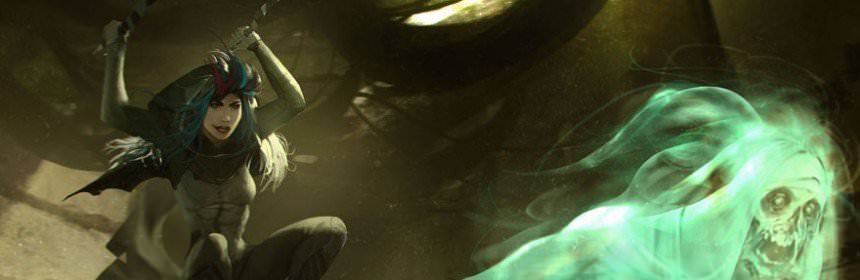
The majority of the game is group content designed for small groups of 6-8 players; a number that could still change during testing, according to McQuaid. Forming permanent groups is not necessary, as the game will offer many possibilities for “pick-up grouping”. Forming groups will be facilitated, among other things, by a mentoring system that allows higher-level players to assist other players and rewards them for doing so.
Rumored to be dead: the downtime!
But another feature that was already declared dead is what the Pantheon team wants to bring back: the downtime! The idea behind it is to give players moments of inactivity, a chance to talk with other players, trade, and discuss strategies, because “without any reason to take a short break and wait (and talk), socializing between players is hindered,” emphasizes Brad McQuaid.
However, by ‘downtime’, the team does not mean artificially stretching content through unnecessary pauses to make the content seem larger than it actually is. How this will actually be implemented in Pantheon remains open, McQuaid stated.
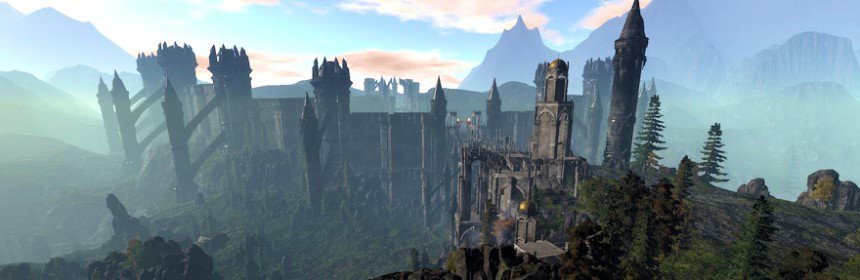
Rather, the developers’ goal is to make gaming sessions generally shorter than what was once accustomed to in old school MMORPGs. A time frame of two hours should suffice for almost all challenges in the game. Longer sessions in the form of five or even ten-hour raids are, according to McQuaid, no longer compatible with the lives of most players.
First gameplay impressions from the pre-pre-alpha
So players can already get a rough picture of the future game, Brad McQuaid decided during GDC to present an initial gameplay video, repeatedly emphasizing that the footage shown is unfiltered and raw pre-pre-alpha material and many elements are not yet in place.
The video already makes a good impression, but also shows where the journey is headed, as the game is clearly aimed at fans of the first EverQuest and Vanguard with its group-centric content.

Your opinion is important to us!
Do you like the article? Then let us know!