Maps are an important gameplay element in every shooter – Twisted alleys, high roofs, or dark corners to hide bring out strategies and excitement. This is also true for Paladins. Thomas Holt is the lead artist of the MOBA shooter and explains how he and his team create maps. What a theme park has to do with it, you can find out here.
In a hero shooter like Paladins, the champions are in the foreground. They are the ones we play with, experience our adventures, and feel connected to. But what would these heroes be without the world they live in?
What would a shooter be without its maps? A big empty nothing – There is no one to fight for.
Thomas Holt is the lead artist of Paladins and is responsible for the visual design of the hero shooter together with his team. He gave us a deep insight into the creation of the maps.
Maps start as a wish turned into an image
The maps in Paladins originate from a wish. The team responsible for game design always has a clear goal in mind with a new map. Usually, they want to fill a gap that Paladins currently has.
A wish could be a map that is particularly well suited for snipers. Balance can also be a major driving force to create a new map. The various champions perform differently on individual maps. A tank like Fernando becomes a nightmare in narrow hallways with his giant shield. Snipers like Kinessa appreciate lots of hiding spots.
Once the design team has found the big theme of a new map, they come to the artists with their wish. The theme can simply be expressed for the designers as something like “open spaces” or “high rooftops”.
The artists then start to give this wish a form.
The theme of the map is captured in a single image
The graphic designers and illustrators approach the maps similarly to the game designers. They also start with a global theme that becomes the core of the map.
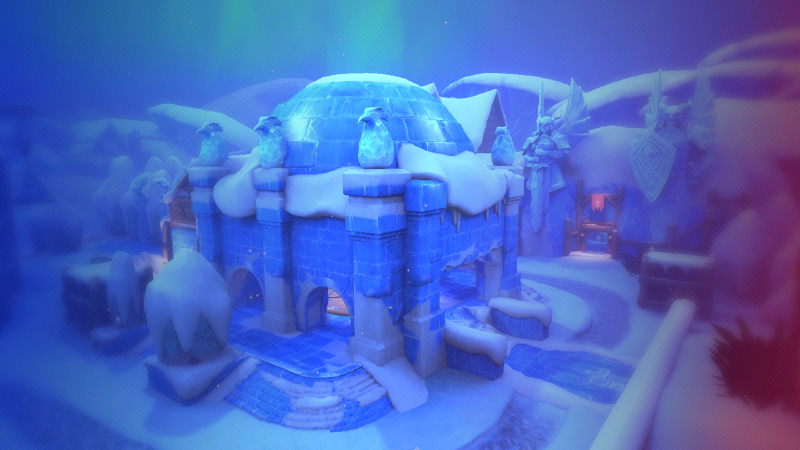
The visual team of Holt looks for a theme such as a climate or architecture. This results in the tropical island, the ice mines, or a fish market.
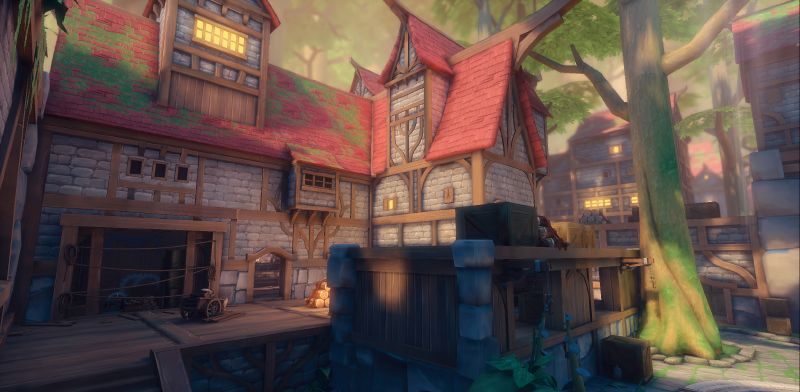
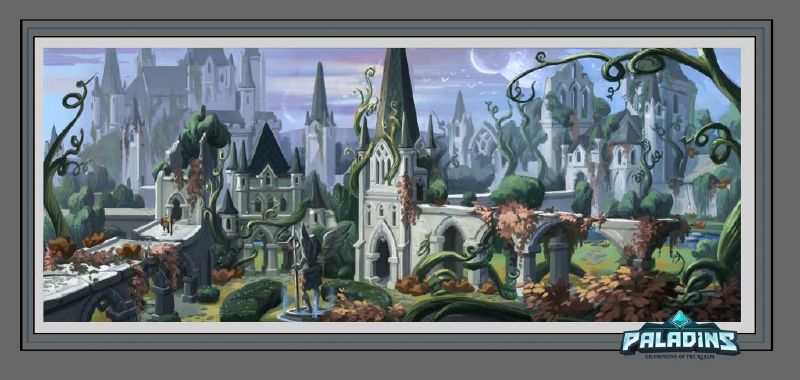
Once the theme is established, often a single image is drawn that captures the core. In the image below, an initial concept of the map “Stone Keep” is visible – A fairy tale castle was the centerpiece here.
After the first concept is established, the design team considers what gameplay elements should be included in the new map. The artists at this time think about what structure the environment should have. They ask questions such as which colors and styles should dominate.
The design of Paladins maps is created with building blocks
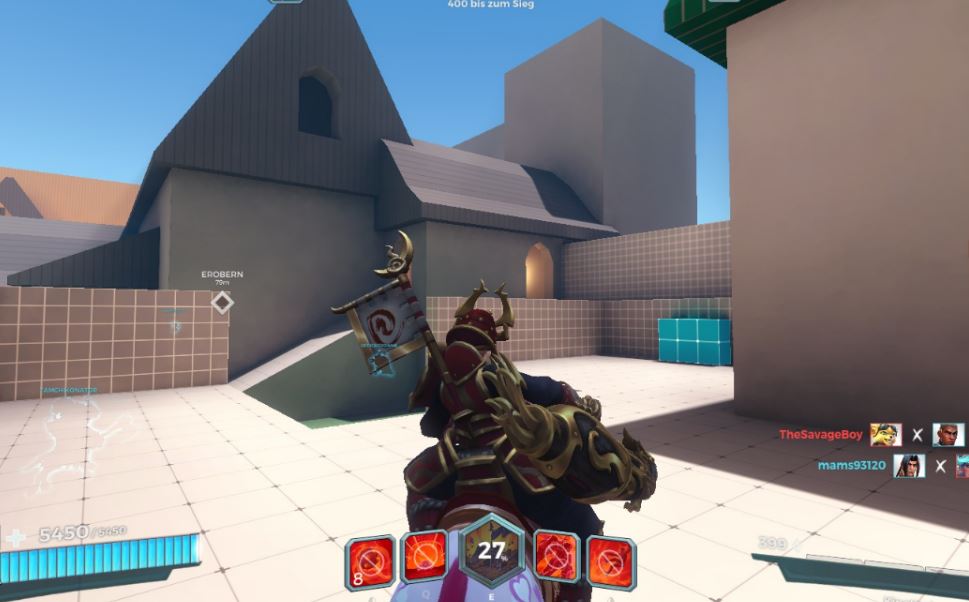
Once the artistic style is generally established along with the gameplay elements, the so-called “Block-Out” phase begins. Here, the level designers develop the map in the form of building blocks.
Before the maps can be visually appealing, gameplay and balancing must be correct on the emerging map. The game design is based on the artists’ concept sketches and develops new ideas that are based on them. What the team enjoys during testing ultimately ends up in the queue for test maps.
Here, players can try out the maps in the block version and provide feedback on gameplay.
Visually, Paladins maps are created like a theme park
When the team is satisfied with the block version of the map, it’s time for Thomas Holt to dress the bare blocks.
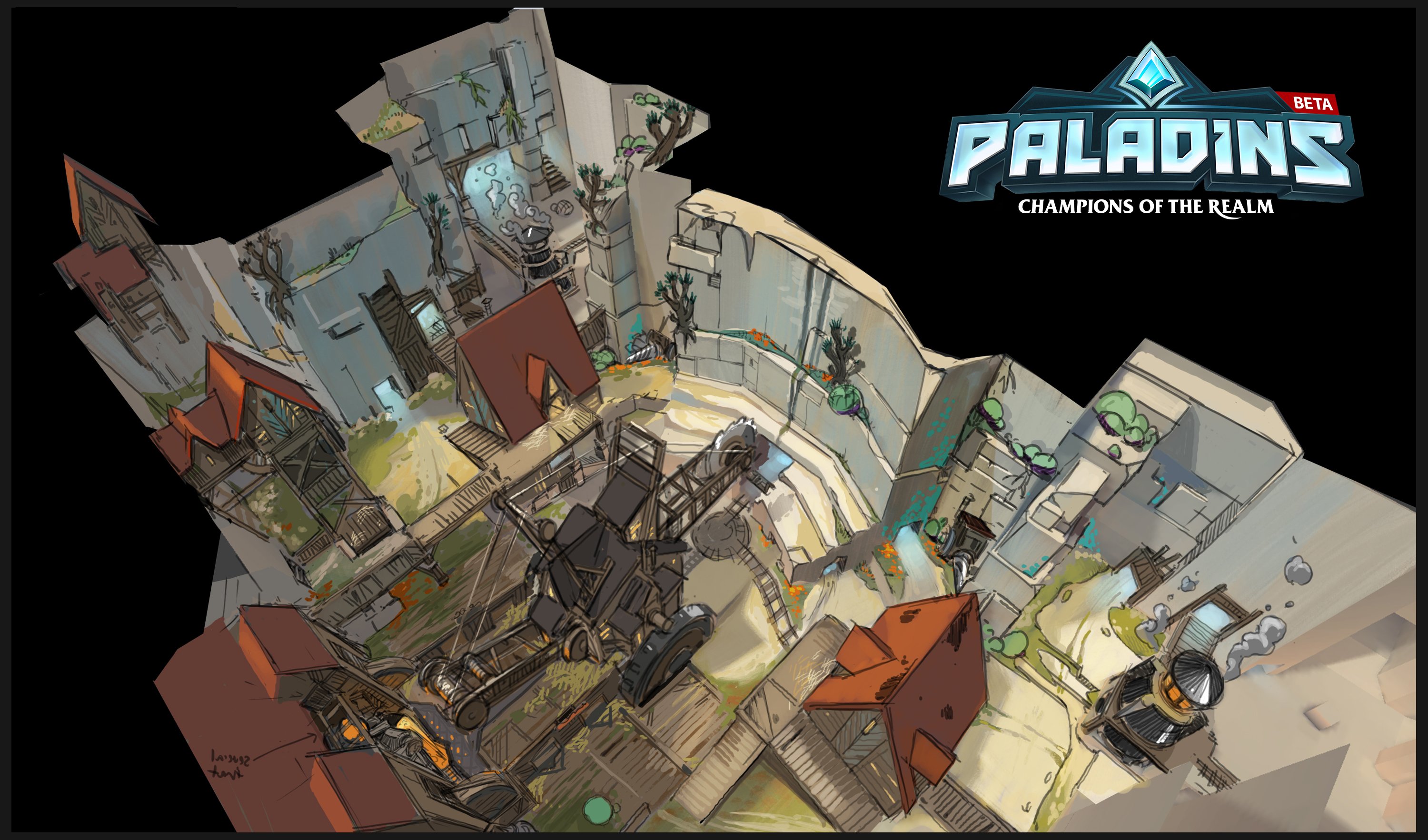
This happens for the lead artist from the perspective of a theme park map. The idea is to zoom out of the map to get a different perspective. Holt envisions a cartoonish map that one would receive for orientation in a theme park. He developed this technique while he was working on the god MOBA SMITE .
This makes it easier for Holt to recognize the different areas and boundary points. From a bird’s eye view, he has a completely different perspective and can better judge what the map should include and how it should be structured. At the same time, the team can consider what role each part of the map plays and what story it tells.
This makes it easier for the lead artist to think about what a building block should turn into.
Thomas Holt provided us with concept drawings of this perspective for this article. Here is the theme park perspective of the map “Light Marsh”.
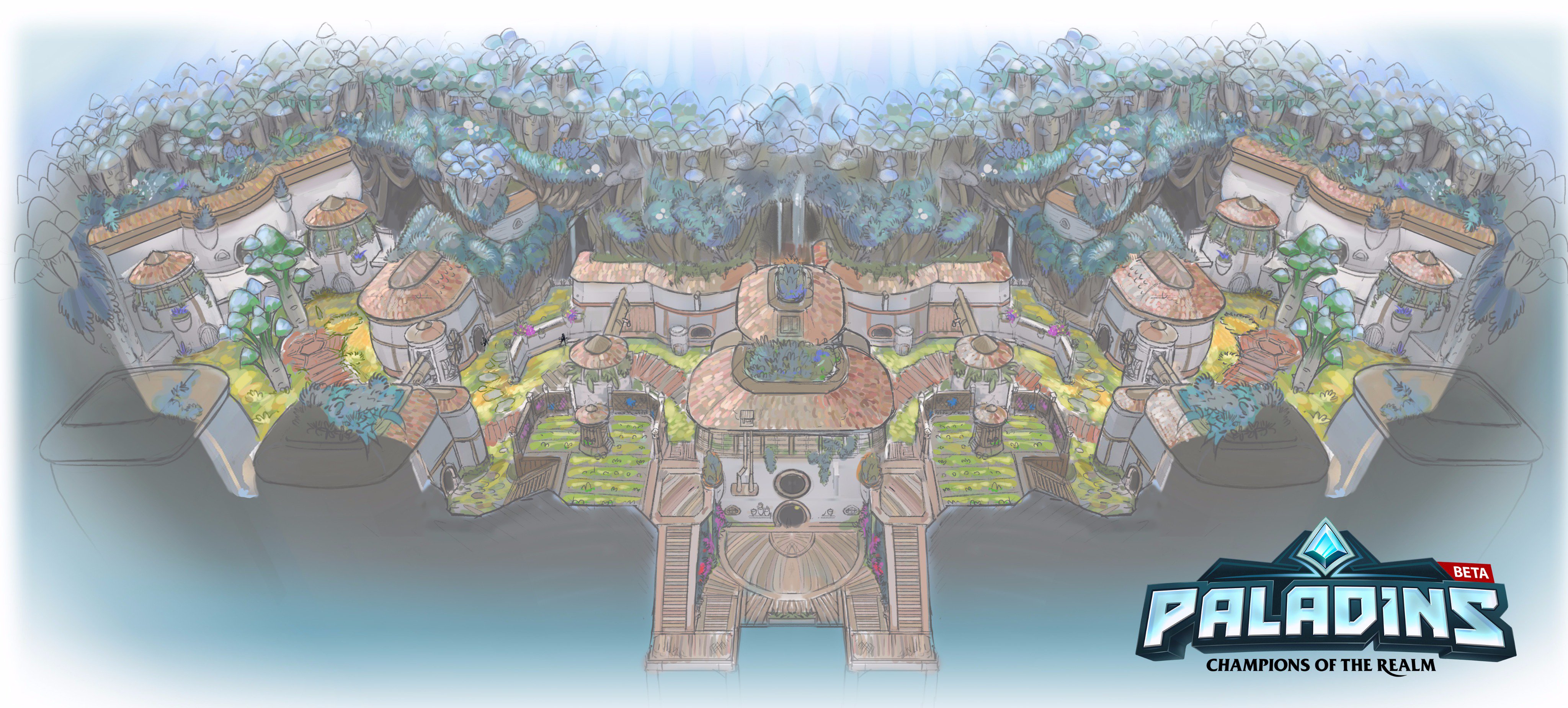
Armed with this map of Holt’s theme park drawing, the entire team re-examines the block map. Here, the artists can again become aware of what the map looks like in three dimensions. Then the graphic designers start drawing over the building blocks.
The breakthrough is always when no block piece is left
Throughout the entire time, the design team conducts numerous playtests to check the functionality of the map. They work closely with the graphical team because the appearance and mechanics must be coordinated.
Sometimes the artists suggest for a visual effect that a building block is made shorter or wider. The level designers then have to test again whether that disrupts the map’s balance. Even a slightly too long corner can lead to unfair gameplay. There is always a lively exchange between the artists and game designers.
The breakthrough is always when the level design is finished to the point where no block piece is left, but everything is covered with visually appealing graphics. Now, usually only the details are missing, such as hitting the right shade. However, it is possible to play and feel the map. This is also the point at which the developers may start teasing new maps on their social platforms.
From now on, all playtests happen in the artistically designed version of the map.
The entire team pulls together to design the maps
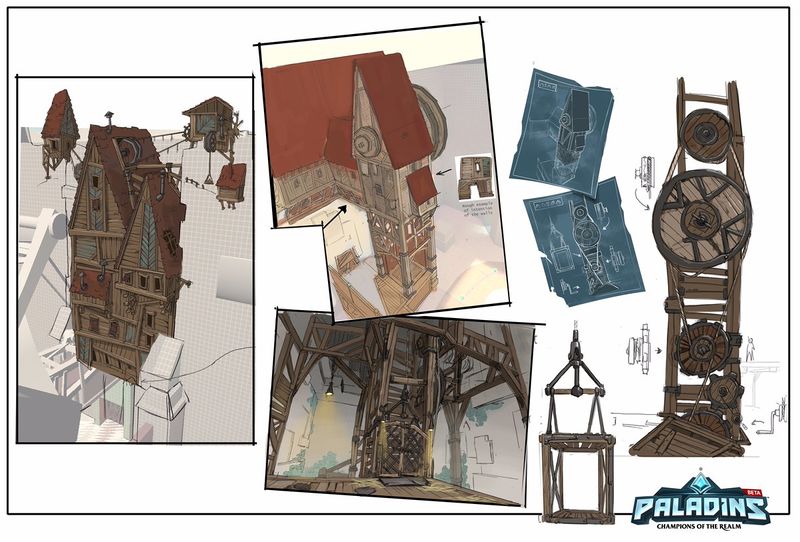
According to Holt, throughout the entire process, the graphic designers and game designers work closely together to achieve the best result. This approach is also followed by the developers in the champion design of Paladins.
They inspire each other and combine the core of both sides.
The biggest difference between champion and map design is the number of different teams involved. In the development of the champions, the visual designers and game designers are involved in the process. For the maps, special teams like level design and environment design are added. However, it is important that everyone pulls together and knows what the respective teams are working on.
With intense teamwork, a clear guideline, and the help of a theme park map, ultimately the maps of Paladins are created.
If you want to learn more about the creation of champions, we have an article on it. The beginning of a champion in Paladins starts with a question instead of a wish.