

Blizzard has revealed some secrets and facts about the skill rating and matchmaking in Overwatch. This aims to bring clarity among the players.

If things aren’t going well in the ranked mode of Overwatch, players often blame the matchmaking. They think it leads to unfair matches and “you always play solo against full groups” and similar thoughts cross one’s mind. Scott Mercer from the Overwatch team took the time to explain many details about the matchmaking in depth.

Group size has no impact on SR. One of the biggest misconceptions in the community is the assumption that group size in ranked mode would affect the gain or loss of the skill rating. This is simply not the case. Whether you sign up alone or with a group of six people, the potential gain (and loss) of SR is identical.
What affects the gain/loss of skill rating?
- The win probability calculated by the system. Above 50%, you earn less on victory, below 50%, you gain more skill rating.
- Consistency. New accounts or those that haven’t played for a long time see greater fluctuations. This stabilizes with more games.
- If your skill rating was above 3000 and then “expired” due to inactivity? Then you will receive more skill rating upon return until you are back near your old level.
- (only Platinum and lower): If you played exceptionally well or poorly and therefore deviate from the average of players in your rank, the skill rating rises or falls more sharply.
- If the skill rating is already very high, you gain less on a win, as you approach the cap of 5000 SR.
Group sizes and their matches
Who plays against whom? Some internal statistics from Blizzard might also be interesting. Mercer revealed how often group compositions faced other setups. Here are some exciting key data:
- Only 16% of all games consist of complete solo players.
- 28% of all matches come from player groups of 2-1-1-1-1 against 2-1-1-1-1.
- If you are in a team of solo players, then in 73% of all cases, you are also fighting against complete solo players. 24% of the games contain a 2-player team and only 3% of the games feature larger teams.
- Teams of six players play in 92% of matches against other teams of six players.
Win rates of different group sizes
The win rates are also interesting – that is, how often certain group compositions win.
- If you combine the win probabilities of all possible matchups of complete solo teams (i.e., 1-1-1-1-1-1), these teams have a win probability of 49.5%.
- 2-1-1-1-1 teams win in 50.03% of all games.
- 2-2-1-1 teams win slightly less, namely 49.46% of all games.
All numbers and matchups combined yield an average win rate of 49.94% for an individual solo player.
Overall, all these numbers are very close to the intended 50%, which speaks for good matchmaking.
The “Looking for Group” feature aims to help
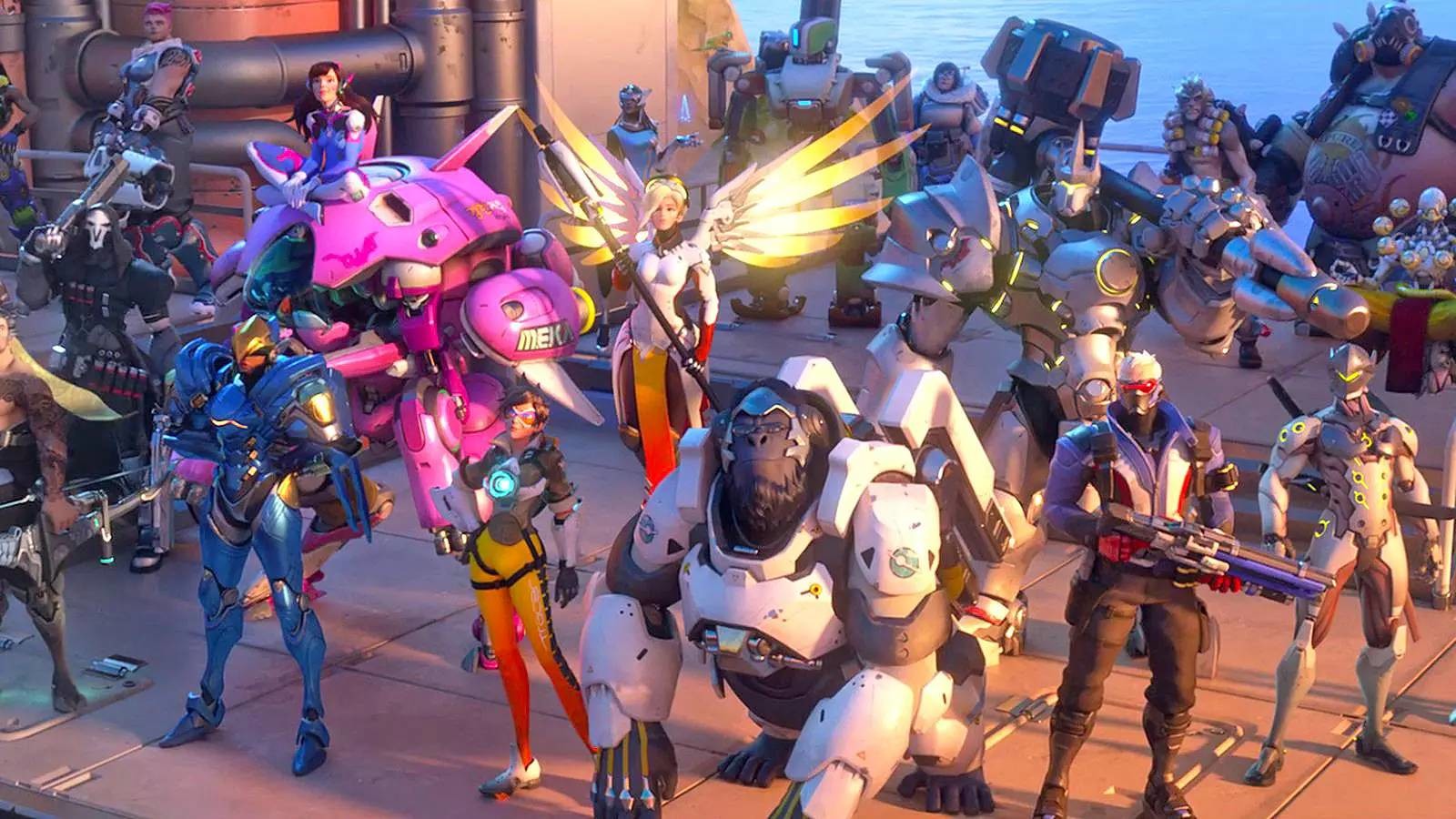
Despite all these quite positive numbers, the gaming experience for solo players is often lacking, as the negative moments are remembered more strongly than the positive ones. The “Looking for Group” tool is meant to help players find like-minded individuals beforehand. Because a pre-set group of players has many advantages:
- More positive communication among each other
- Better conflict resolution (who plays which role?)
- Stronger cohesion. Devastating losses do not weigh as heavily because you have fun together
Lastly, Mercer gave a general tip that is not only suitable for Overwatch: “Be kind to each other. Life is too short.”


Your opinion is important to us!
Do you like the article? Then let us know!