
Nvidia CEO Jensen Huang warns: AI is not yet trustworthy – nevertheless, Nvidia is significantly profiting from AI and presents a new tool called Fugatto.
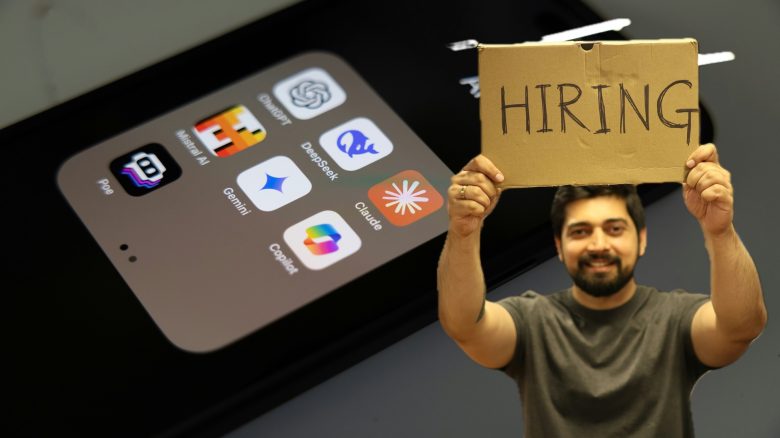
Why is AI not trustworthy yet? In an interview at the Hong Kong University of Science & Technology, Jensen Huang, the CEO of graphics card manufacturer Nvidia, explained that today’s AI systems often provide answers that are not optimal. He emphasized that users should constantly question whether an AI answer is “hallucinated” or makes sense.
We need to reach a point where one can largely trust the answer one receives. […] I think we are still a few years away from that, and in the meantime, we need to continue increasing our computing power.
Jensen Huang via YouTube
The Nvidia CEO estimates that it will take several more years to achieve this trust.
Artificial intelligence in a spy glasses? You can watch what this is about here:
What are the current challenges with language models? Language models, or LLMs (large language models), imitate human cognitive abilities by learning from large amounts of data, recognizing patterns, and solving tasks or making predictions based on that, without being explicitly programmed.
They are used in areas such as speech recognition, image recognition, and decision-making. Although models like ChatGPT have made significant progress in recent years, they continue to struggle with issues like the so-called “hallucination,” where incorrect or fictional answers are generated. An extreme example (via derStandard) of this is a lawsuit against OpenAI where ChatGPT generated a made-up legal complaint against a radio presenter.
Furthermore, companies like Nvidia face the challenge of advancing AI models without relying solely on vast datasets. Huang emphasized that pre-training alone is not enough to fully harness the technology’s potential.
Why is pre-training alone not enough? Huang clarified that merely pre-training on large datasets is insufficient to achieve the necessary quality and reliability. He drew a comparison to completing a degree: “Graduating is an important milestone, but it’s not enough.” However, he does not specify what this really means and what could be done better or completely differently instead.
New AI products with high revenue despite lack of trust
Why is Nvidia still launching new AI products? Nvidia uses AI in many areas and integrates it into their technologies. In gaming, Nvidia relies on AI features like DLSS (Deep Learning Super Sampling), which enhances graphic quality and allows games to run more smoothly by upscaling lower-resolution images.
Additionally, AI is used in character animation and the simulation of realistic environments. Beyond gaming, Nvidia’s artificial intelligence is applied in planning smart cities, in robotics, and in medical image analyses (via Nvidia).
Nvidia’s latest AI tool, Fugatto, is designed to efficiently analyze audio material and set new standards in its processing and synthesis.


What does Nvidia earn from this? The AI chip manufacturer Nvidia continues its successful course from recent years. In the second fiscal quarter, which ran until July 2024, the company achieved revenue of $30 billion – a 122 percent increase compared to the previous year. Nvidia was able to record triple-digit percentage growth for the fifth consecutive quarter, as reported by the Tagesschau.
AI is everywhere. But if the use of artificial intelligence in schools goes too far, it can lead to problems. A student in the US used AI for his homework and was sued by his school for it. You can read the story here: Two students were punished for using AI for an assignment – The court ruled that the teacher acted correctly.