
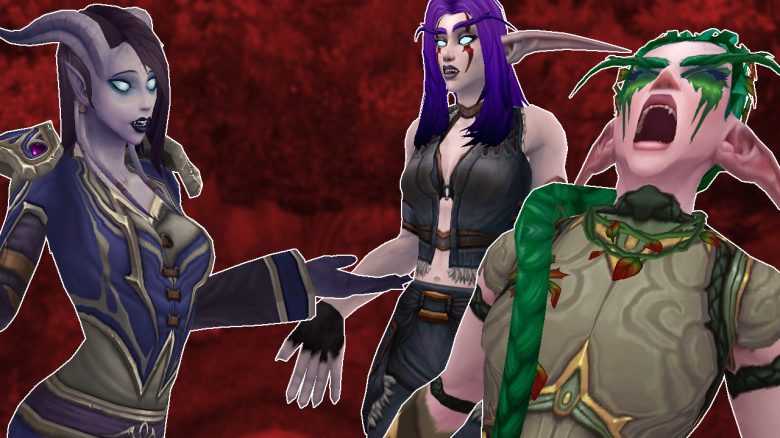
Night elf fans in World of Warcraft are howling incessantly – at least that’s what Cortyn from MeinMMO thinks and wants to analyze.

The story of World of Warcraft is often a big topic. Not everyone likes where the story is heading; some would rather see their own vision of the story realized in WoW. But especially one group seems to have become very sensitive in recent months and years: hardcore night elf fans.
What’s going on with the night elves? The night elf nation has been under quite a lot of pressure in recent expansions. With the destruction of Teldrassil at the beginning of “Battle for Azeroth,” about 90% of the night elf population in the WoW universe died, and Tyrande’s quest for revenge began, which for many ended unsatisfactorily as Sylvanas did not die completely but has to search for souls in the Maw.
Datamining from the Alpha of Dragonflight shows that night elves will also play an important role in the upcoming expansion. It is likely that an incident will occur where the Archdruid Malfurion Stormrage must descend into the Shadowlands to facilitate Ysera’s rebirth in Azeroth – a trade-off to maintain balance.
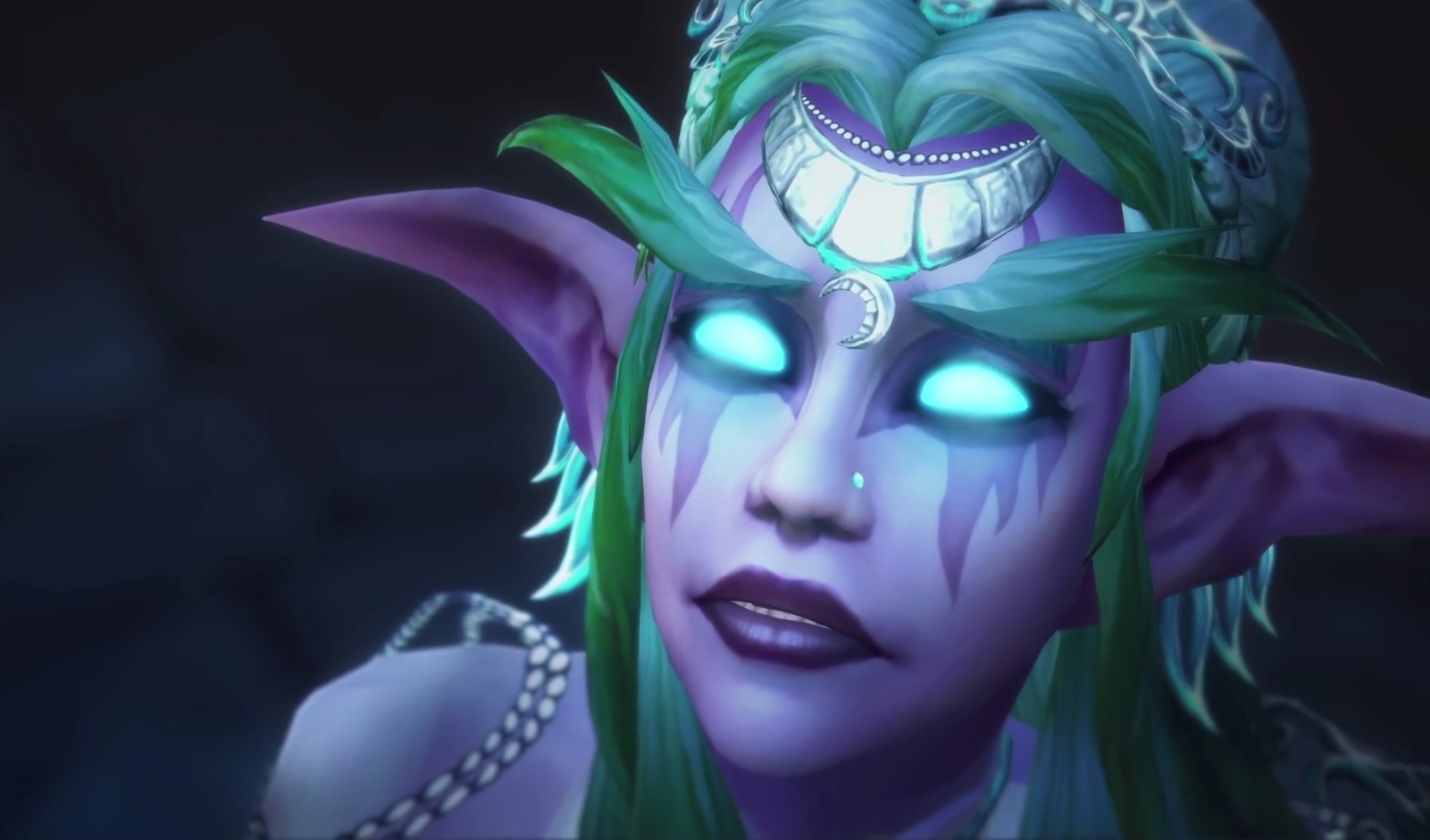
Even though the exact details of the quest, the decision-making process, and all the particulars are not yet known, the outcry in the night elf community has already been enormous. Story writers are once again being severely insulted, the “everything was better back then” faction is on the rise, and there is generally so much criticism of the night elves in the last two years that I’ll casually summarize this as “howling”.
The demand is clear: things should finally get better for the night elves; they should no longer suffer setbacks, and rosy times (without thorns!) should dawn, during which the nation can thrive without problems once again.
Night elves introduced as a suffering race
Losses and setbacks are natural in a story, and some suffer more than others. Night elves should actually be used to this. Already in Warcraft III, they endured much. Their elven forests were largely desecrated and deforested by the orcs, the demigod Cenarius was slain, and the World Tree Hyjal lost the power that made the night elves immortal during the explosion of the Emerald Dream.
It is precisely these stories of loss and coping that have sparked such strong interest in night elves—along with their culture and everything that makes the Kaldorei what they are.
And yes, in the end, this dissatisfaction with story developments is somehow natural. One is no longer in the process of falling freshly in love with the game world and the characters; they have already grown close to one’s heart, and now one wants to see how the story unfolds and hopes that they are happy and satisfied. I can understand that desire, but if you think about it longer, it simply falls apart.
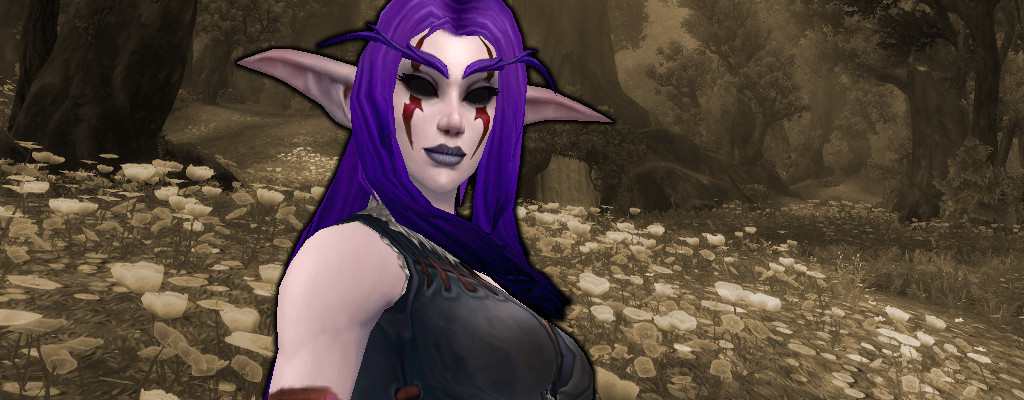
The night elves are who they are because their nation has repeatedly been exposed to massive problems. Whether it was the first invasion of the Legion 10,000 years ago with the shattering of the world, the Third War in Warcraft III, or just recently the War of the Thorns.
Night elves have more story than any other race
To put it simply: the complaints of some night elf fans really annoy me. The most absurd accusation is that Blizzard always provides so little new story for the night elves. Every other race supposedly received so much more story, while the night elves merely occupy a minor role and are almost “forgotten.”
I often wonder if players really believe that or are just still half-stuck in the emerald dream. Since “Cataclysm,” night elves have been prominently featured in almost every expansion and have had several interesting and exciting quest lines, if not entire areas devoted solely to their culture.
In Cataclysm, there was much new night elf lore. The “old” areas were at least overhauled. Ashenvale, Feralas, Darkshore, and the Felwood—all traditional night elf areas offered new stories with deeper backgrounds. Additionally, there was Hyjal, the sacred World Tree of the night elves, which players had previously only known from Warcraft III.
Although Mists of Pandaria focused heavily on the Pandaren, night elves also had a very interesting appearance here. The search for the Spring of Youth in Krasarang is one of the most fascinating and interesting quest lines revolving around the Kaldorei. How they attempt to regain their immortality—and what they are willing to sacrifice for it.
The “Legion” expansion could have simply been called “Kaldorei-Story.” The zone of Azsuna mainly revolves around ancient night elf culture and the spirits of elves who lived many millennia ago. It provided more information about Azshara, her followers, the faith of Elune, and magic within the night elf nation—and on top of that, it included the first confirmed homosexual relationship between two night elves. The same applied to Val’sharah. Here, it strongly focused on druidism, the Emerald Dream, and the priesthood of Elune, as well as the former aristocracy of the night elves. The dungeon “Ravencrest” is pure night elf story.
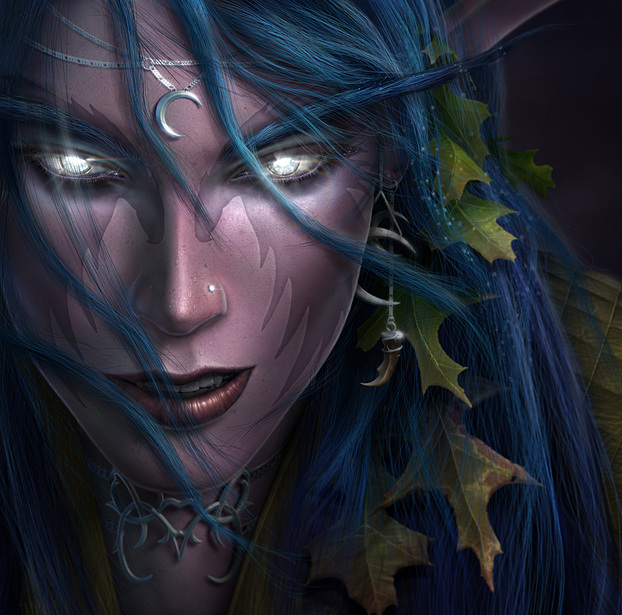
It continued into Suramar. Here, the Shal’dorei, night elves who have developed differently, are in focus. There was also contact with the Moon Guard, a legendary order of night elf mages who fought in the War of the Ancients.
Oh, and before I forget: The Tomb of Sargeras had an incredibly interesting number of night elf details. After all, the entire raid is built in an ancient Elune temple, which also had an additional dungeon.
Battle for Azeroth had the War of the Thorns, the destruction of Teldrassil, the loss and retaking of Darkshore, Tyrande’s ritual that turned her into the Night Warrior, the escape of the elves, and a whole lot of war actions during the war campaign alongside Shandris.
Shadowlands featured the Night Fae campaign, which could easily be called the “Night Elf campaign,” as it primarily focused on the search for Tyrande, the souls of the night elves, and even a confrontation with the moon goddess Elune herself.
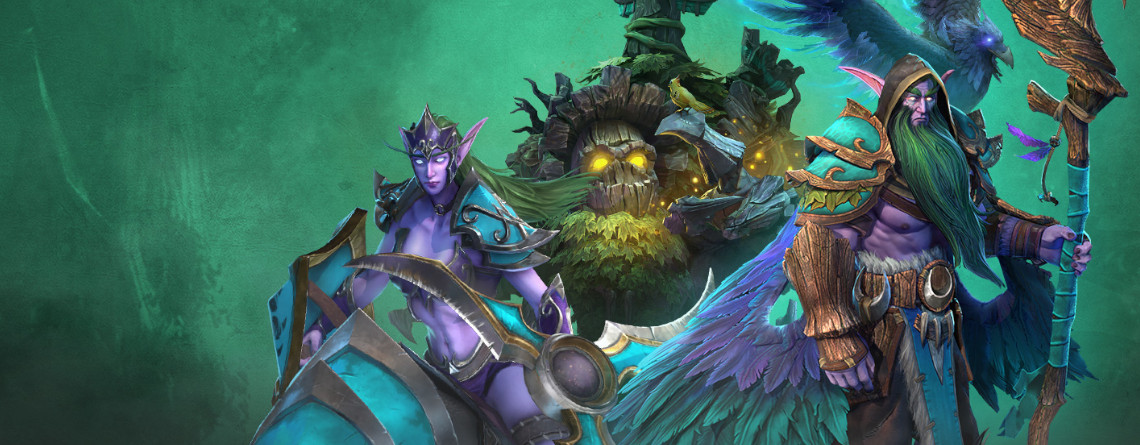
And all of this is just the night elf content that comes to my mind at first. I haven’t even mentioned new stories about the Shen’dralar and other splinter groups.
So, when night elf fans complain about a lack of story, I carefully point the finger at Goblins, Gnomes, Worgen, Tauren, and Blood Elves. Their stories have hardly moved since their introduction if a leader was taken down somewhere.
Absolutely every other race in World of Warcraft can only wish for so much “screen time” and such an important role in the story, whether in terms of the big cosmic threats or the small “daily quests.”
As for representation in pure “story time,” the night elves have it incredibly comfortable and should be glad that they will probably play a more significant role in Dragonflight as well.
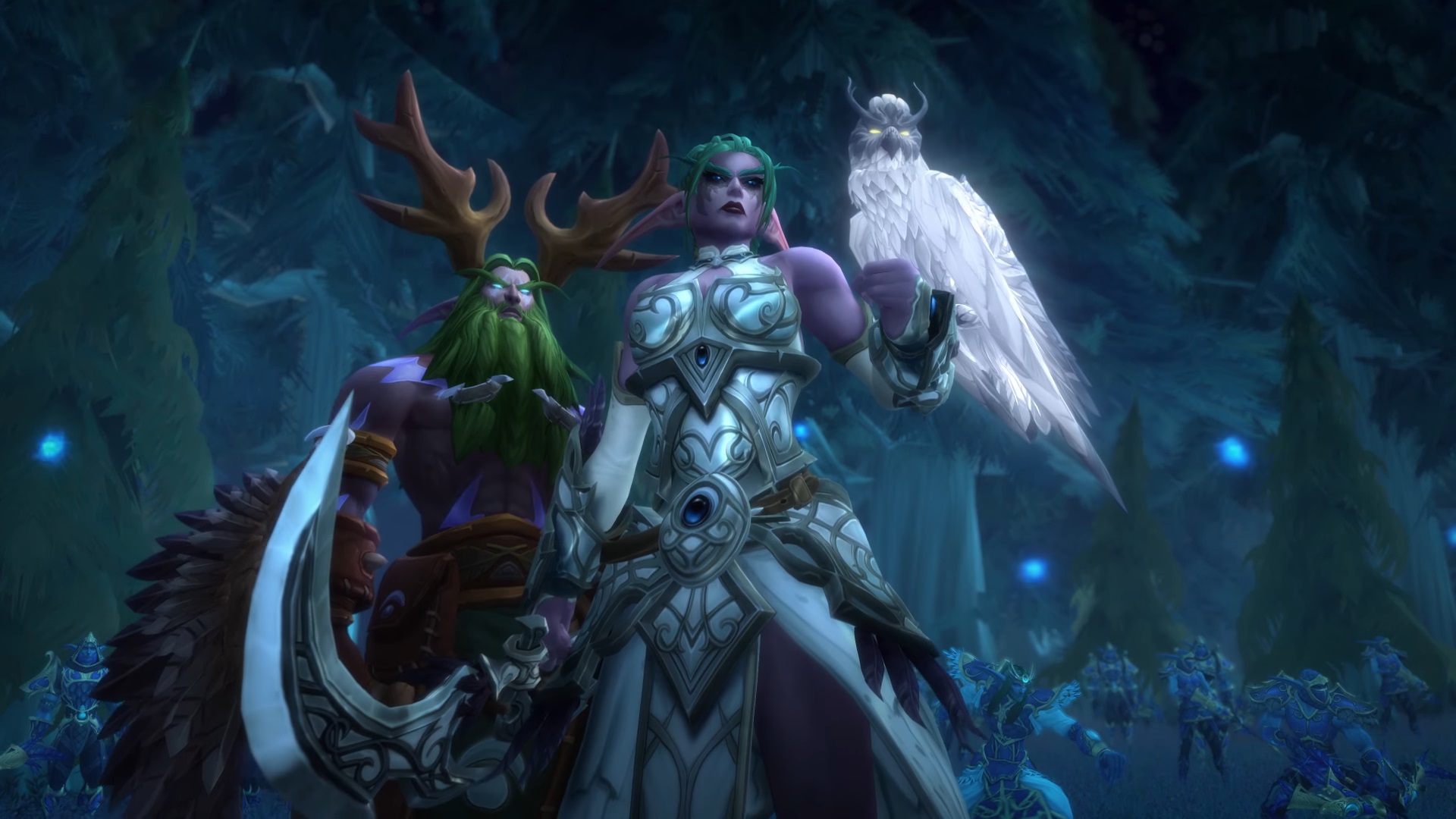
Night elves are the exception to the “Faction Tax”
This is not often discussed in the German-speaking world, but in relation to the Warcraft story, people often mock the “Faction Tax.” This refers to a concept where there are always balancing factors in the story. If something big happens with the Alliance, something similar must shortly happen with the Horde to balance things out.
- The Alliance loses Teldrassil and thus Darnassus as a capital? Then shortly thereafter, the Horde loses Undercity.
- The Horde loses Vol’jin as warchief in the battle against the Legion? Then almost simultaneously, King Varian Wrynn bites the dust on the Alliance side.
- Sylvanas exits as the leader of the Horde in the story? Poof, Anduin disappears from the Alliance as well.
The night elves currently hold a very interesting and fascinating special position here, in my opinion. The quasi-genocide caused by the burning of Teldrassil, in which about 90% of the night elves died, is the only major case where there is no counterpart and thus no “Faction Tax.”
Of course, they are the only race that had to suffer so massively—but that also presents a rather exciting special situation.
Once a huge race, now decimated and having to deal with many problems simultaneously. This is exciting for role players and should be for everyone looking forward to stories from quests or books. The possibilities that arise here for storytelling are fascinating and can bring more individual fates into focus.
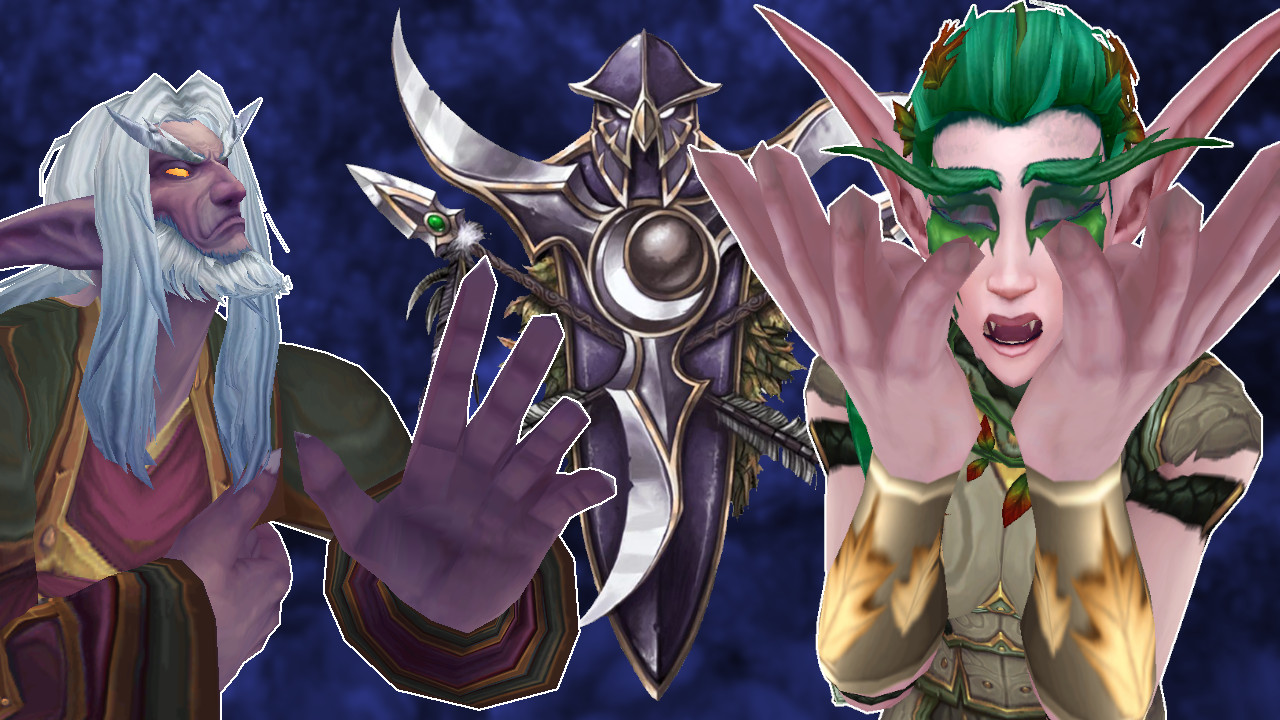
However, it’s not just the criticism of the “evil” story itself that is getting on my nerves, but another detail that has become increasingly irritating in recent years.
It’s the desire to change the story of a game, book, or movie that I always find extremely problematic.
That’s why I also think it’s terrible when people want to pressure the developers and story writers to steer the night elf narrative in a specific direction where everything runs perfectly immediately. Because that’s boring. After a major setback, there’s usually a struggle, an adjustment with sacrifices and changes, to create something new from it. Give the developers the freedom to tell it as they see fit.
I fully support pointing out obvious errors in the story and wanting to ensure that the lore remains logical and that obvious contradictions do not occur. A good example was the “Red Shirt Guy” who pointed out to Blizzard years ago that a certain dwarf was not dead, as the developers believed.
But when players try to take control of the exact direction of the story itself, I find that problematic. You don’t have to like every story decision, but in the end, it’s still a story whose content is created by artists.
Malfurions departure creates space for new stories
Finally, I want to end on a positive note. I love night elves. I regularly play one in role play because they have such an interesting and rich history. The night elves have always been a matriarchal society, where women held the power—be it during the reign of Queen Azshara or all the millennia thereafter under the priestesses of Elune. They have been a tribe resembling amazons, very connected to nature, and their faith and closeness to all the “mythical beings” such as dryads, ancients, and demigods has given them a unique mystique.
This is something I think has been somewhat diluted in recent years. The War of the Thorns with all its implications brought this “wildness” back to the forefront and reminded me why I always thought night elves were so cool.
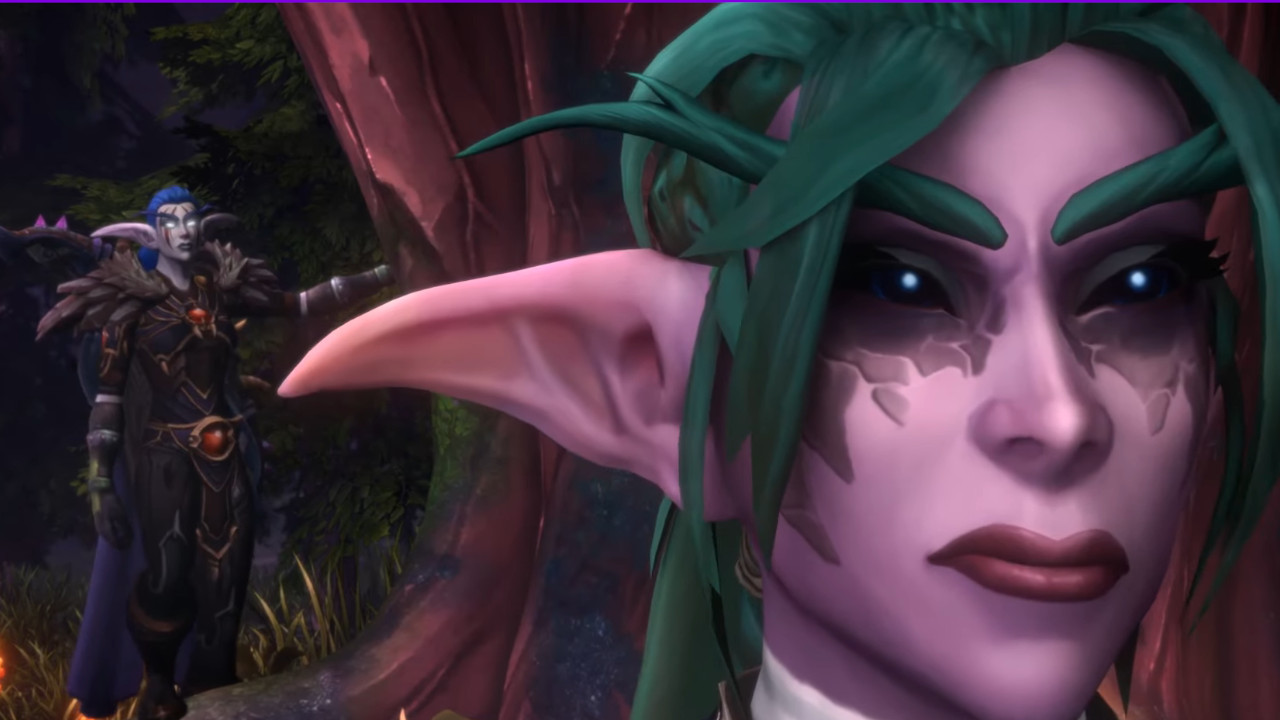
If Malfurion, as one of the most powerful personalities among the night elves, now disappears from the scene, then the Kaldorei will again be almost completely under Tyrande’s rule as High Priestess of Elune. This allows for much development back to the “old” night elves as we once knew them and simultaneously has the potential for internal conflicts with elves who have embraced the new lifestyle alongside different races or in dealing with magic.
Malfurion’s departure is, if it comes to pass, of course sad for all who wanted to see this relationship deepen at long last. Even after 10,000 years of separation, they still do not have a happy ending.
However, if Malfurion disappears and a new World Tree is planted, it has an incredible amount of potential—and one should simply look forward to that. Because if the night elves were to have a “happy ending” now, it is likely that their character development as a race would also come to an end.
And then the night elf fans would indeed have a reason to cry.

Your opinion is important to us!
Do you like the article? Then let us know!