

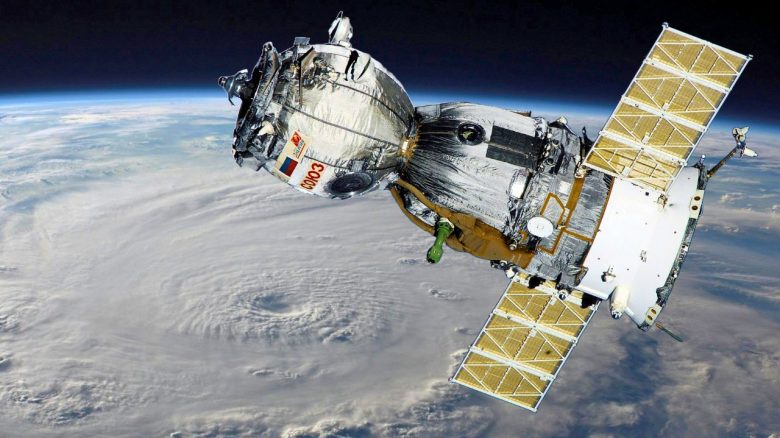
The latest research by NASA on the South Atlantic Anomaly (SAA) shows an expanding area of decreasing magnetic intensity that threatens all satellites and even the International Space Station.
What is this anomaly? Over South America and the South Atlantic, there is a large area with a weak magnetic field known as the South Atlantic Anomaly (SAA). This weakened magnetic field acts like a hole in the Earth’s natural shield and allows highly energetic solar particles to come dangerously close to Earth (via nasa.gov).
This weak field thus causes significant problems in space travel, which are now also concerning NASA.
The danger to space travel
Why is the field dangerous? Because the high-energy particles from space come closer to Earth above this area than in other places, they collide with satellites and even the ISS in Earth’s orbit. When satellites pass through the SAA, it can lead to malfunctions, data loss, or even permanent damage (via nasa.gov).
Even though astronauts on the ISS do not notice the particles due to good insulation, external equipment on the station’s hull can also be affected by disturbances and suffer data loss. During spacewalks, astronauts must pay attention to the SAA (via nasa.gov).
To prevent damage, satellite operators do not turn off critical systems when passing through the area to avoid damage.
Where does the anomaly come from? According to researchers, the anomaly occurs because complex movements of molten iron and nickel happen deep inside the Earth’s core. However, these movements in the core are only one factor; the tilt of the Earth’s axis and a massive rock formation deep beneath Africa also play a significant role.
The anomaly is growing
How is the anomaly changing? Since 2020, the anomaly has split into two separate areas, further increasing the problems for space travel. Additionally, the entire South Atlantic Anomaly is slowly moving northwest and is getting larger.
Meanwhile, NASA is trying to track the development of the magnetic field using satellite data and simulations of the Earth’s core. This is intended to protect space missions and satellites from accidentally entering one of the fields (via nasa.gov).
Although the South Atlantic Anomaly has developed into a focal point of scientific attention and concern and is also among NASA’s greatest worries, the space agency already rules out the worst:
According to scientists, such anomalies have occurred frequently in Earth’s history and are not a sign that a reversal of the Earth’s magnetic field is imminent (via sustainability-times.com). For them, the South Atlantic Anomaly is a fascinating phenomenon that poses challenges for space travel, but does not determine the fate of the Earth.


Although the field threatens Earth’s space travel, NASA has been steadily working to prevent damage. Significant problems could arise if the anomaly grows and becomes stronger.
As a result, all satellites over a country could simultaneously be disrupted. It is conceivable that systems like GPS could fail for an entire country. A 60-year-old hypothesis also discusses energy fields surrounding our Earth: NASA has confirmed a 60-year-old hypothesis that could completely change our perception of Earth

Your opinion is important to us!
Do you like the article? Then let us know!