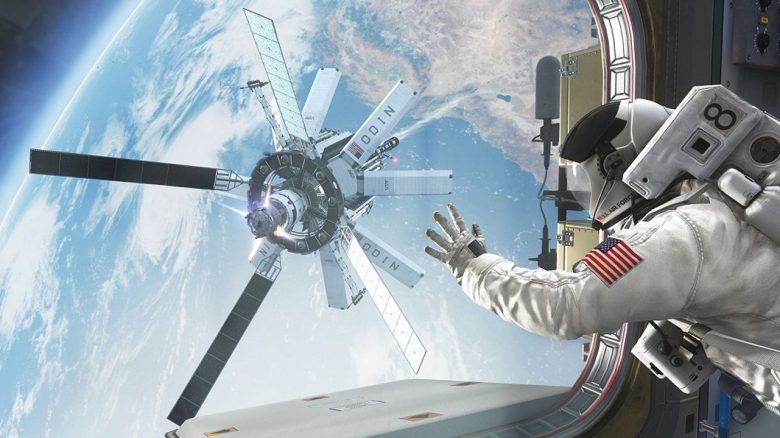
In recent months, an experiment of a special kind took place: After 30 days in space, a kind of modern “Noah’s Ark” returned to Earth to provide insights that should noticeably facilitate our stay in space.
What is this Noah’s Ark? The module “Bion-M No. 2” has earned this nickname because it carried 75 mice, more than 1,500 flies, as well as countless cell cultures, microorganisms, and plant seeds on board.
The “crew” launched into the sky with a Soyuz rocket, a Russian launch vehicle, on August 19, 2025, to orbit the Earth for 30 days. On September 19, a successful landing occurred, as space.com reports (via GameStar).
During the experiment, the mini-menagerie was exposed to high cosmic radiation at an altitude of 370 to 380 kilometers. After landing, scientists are to find out whether there are impacts on the motor activity of the flies or their nervous systems, for example.
Additionally, they want to investigate the influence of space flights and space factors on the biology of plants and microorganisms. Conducting experiments with animals for this purpose can certainly be viewed critically.
Everything for the club … uh … humanity
What is the goal of the experiment? In the long term, researchers at the Russian Academy of Sciences (short: IBMP) want to develop new technologies that improve human life support during flights under the combined effects of weightlessness and cosmic radiation. This also includes optimizing the radiation safety of new manned spacecraft.
The war in Ukraine can evoke worries and fears. You are not alone in this. If you feel uneasy due to the current situation or are plagued by dark thoughts: Help is available, among other sources, at the help hotline “Mutruf”. You can reach the association at 04191/27 4928 0.
Under the action 2Gether, an emergency relief and donation campaign has been initiated to benefit those in need in Ukraine. More information can be found on the blog at GamesWirtschaft.de or directly on Betterplace.org.
Additionally, colleagues at GameStar Plus spoke with Ukrainian game studios about how they are working amid the war.
However, through the experiment, one also hopes to gain insights into the general pattern of life in the universe. Additionally, the theory of so-called panspermia has been checked. This theory suggests that something from space landed on the planet, thereby making life on Earth possible.
To verify this, basalt rocks embedded with microbial strains were placed inside the capsule’s hull. If these microbes did not survive the tremendous forces during re-entry into the atmosphere, it would indicate that the panspermia theory might not hold water. However, a final result has not yet been shared regarding this.

If it were up to the Amazon chief, one could also simply send robots into space instead of humans. However, he estimates that this will probably not happen. More on his theories and assessments regarding this can be found here: Jeff Bezos expects that millions of people will live in space soon, even though they are not needed up there