

A sage of the MMORPG scene explains why it is clever when games kill their kings. As an example of what happens when you don’t, he mentions professional tennis or Amazon.

Raph Koster is regarded as one of the great MMORPG thinkers of the last 20 years. He is a designer of game systems and played a leading role in MMORPG milestones such as Ultima Online and Star Wars Galaxies.
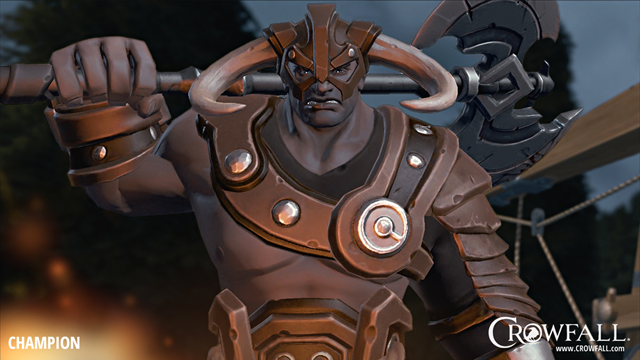
Currently, Koster advises the indie MMORPG Crowfall and provides them with feedback on their game systems.
Koster explains on his personal blog why MMORPGs must kill their kings and why game systems should not focus on stability but on decay and change.
Professional tennis shows the problems with “The strong always get stronger”
As evidence for his theory, Koster cites an article about professional tennis from Medium.
In professional tennis today, the champions are getting older because they can buy advantages and optimal conditions with previous prize money. Young, financially weak professionals cannot afford these advantages, therefore do not win tournaments and remain financially weak.
Thus, statistics show that the top 100 tennis players in the world today are much older than before.
For example, the top 100 male tennis players in the world:
- 1990 averaged 24.6 years old – only 6% of the top players were over 30
- 2017 they are 28.6 years old – 40% of the top players are over 30
This means: The strongest climb the success ladder to the top and then throw the ladder away so that no one can follow.

Because the prize money in tennis has consistently increased and older players have had time to gather winnings, the elite can buy huge advantages:
- A star like Roger Federer can afford a huge team of coaches to optimally prepare for each match.
- Novak Djokovic sleeps in a hypobaric chamber.
- Andy Murray treats himself to a personal diet where he eats 50 different types of sushi daily.
All of this young professionals cannot afford. It becomes increasingly difficult for them to win tournaments and break into the top 100 in the world, according to Medium.
MMORPGs must regularly destroy their kings
According to Koster, MMORPG systems have the same problems: A system that rewards the strong leads to the strong getting stronger. This makes it more difficult for everyone else to catch up with them. The strong raise the “price” that newcomers must pay to enter the elite circle.
If an MMORPG system continues to give advantages to the best PvP players, they will only get stronger and it will become increasingly difficult to beat or catch up with them.
No one can catch up to the strongest. The typical player will sink below average, driven up by the super-strong. This leads to stagnation and regression. At the top, a cartel emerges, perhaps even a monopoly. The system dies.
This applies not only to tennis stars or PvP systems in MMORPGs. According to Koster, it applies also to Amazon or supermarkets. It applies to Facebook or MMORPGs themselves: The largest MMORPGs have the most revenue and can therefore grow the strongest and expand their dominance.
If the strong get stronger, they eliminate the competition and the system dies.
Break it, or everything will break
According to Koster, every system perishes that does not regularly destroy its kings.
Koster says: You need a certain amount of inequality; this leads to teams and cities, to competition and cohesion. But too much inequality leads to stagnation and centralism, to the loss of freedom.
A game designer must constantly learn: Build your systems so they ferment and bubble; do not rely on stability and the inevitable.
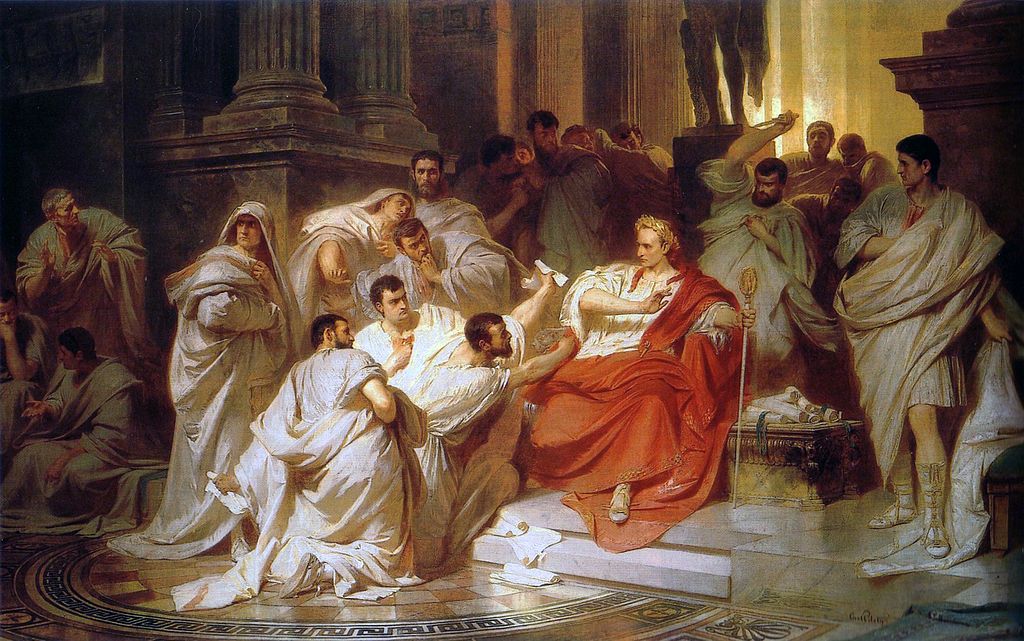
The title image is “The Death of Caesar” by Carl Theodor von Piloty (1865).
Koster’s ideas from the article can be found in the MMORPG Crowfall. Each round is meant to start anew – the system is intended to guarantee a constant fresh start. Because “the hunger” erases the game worlds after a certain time. Decay plays a constant role:

Your opinion is important to us!
Do you like the article? Then let us know!