

MMO, MMORPG, what is the difference? Do the terms not refer to the same genre? Today, it’s not that simple anymore, as the terms have stretched more and more in recent years. We would like to bring you closer to what the genre terms MMO and MMORPG mean.
The terms in full:
- MMO stands for “Massively Multiplayer Online” – the “Games” at the end is omitted. However, “massive multiplayer online games” are actually meant.
- MMORPG stands for “Massively Multiplayer Online Roleplaying Game” – a massive multiplayer online role-playing game.
The word “Massively” is interpreted differently. For some, “Massively” means that many players are visible on screen at the same time, often more than 20 or even 50 players are considered “massive”. The notion that it must be thousands like in EVE Online or hundreds in WoW back then comes more from certain player groups themselves. This discussion is ongoing.
However, when looking at interviews with former genre giants, it was not decisive how many were on screen. Rather, in the 90s, the goal was to stand out from single-player and simple multiplayer games. Here, social features, a persistent world, and evolving characters were in the foreground, especially interconnected on a larger server.
Raph Koster, one of the fathers of MMORPGs and creator of Star Wars Galaxies, continually emphasized that persistence and the focus on social aspects are the pillars of an MMO (content between players, continuous development, a shared and malleable world, and player-dependent economy allowing players to exert influence, guilds, etc.): “… to me, the magic of MMOs happens with other people”. He broadened the term further, stating that Pokémon GO is an MMO.
What does Wikipedia say? In the definition, the social features are emphasized in connection with the RPG elements. The number of players on a screen is not addressed; instead, the server capacity and a shared environment in which “thousands of players can inhabit a persistent virtual world simultaneously” are highlighted.
In summary, Wikipedia states: “Content-wise, an MMORPG is comparable to other computer role-playing games, but the emphasis is more on the interaction between players and player groups (guilds).” This definition resembles those of the genre’s forefathers the most.
Today, many things are referred to as MMOs. But what is correct? Therefore, we want to explain where the term comes from and how it has developed.
How do “MMO” and “MMORPG” differ?
What is an MMO? MMO means “Massively Multiplayer Online games”. It is fundamentally an umbrella term that does not define the genre any further.
Basically, all online games fall under this term that have a large player population and where you can encounter large numbers of other players on the server OR in the game world (Massively).
Companies decide for marketing reasons whether to call their game an MMO (like in World of Tanks) or whether they do not want to label it as such (for instance, Destiny for a long time). The studios do not follow any real rules – they take the label that best suits their business interests and target audiences.
Are there more MMO terms? Often, MMO is now also counted as an umbrella term for the different sub-genres like MMORPG, MMOFPS, MMO shooter, or MMORTS.
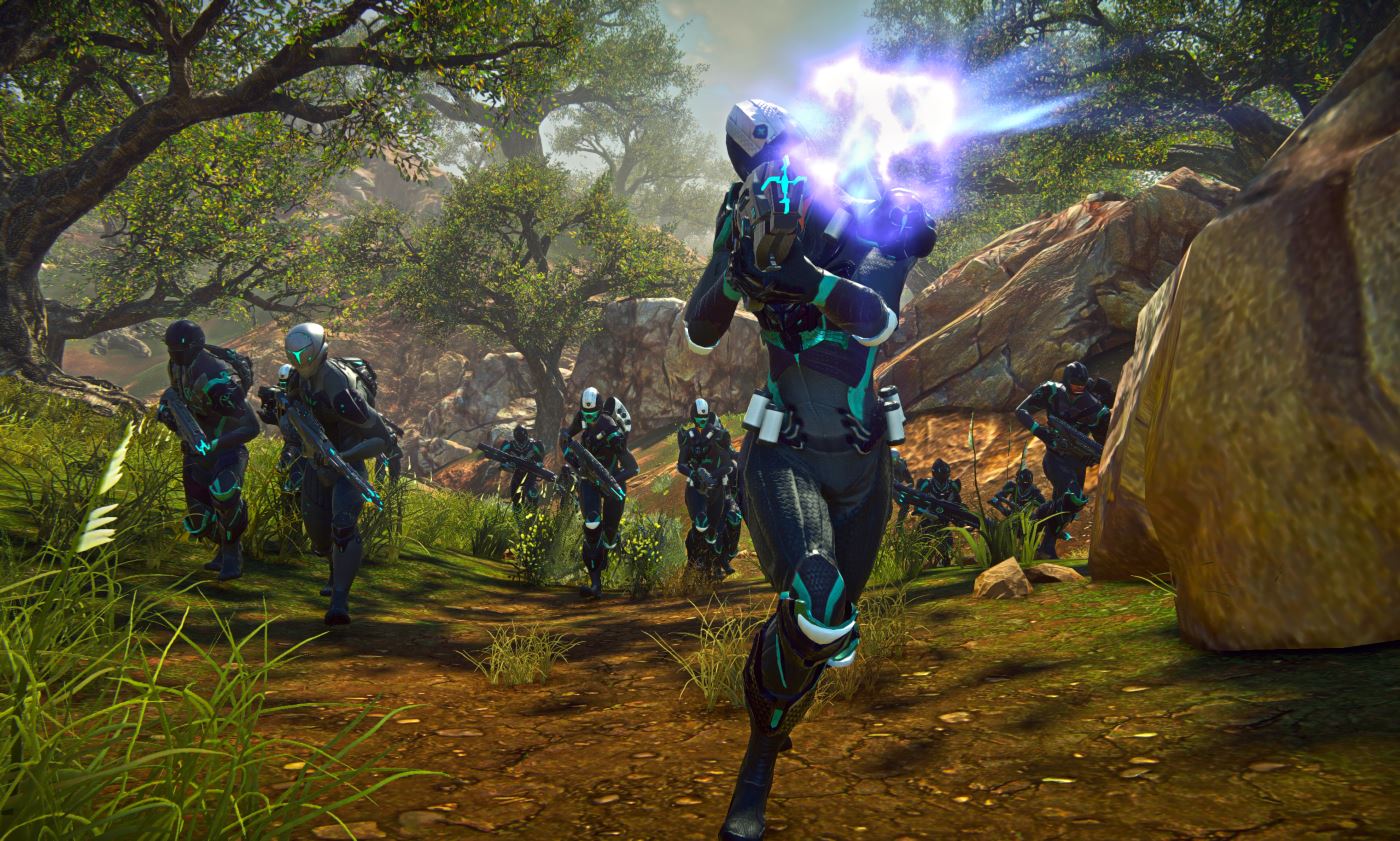
Even shooters can be “Massively,” as shown by the MMO-FPS Planetside 2. Strategy games in the “Massively” area like Foxhole or Conqueror’s Blade allow you to engage in MMORTS against many opponents in virtual warfare. Or recently, there were also some games, including a Pagan Online, attempting to be a Hack&Slash MMO – an MMO in the style of Diablo.
Richard Garriott explained in an interview: “In my opinion, an FPS can be an MMO if it involves placing all players into a single large world – as opposed to distributing players across many small game sessions. Depending on whether character progression grows and persists between sessions, my description can either remain to “MMOFPS” or become an action-MMORPG.”
If a large number of players are active together simultaneously in a game, then the term “MMO” is appropriate, regardless of the genre.
What is an MMORPG? MMORPGs refer to a more specific genre. They are online role-playing games in which you encounter large numbers of other players in their persistent (permanent) worlds.
RPG elements like quests, player progression, item collection, crafting, housing, and so on are at the forefront.
Generally, it has always been important for an MMORPG that you do more than just fight in them. Additionally, items and character development are expected.
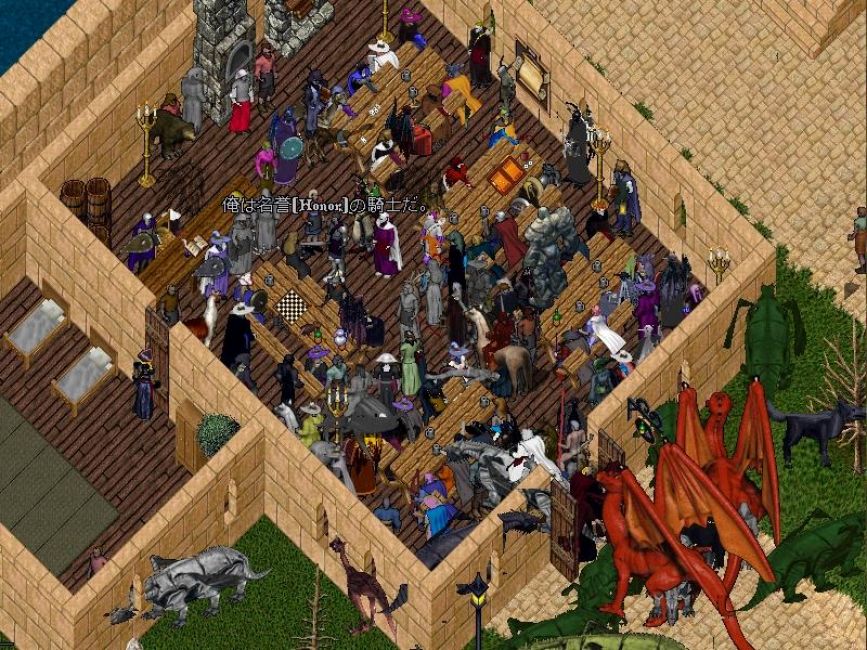
Where do the terms come from? Richard Garriott, creator of the Ultima series, explained that the term “MMO” came up during the development of Ultima Online. The game from 1997 also coined the term “MMORPG”, as it was a role-playing game in which thousands of players could play simultaneously and together.
The MMO term is changing
Therefore, MMO is not the same as MMO today: Even though it is generally still true that the term “MMO” stands as an umbrella term for “Massively Multiplayer” games, the term MMO has greatly evolved and has broadened significantly.
Online gaming expert Raph Koster, who also significantly worked on Ultima Online, now sees it this way: “MMOs are a platform for me, where we offer games. […] MMOs are a platform for me. They are a place that offers entertainment, where socializing and playing together happen”.
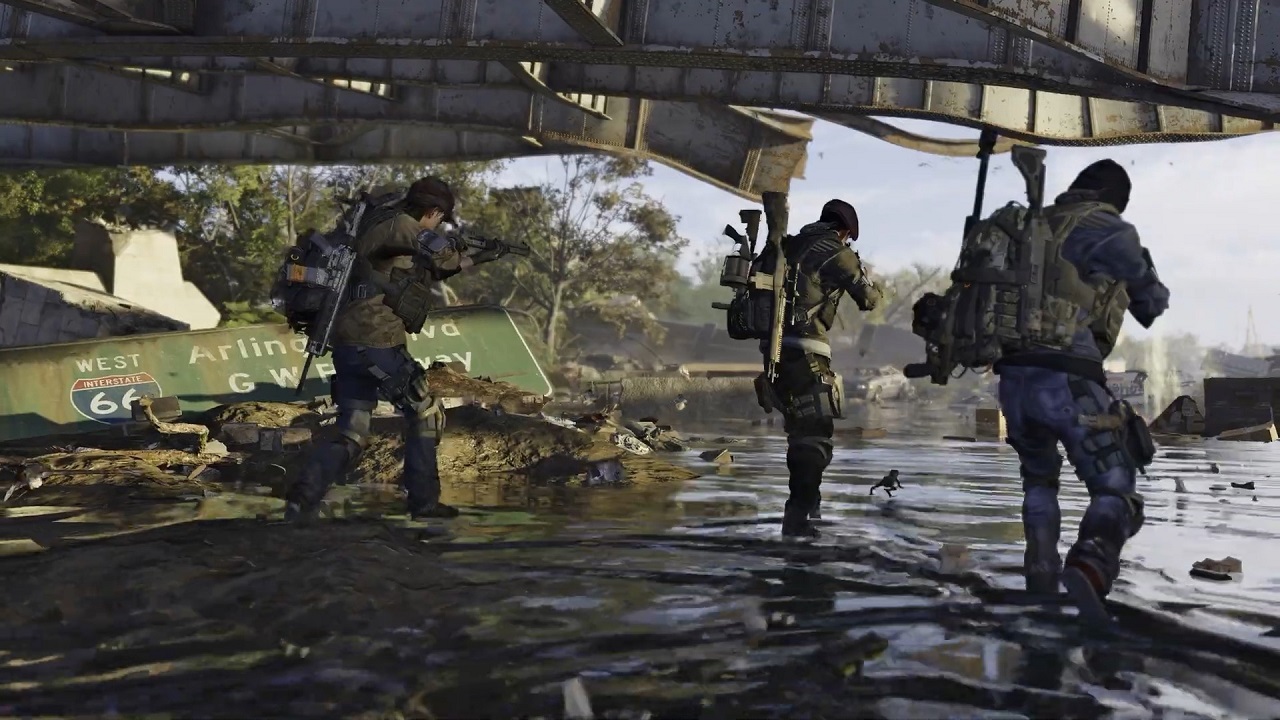
It is becoming increasingly noticeable that games are labeled as “MMO” by players, which are not fundamentally “Massively” – or depending on how one defines “Massively”. A good example here is Ubisoft’s The Division.
In this title, you are not in a huge persistent world together with thousands of players who are jumping around you. You team up with friends and explore the landscape as a team.
Nevertheless, The Division is often referred to as an “MMO” or “MMO-Shooter” because it possesses many MMO elements:
- For example, group play
- constant expansions
- creating and continuously developing a character through items and skills
- gameplay adjustments
- the ability to interact socially with other players
- and therefore larger servers connecting many players
- social features like guilds, meeting places, and extensive group content that promotes the formation of established communities
Today, much is an “MMO”
What is an MMO today? The idea that “Massively” means there must be many players on one screen is becoming increasingly outdated. As seen in The Division or Destiny, games that are very popular today are those that are played online, but do not display masses of other players in the game world itself.
If a game like Destiny wanted to have 50 players on the screen at the same time, players would have to accept immense graphics and performance losses. That hasn’t been risked for a long time.
This trend began with World of Warcraft when instances for smaller groups were introduced. Previously, in MMORPGs, crowds of players gathered around bosses to fight them. In WoW, this was intended for small, manageable groups.

The term MMO has evolved over time and now encompasses a much broader spectrum of online games. We at MeinMMO use the term for multiplayer online games that are continuously developed, have large communities, and allow you to connect with thousands of players, but do not necessarily play with all of them at the same time. Games-as-a-Service titles play a significant role here.
A game like Destiny, where you can only play with a maximum of 6 people, confidently calls itself an “Action-MMO”.
And how about MMORPGs? “MMORPG” on the other hand is a much more traditional and “purist” term. It is already limited by the “RPG” to role-playing games.
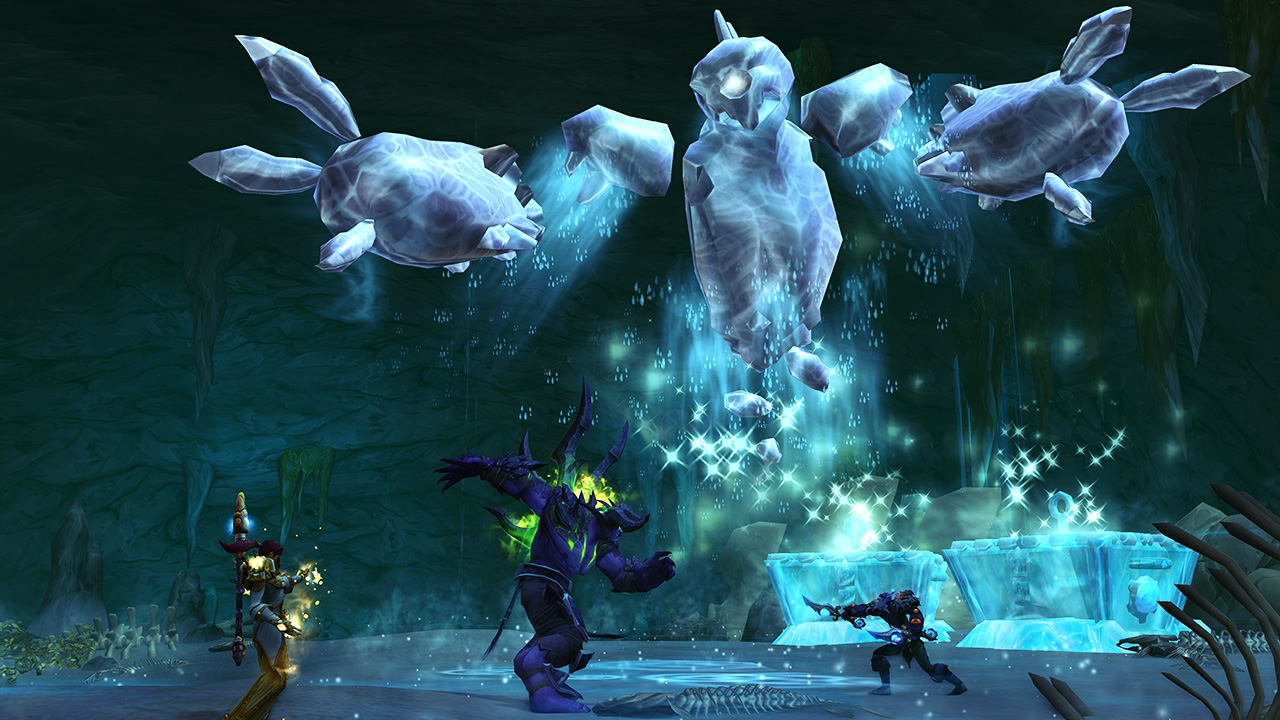
When people think of an MMORPG, they usually think immediately of character development, crafting, fighting monsters, mastering dungeons and raids together in groups, and often completing quests (unless it’s a sandbox game). And all this in a huge, persistent world where you encounter many other players.
For MMORPG purists, the new “Mobile MMORPGs” are an attack on their genre that they want to fight back against.
In general, one can say that,
- that “MMO” now describes a broad spectrum of games that are all played online, where the “Massively” is not as important as the Games-as-a-Service principle, i.e., the continuous development of the title.
- In contrast, “MMORPG” is a stricter term that characterizes online role-playing games with a large population of players per server.
What does this mean for “MMOs” and “MMORPGs”? Time and again, one reads that MMORPGs are dying. However, when considering how the term “MMO” has changed over time, one realizes that the genre has also transformed. It is branching out, broadening, and offering new forms.
MMORPGs are not dead; they are evolving and changing. MMORPGs are becoming more diverse, which opens up the entire genre to a broader audience.

Your opinion is important to us!
Do you like the article? Then let us know!