

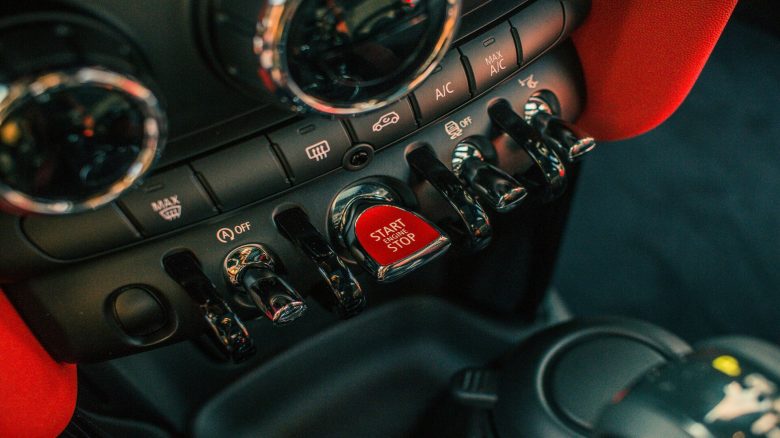
Mercedes, like most car manufacturers, has equipped its cockpits with huge screens in recent years. But now the software chief says: Physical buttons are simply better in many cases.
What exactly has Mercedes presented? Mercedes recently unveiled models like the new GLC that feature the MBUX Hyperscreen in the cockpit – an almost 40-inch wide area that will seemingly display everything digitally (via Xataka).
Originally, almost all physical control buttons (especially on the steering wheel) were eliminated – everything was supposed to be controlled via touch. But Magnus Östberg, Mercedes’ software chief, now admits in an interview with the industry magazine Autocar that physical buttons might indeed be better (via Autocar).
Why are buttons suddenly back in style? In the interview, the lead software expert from Mercedes talks about a data-based analysis of the usage behavior of drivers of new Mercedes models. This leads to certain insights:
- Visibility & Operation: A physical button or dial is often easier to feel without taking your eyes off the road. This increases safety & operational comfort.
- Cost-benefit analysis: According to Östberg, buttons (especially on the steering wheel) are a “more cost-effective and simpler” way to control important functions without constantly going through touchscreens.
- Market differences: Mercedes plans that not all models or regions will get the same number of buttons back. Larger vehicles like SUVs will provide more space and will have more of such physical controls. Furthermore, regional differences are being considered: In some Asian markets, touchscreens and voice control are still in demand, while the European market increasingly prefers physical buttons.
And the competition?
What about other manufacturers? Cockpits similar to Tesla’s with nearly nothing but screens are not completely off the table for Mercedes. Rather, there should be a more balanced combination of various controls.
An interesting counter-movement has been seen in recent years with Mazda, as Xataka recently reported. Mazda has long shown a sort of “resistance” to this display development – small screens, many buttons, and classic operation.
However, Mazda has also changed: The Mazda CX-5 2025, for example, shifts important functions to the large, central touchscreen display. This means that the Japanese manufacturer is also heading in a direction that Mercedes is currently reversing.

What else is to come? Mercedes is considering a return to classic controls, as well as incorporating more artificial intelligence into its cars, primarily in the area of voice commands.
This is an important feature for buyers in China – the world’s largest automotive market, where Mercedes wants to expand its presence again. However, Östberg stated that the European market will also be equipped with this. The data suggests that the use of voice control in the CLA among Mercedes owners has tripled (via Autocar).



Whether touchscreen or physical button – in the end, what matters is that the technology makes everyday life easier and traffic safer for everyone. Those who prefer to be on two or even three wheels while thinking about the climate should take a closer look at the latest find of French small vehicles: With an electric tricycle, you can reach speeds of up to 120 km/h with pedals

Your opinion is important to us!
Do you like the article? Then let us know!