

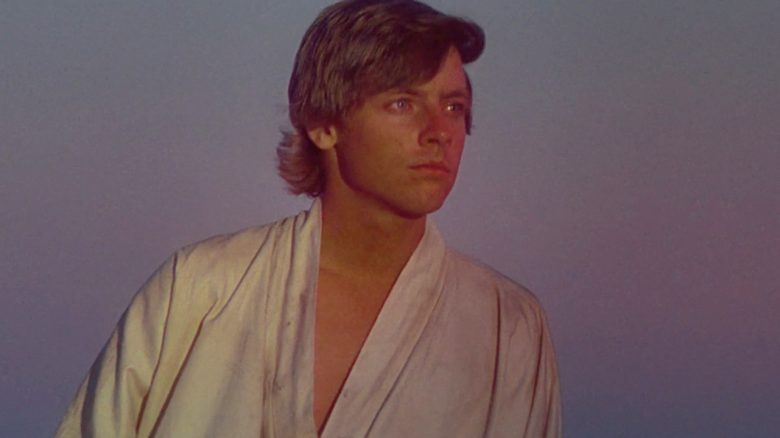
The original trilogy of Star Wars could not yet use significant CGI to realize many effects of the futuristic story. Instead, one had to use tricks in the films, as was the case with Luke’s hovering vehicle.
Which vehicle is it? In 1977, the first Star Wars film was released. Even then, not only space was shown, but also futuristic weapons, like the lightsaber or vehicles that could hover.
Since CGI could not be used on a large scale at that time, one had to try to represent futuristic technology with tricks and everyday objects. For the hovering speeders, George Lucas only needed mirrors and Vaseline.
2 simple but effective tricks
How were the hovering vehicles created? Luke’s speeder is actually a modified car with 3 wheels, which one could even see if George Lucas hadn’t used mirrors.
Mirrors were placed on the sides of the vehicle, reflecting the ground, making the tires no longer visible. For wide camera angles, this effect was enough to deceive the viewer into believing that the car was hovering (Source: vidaextra.com).
For closer camera shots, one had to create an effect to make it look like the vehicle was being held up by some form of energy. For this, George Lucas used Vaseline. He smeared it on the lens of the camera to create a blurred effect under the speeder.
You can see how a scene with the speeder and Luke was filmed here:
One built a rotating construct and filmed from several perspectives to create the effect that Luke was actually driving straight ahead.

This implementation shows that in the past, one had to become significantly more creative to implement various ideas and effects. The Star Wars series is full of such stories, even though many effects were digitally renewed in later versions. Also for the lightsabers, one had to use tricks: The old lightsabers from Star Wars have something in common with street signs, and the trick is genius

Your opinion is important to us!
Do you like the article? Then let us know!