

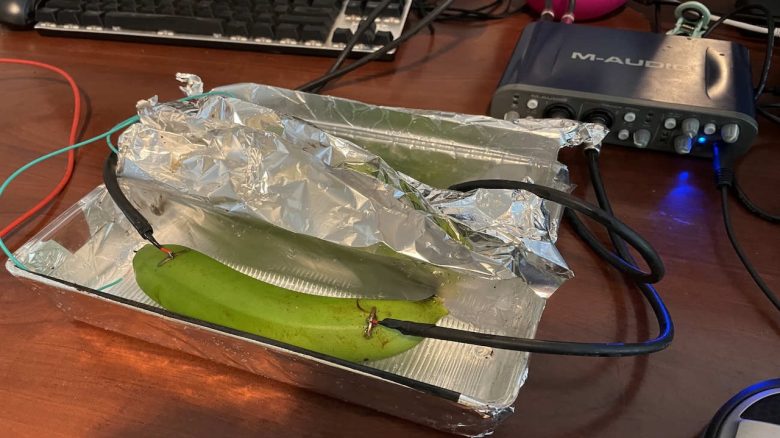
In a somewhat unusual audio blind test by a user, even experienced HiFi fans could not tell whether music was transmitted through copper wire, a banana, or wet mud.
How did the blind test proceed? A user in the HiFi forum DIYAudio wanted to know for sure – and set up a testing arrangement that was both simple and unusual. Instead of sending an audio signal solely through ordinary copper wire and comparing the quality differences, he also transmitted it through a banana and wet mud (via TomsHardware).
Pano, the user behind the experiment setup, asked other forum members to listen to several sound examples – each in four different sound versions through various media: one directly from the original CD file, the other three traveled once through 180 centimeters of professional audio copper cable, through 20 centimeters of wet mud, through 120 centimeters of old microphone cable soldered to US cent coins, and over a 13-centimeter long “banana plug” (DIYAudio).
The first feedback showed: For most listeners, it was difficult to impossible to correctly assign the individual audio tracks to their respective wiring setups.
Pano drew his inspiration for the experimental setup according to TomsHardware from a documentary in which the US Army laid a single telegraph line in the Philippines and tested various materials for it.
Banana as Replacement Cable
How did the experiment turn out? After Pano waited a month for the submission of the test results, the following results were compiled:
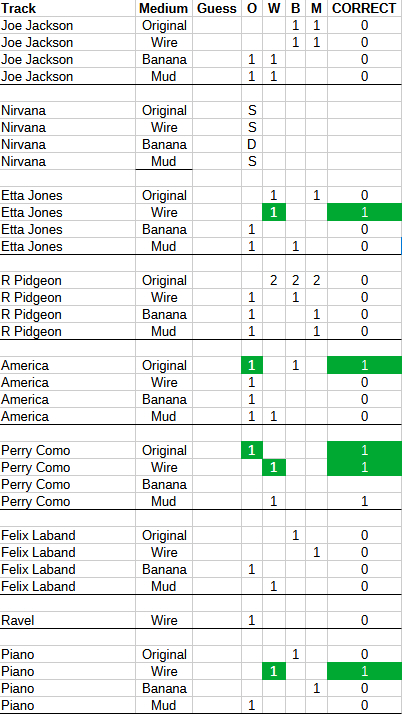
As can be seen in the illustration, out of a total of 43 attempts, only six responses were correct. In a summary table, it became apparent that only 13.95 percent of the assignments were correct.
Additionally, using the binomial distribution, it was calculated how likely such a result would be by mere guessing. The probability of randomly arriving at the same number of or fewer correct answers was 6.12 percent. This value lies just above the commonly used statistical significance threshold of 5 percent (over 5% = not significant; hence no evidence of actual auditory differences) (via PCGamesHardware).
The result therefore does not provide statistically reliable evidence that differences were reliably heard. In other words: Even if the appropriate cable is missing, the banana from the fruit bowl could apparently also serve as a signal path in an emergency – at least technically.

Such experiments are not completely new. Similar attempts were made as early as the 2010s. Back then, various objects such as fruit, vegetables, and even drinks were tested as audio carriers. One of them comes from the musician and producer J.Views, who played songs using fruit.
In competitive gaming, a suitable sound quality can quickly determine success or failure. Whether using a banana as a sound carrier for your own headphones is advisable must be decided by each individual. But there are also other extremes: A manufacturer now sells in-ears that cost more than a powerful gaming PC

Your opinion is important to us!
Do you like the article? Then let us know!