
MyMMO demon has been a bit overworked in the last few days. Blame it on a rogue-like that puts other games to shame.
Around Christmas, it is a tradition in my circle of friends to gift small games on Steam or other platforms. Simply as a little gesture or to say to the other person: “I thought this game was great, and I expect you to play it too, so we can nerd out about it together.” You know, a bit of gentle pressure to ensure friends and acquaintances actually play good games instead of the junk they usually waste their time on.
So that I don’t only chase old gods in dating sims, I was gifted “Knock on the Coffin Lid.” At first, I was a bit skeptical, but I got into it – and I’ve put more time into it over the past few weeks than in almost any other game of this kind before.
What kind of game is this? Knock on the Coffin Lid is a tactical rogue-like and also a card game. The abilities you can use are determined by the drawn cards from the deck. When the deck is depleted, the cards are shuffled back into the draw pile. Since you have limited resources, you must always think about which cards to play and in what order – unused cards leave your hand at the end of the round.
You start the journey every time with the mysterious Mortis, who resurrects you after death and has turned back time. From there, you choose a path filled with various events. There are classic battles against enemies, but also events where you can make decisions. Do you explore the dark cave? Do you loot the corpse of the murdered scout? Do you help the goblins kill an ogre? Do you save the village from the demons or help the demons?
Depending on the decisions you make, there are different rewards and consequences. Sometimes you get debuffs, other times you lose cards or gain new ones, sometimes you get a temporary companion or a fancy weapon.
Those who plan, win – those who do not plan, start over
How do the battles play out? The heart of the game is, of course, the combat system, which most people are already familiar with from games like “Slay the Spire” or “Rogue Lords”. You see the enemies’ intentions and know exactly in advance which spells or effects they will cast, how much damage they will cause, and what buff effects they have.
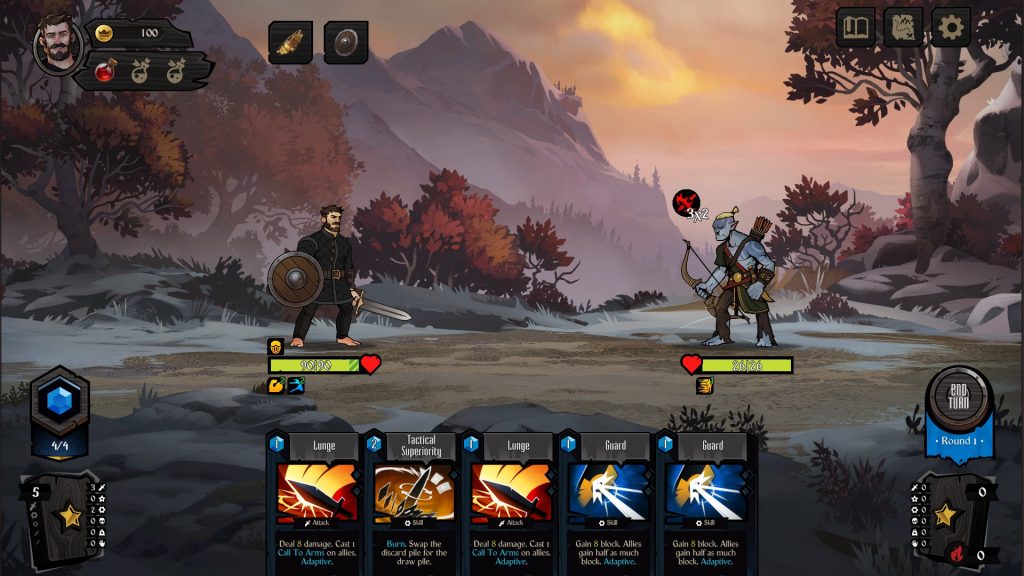
This turns it into a puzzle game: Can I manage to defeat the enemy before their turn so they can’t deal damage? Or do I build up enough shield energy to just absorb the damage? The opponent attacks 4 times in a row with weak attacks – can I possibly cast “Thorns” on myself so they suffer 4 damage and are defeated during their attack?
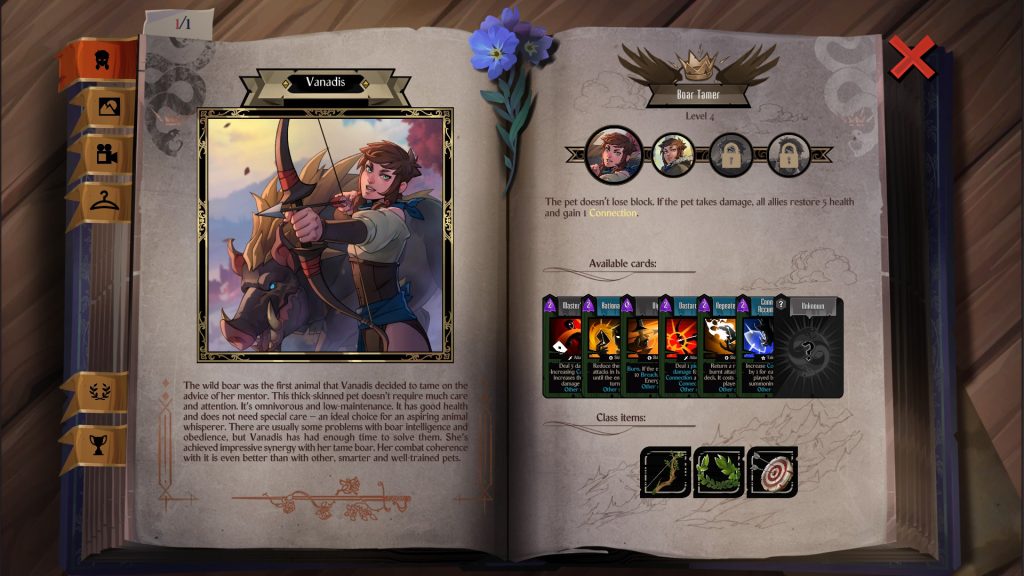
The tactical variety here is quite extensive and is only enhanced by the fact that there are 3 characters, each with 4 subclasses to choose from. Yet even with the same subclass, hardly any run will be alike, as the character can be equipped (weapons, jewelry, armor, potions, etc.) and benefit from set bonuses.
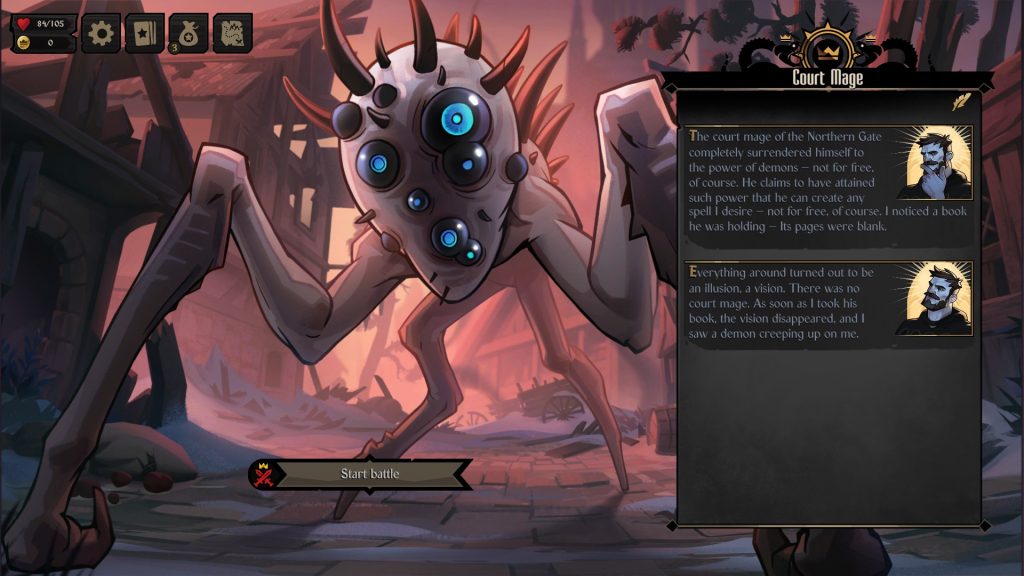
And yes, you should really take the time to read the buffs and debuffs carefully. I have sent myself to the afterlife several times by firing off a whole barrage while the opponent had a buff that read something like: For each hit taken in this turn, the number of attacks performed increases by 1 in the next round.
This learning from mistakes is, however, an integral part of the gameplay experience – and then you simply start over.
What makes the game special? The story and the variety of options. Because as Mortis tells his current story, you receive more and more information.
Two small examples:
- At the watchtower of a city, you must decide: Do you want to attack the demonic guard or pay the toll of 500 gold? If you pay the gold, Mortis later says: “Oh, you could have just bargained to lower the price.” That becomes an option available in the next run.
- The dwarven scouts: An elite scouting unit full of (drunken) dwarves attacks my knight and seems somehow upset and angry for no clear reason. Only when we take a completely different path in a future run do we find their commander, with whom we can befriend. In subsequent runs, we can then appease the dwarves by telling them about their commander – thus avoiding the battle.
These are just small details, but Knock on the Coffin Lid is full of them. It is worth taking a different path each time and making new decisions in the events to learn more of the story and unlock more options.
Where can I get the game? Knock on the Coffin Lid is available on Steam for around €21. Given my playtime, this rogue-like is definitely worth the price. If that’s too high, you can always wait for a sale when the game will surely be offered at a discount.
Who is the game suitable for? Basically, anyone who has a soft spot for tactical rogue-likes. Those who enjoyed “Slay the Spire” will hardly need to adapt – as the game largely uses the same terminology but offers much more story and thus a greater motivation to set out one more time to fulfill Mortis’s wishes.
And if I eventually lose interest, I’ll just go back to my goat goddess …