
Idle games are often not taken seriously. However, this is completely unjustified, says MeinMMO author Linda Baumgartl. The genre fascinates her like few others and even helps her learn.
It all started as a joke. In 2002, developer Eric Fredricksen released a game called Progress Quest, which is now considered the first idle game. The inspiration came from classic MMORPGs, especially the game EverQuest. In MMORPGs, players are constantly chasing better character stats, better loot, and higher numbers. And this is true even when the quests are rather generic and the combat system is automated.
Fredricksen wanted to take this to the extreme.
In his game, you could do nothing but create a character. After that, the game played entirely by itself. In a simple text menu, you could watch as the character leveled up, completed quests, and collected items. Nothing more.
But as it had to happen: People actually found enjoyment in this game, which was supposed to be just a parody. In the following years, more and more such automated games appeared, often with a satirical character as well. Eventually, there was even a parody of the parody, Anti-Idle, where the goal was simply to do something.
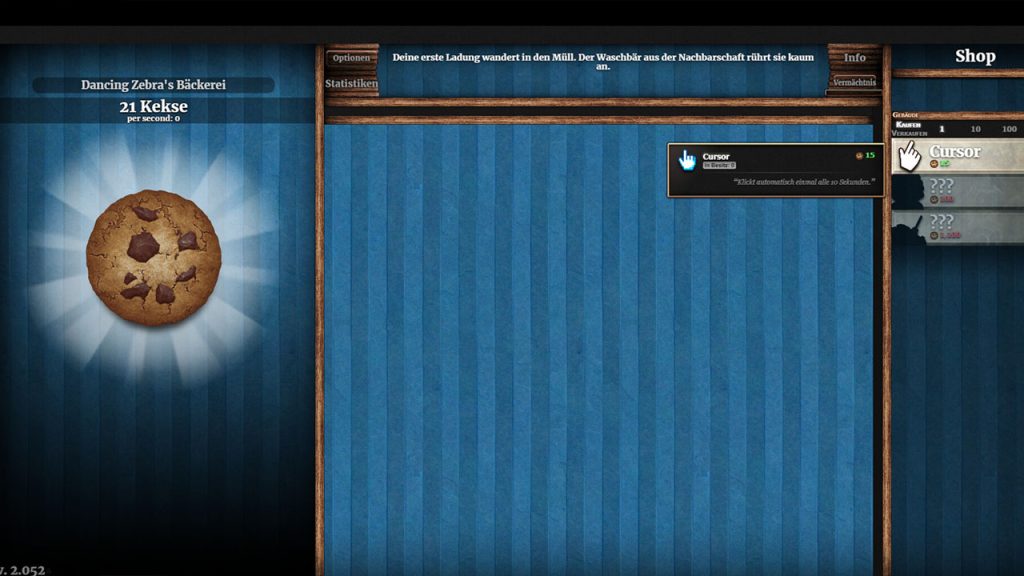
The genre broke through in 2013 with Cookie Clicker, which remains one of the most successful idle games on the market to this day.
Games without Playing – What’s that?
Before we take a look at what is interesting about idle games, we should first clarify what they actually are. Idle games (literally “idle games”), also known as clicker games, are roughly games in which progress occurs without requiring player interaction. Typical features include:
- Automatic Progress: The game automatically generates resources, often even when the game is closed.
- Simple Mechanics: Player interaction is very simple and often limited to mindless clicking.
- Upgrades: Players can purchase upgrades to generate more resources and advance in the game.
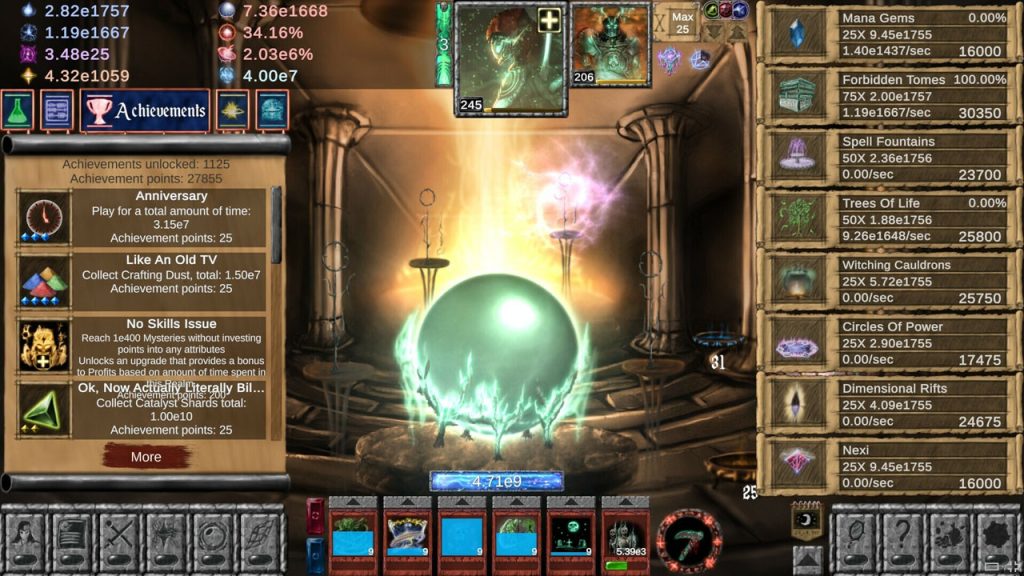
- Big Numbers: Typically, there are also enormously high numbers that skyrocket exponentially.
Even if players can fundamentally interact with the game, the essence of idle games lies in letting them run in the background. The “gameplay” basically consists of waiting.
But why would someone play a game that you play by not playing? That sounds a bit contradictory. Personally, however, I find this aspect particularly interesting. Other games have the possibility to impress with things like graphics, characters, story, action-packed gameplay, or large game worlds. In idle games, none of that is usually present. They are the essence of video games, the smallest common denominator left when everything else is stripped away. A good idle game manages to be engaging without much frills. With simple mechanics that are still fun.
But why does this even work? Simply put: Because people love rewards. As soon as we receive a reward in a game, our brain releases dopamine, we feel good, and we are motivated to keep playing. Idle games trigger our reward system almost permanently and without risk. Because unlike in many other games, there are few chances to fail. Progress continues automatically.
One might think that idle games are primarily played by “casual gamers” who otherwise have little to do with gaming. However, the opposite is actually true (via quanticfoundry.com). Especially people who already play a lot seem to have an affinity for idle and clicker games. We simply love watching numbers grow. More stats, more resources, more progress! For the dopamine kick, our brain doesn’t even care if we earned the reward through active play or if it was simply presented to us.
Perfect for Gamers with Little Time
No matter if it’s due to school, training, studies, work, or household – we all probably know the feeling of simply not having enough time to play. This is where I see the greatest advantage of idle games. They are fun without taking up too much time.
Of course, you can open many other games, play for five minutes, and then close them again. But usually, you don’t get very far and quickly become frustrated. Idle games, on the other hand, are designed to be played in short bursts. I don’t have to grind for days to achieve the next big success. I can simply wait, attend to my duties, and then be pleased to buy a big new upgrade the next time I log in.
Please don’t get me wrong. I love playing actively. And I love grindy games. But I still appreciate having an alternative when I can’t or don’t want to spend too much time. With their flexibility, they are also perfect as a mobile game for on-the-go. Checking my progress on the train, buying a few upgrades, and closing the app at the next stop – no problem at all.
Many idle games today also offer much more content than one might expect. Not infrequently, I thought I had completely figured out an idler, only to suddenly be presented with a new level that turned everything upside down. We also don’t have to settle for passively observing a few bars today. There are games with level trees, character classes, numerous item builds, quests, and challenges. Exploring, managing, and unlocking all of this can keep you actively engaged for quite some time. Only the longer grinding happens automatically.
Idle Games Even Help Me Learn
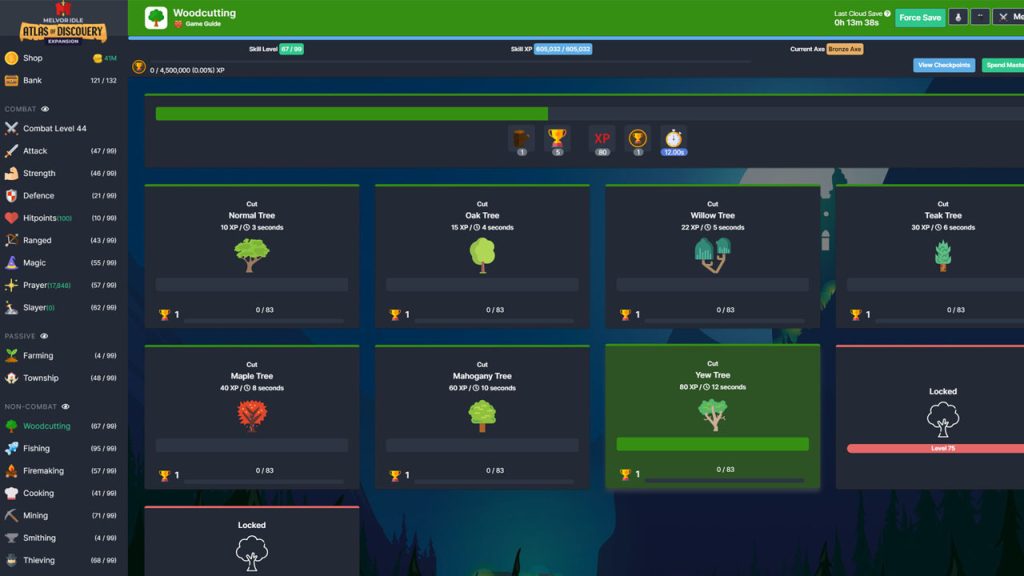
You may have already heard of apps and games that help boost productivity. This sounds a bit strange at first, but I actually prefer using “normal” idle games for this. The system works like this:
- First, you need an idle game where you can manually turn tasks on and off. I prefer using Melvor Idle for this.
- The idea is that you can only let the game run while you are learning or working on the task you want to motivate yourself for. As soon as you are no longer productive, you must also pause the idling.
This system has helped me get through some unpleasant exams where I otherwise found it hard to start studying. During longer study sessions, it’s also beneficial to take breaks at regular intervals, during which you can assess the progress in the game. This provides an immediate reward effect for your work, which is particularly helpful when studying since the reward (good grade) would otherwise come much later.


Many Treasures, but Unfortunately Lots of Trash Too
Like in every genre, there are of course good and rather mediocre representatives of idle games. Especially in the mobile sector, many idlers unfortunately seem like a loveless attempt to earn as much money as possible with as little effort through microtransactions. Fortunately, many titles are initially free or quite inexpensive to acquire. So, you can at least try out games without significant losses. Here’s a brief selection of my personal favorites:
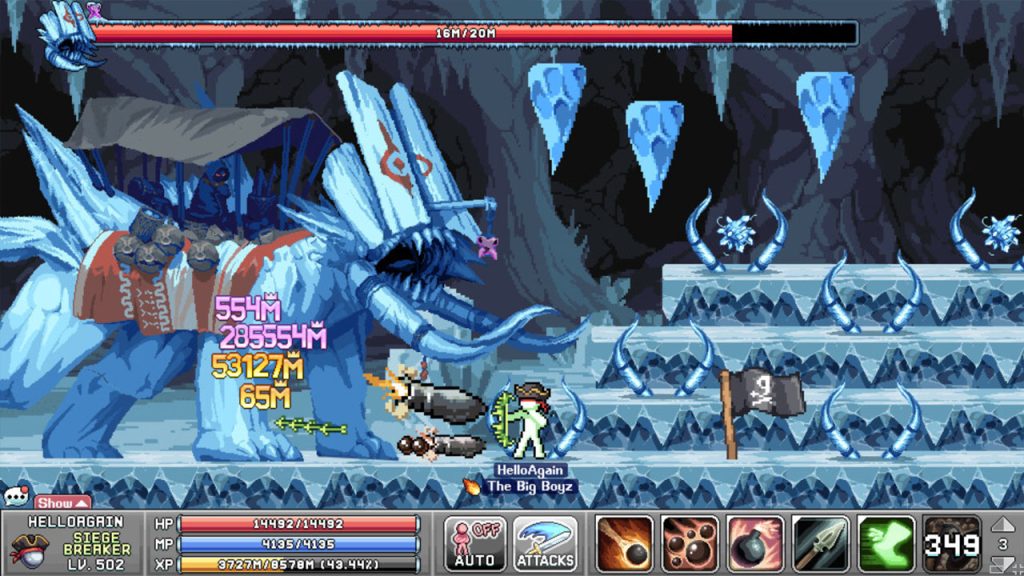
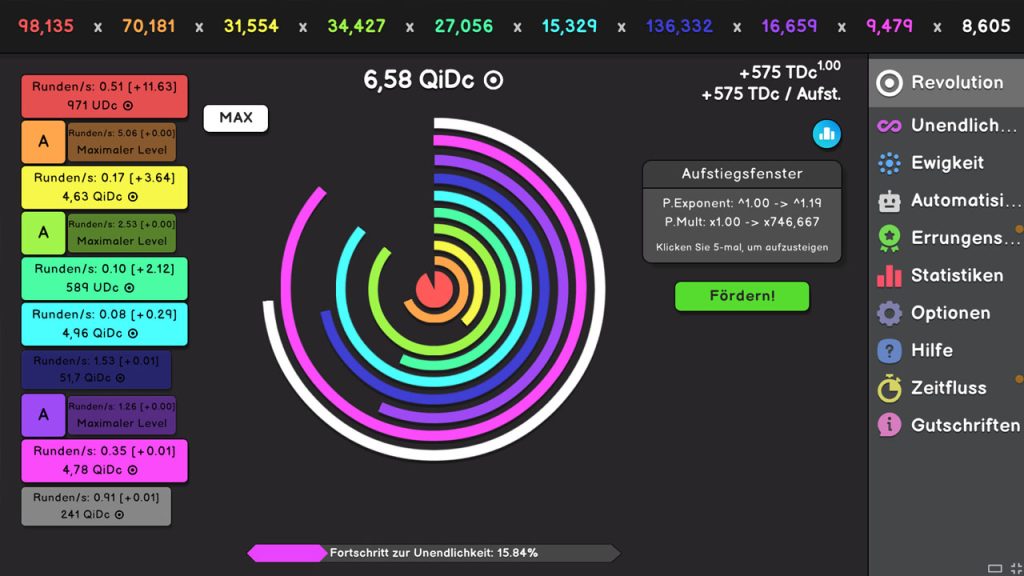
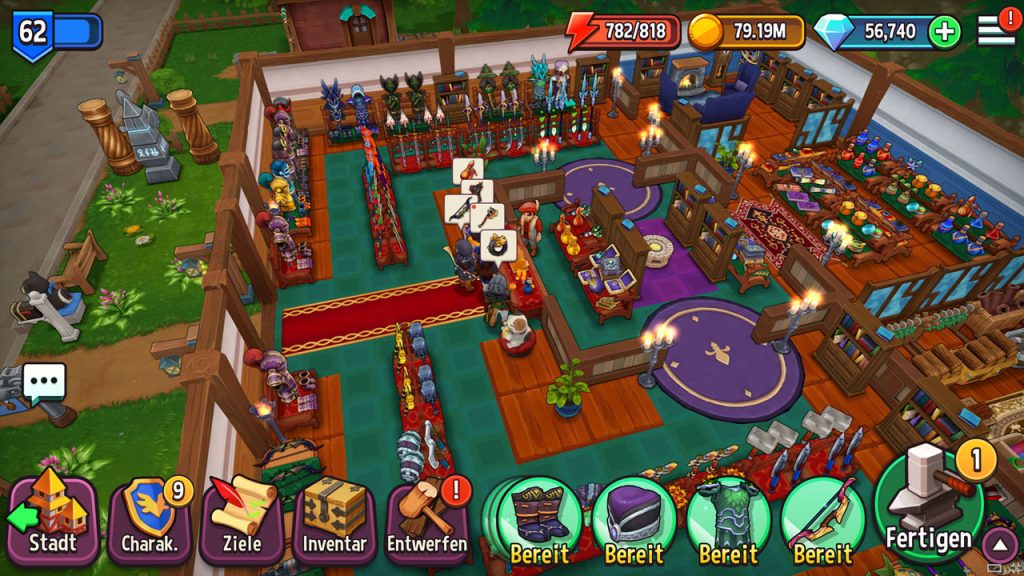
My personal favorites include:
- Melvor Idle (Steam | Mobile | Web Browser) : A classic fantasy RPG inspired by RuneScape. Paid, but does not have microtransactions.
- IdleOn (Steam | Mobile | Web Browser): An MMORPG in idle form, perfect for all fans of the genre. It has quite a bit of interaction for an idler.
- Revolution Idle (Steam | Mobile): Numbers get larger, colorful circles spin faster, the brain rejoices. It’s particularly fun to crack achievements, which can be quite challenging.
- Shop Titans (Steam | Mobile): Here you build your own fantasy shop. Nice setting, but it leans towards the “typical mobile game” with energy limits and microtransactions.
The satirical and critical tone has not been lost in the idle games genre to this day. A particularly good example of this is The Longing. Here, you play a shadow that lives deep within a cave system and must wait 400 days for the return of its king. To achieve this, you can do nothing but wait – for 400 real days. No speeding up, no tricks, no shortcuts. The developer wanted to set a contrast to the fast-paced and overstimulating games that are so common today. Therefore, The Longing also made it onto the MeinMMO list of the 15 most creative and unusual game ideas: Top 15 most unusual games that will surprise you with creative mechanics