
MeinMMO-Dämon Cortyn had actually finished with MOBAs. But now a “new, old” favorite is back – and better than ever.
MOBAs and I have a bit of a love-hate relationship. I gave League of Legends just a few minutes and quickly decided that my lifespan was too precious to deal with the (at least back then) extremely toxic community.
Then came SMITE, which I liked because of the 3rd-person view and the action feeling. I enjoyed the gods and for a while, it was a lot of fun. I really liked playing it for a while – until the community annoyed me too much and my circle of friends slowly distanced themselves from the MOBA.
Lastly, Heroes of the Storm came, which I still occasionally play, even though the game is technically dead and only receives minimal balance patches. There are no new contents anymore.
I thought it would stay that way. MOBAs and I, we were simply done with each other.
But now SMITE 2 has entered open beta on Steam – and what can I say? I have relapsed again. For the last 2 weeks, I have hardly played anything else and have spent almost all the time in the revamped god MOBA, either with two or three people.
Even though it’s still a beta, it’s already clear that SMITE 2 is a significant improvement over its predecessor while remaining true to the principles of the game.
Why does SMITE 2 even exist?
The reason for SMITE 2 is the outdated engine of its predecessor. SMITE 1 was based on Unreal Engine 3, and it has become a bit outdated now. Making the game fit for the much newer Unreal Engine 5 seemed sensible to the creators – and thus SMITE 2 was born.
But what distinguishes SMITE 2 from its predecessor?
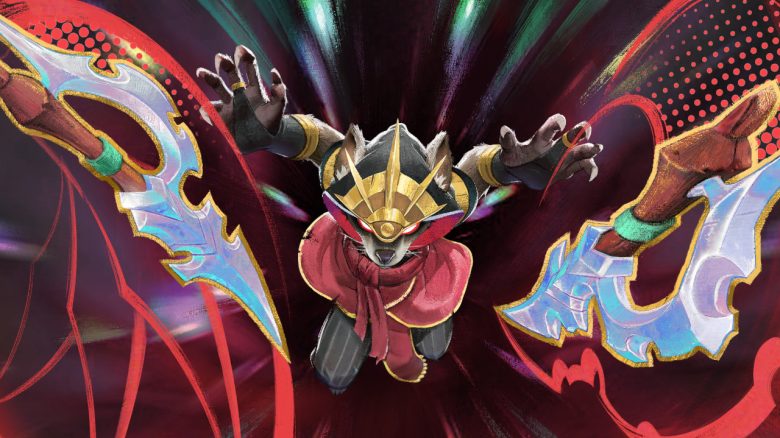
At first glance: Not much. There are the same gods, though significantly fewer of them. The gameplay is nearly identical; the MOBA wheel has not been reinvented here. There are lanes, items, abilities, and plenty of skill shots.
Anyone who has played SMITE 1 will feel at home in SMITE 2 almost immediately.
But it’s the many small changes in detail that make SMITE 2 a fundamentally better game and an update that became absolutely necessary.

Almost all gods have been revamped and have new abilities or functions, even if the basic skills are still nearly identical. Now, many more gods scale not just with intelligence or strength, but often with both. This allows you to reach different facets and set focuses.
Do you want to make the archer Neith a character who plows through tanks with high attack speed? Or would you rather focus on fewer, strong auto-attacks that primarily take out the enemy mages and hunters with critical hits? Or are you giving Neith an absurd amount of intelligence, thereby increasing the effectiveness of her abilities for high burst damage?
The freedom to shape a god or goddess according to one’s own ideas and to vary it a bit in every round is significantly greater than in SMITE 1. Of course, this could also have been a patch in SMITE 1 – but it just feels rounder with the switch to a new game.
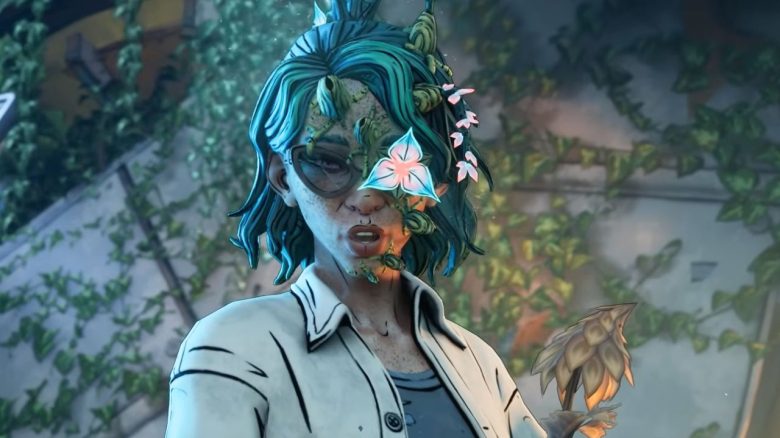
Additionally, gods now get “aspects” one after the other. These are optional “alternatives” of a god that can be activated before a match starts. This slightly modifies the abilities of the god or gives them new mechanics. Two examples:
The god Thanatos heals himself through his passive effect when he deals damage, killing gods and minions. However, you can deactivate this healing and instead ensure that Thanatos’ maximum health increases each time he kills something. This allows you to play Thanatos even more effectively as a tank.

The magic goddess Hecate can normally cover a large area. Within this area, the used abilities of all gods charge their spells, which she can then unleash to deal high damage. Anyone who doesn’t want that can modify the ability with her aspect so that she reduces the damage dealt by enemies in the target area and automatically fires a (considerably weaker) projectile every time someone uses an ability.
Even though not all gods have such aspects yet, these customization options remind me a bit of the talent system from Heroes of the Storm – not as extensive but still interesting enough to allow for new strategies and tactics.
The Thing with Skins
The only major criticism I keep seeing is the issue with skins. The accusation here is that SMITE wants to “con” the player base by requiring them to buy already purchased content again – only now in SMITE 2.
This accusation is true, but only to a very limited extent.
What is often omitted: If you buy the god pass for SMITE 2 – which gives you immediate access to all gods that will ever be released for the game – then this comes with several bonuses. The most significant bonus is that the amount of gems you purchased in SMITE 1 is doubled in SMITE 2, in the form of legacy gems.
So if you bought 10,000 gems in SMITE 1, you will receive 20,000 “legacy” gems in SMITE 2.
Legacy gems can be used for half of the cost to pay for new skins and other content. Therefore, as long as you have legacy gems, new skins will effectively only cost half.
Moreover, many of the “old” skins can be purchased entirely with legacy gems, allowing you to get a good portion of the popular skins back.

I have thought about this for a long time and find the system quite fair. SMITE 2 certainly makes good money from new skins, while as a veteran from SMITE 1, you have quite a hefty amount of legacy gems, for which you can still get a lot.
However, it should also be clear: SMITE 2 is Free2Play. None of this has to be purchased, and you can have fun with the game without major limitations for free. Even as a Free2Play player, you can quickly unlock new gods.



SMITE 2 is more than worth a quick look
SMITE 2 is prettier, rounder, and more versatile than SMITE 1. And for those who can get past the fact that not all skins from SMITE 1 can be carried over, it should definitely be worth taking a look at the successor. I’ve had a lot of fun there over the past weeks – and right now the entry is still relatively easy, as many of the old gods are now released weekly, making it fairly easy to learn what the individual gods can do.
I definitely notice that I have been fully caught up in the flow again, and I can really immerse myself in a game that I actually thought I had long written off. Just for that, it’s worth taking a look at SMITE 2.