

On September 19, 2025, a new roguelite titled Towa and the Guardians of the Sacred Tree will be released on Steam. MeinMMO editor Jasmin Beverungen is a newcomer to the genre, which made her entry into the game a bit difficult. However, in the end, she managed to navigate through the enemies so well that she wished for even more complexity.
Anyone who has read my article about Moonlighter 2 knows that I don’t typically engage much with roguelites and roguelikes. Moonlighter was my entry into the genre. Since then, I’ve mostly played roguelites with deckbuilding elements. Even Moonlighter only includes some elements from the genre, which is why I barely had contact with the action-heavy tough nuts from the genre.
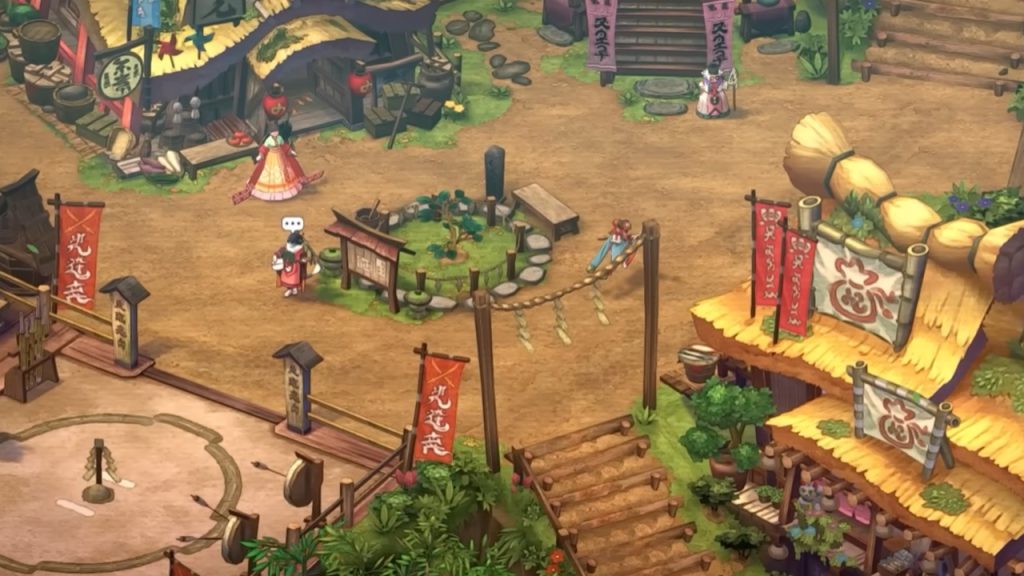
However, as a huge fan of everything from Japan, Towa and the Guardians of the Sacred Tree caught my eye. Both the level and enemy design immediately appealed to me, as it looks like a mix of traditional Japanese flair and quirky elements.
It’s perfectly timed that I could sneak a peek at a preview version of the game on Steam. I had access to the first three chapters of Towa and the Guardians of the Sacred Tree, spending around 7 hours in total.
As I’m still a novice in the genre, the beginning totally overwhelmed me. I felt almost like I did during my doctoral thesis at university. But after a few hours, I had to admit that I actually needed something more to keep me engaged for the long haul.
8 Guardians overwhelmed me
In the roguelite, we play as the titular Towa and her 8 companions, who take on the role of guardians. They must defend against the nasty Magatsu and his forces, while different worlds await the guardians. In a top-down perspective, we slice through hordes of enemies, with the top priority of not getting hit.
In Towa and the Guardians of the Sacred Tree, there are several features you might recognize from other roguelites:
- The game worlds and levels are procedurally generated. Except for the bosses at the end of a run, the layout of the next room is left to chance.
- Once you die in a run, collected items are lost. Only resources like ores are retained after death.
- Like Hades, there is an action-oriented real-time combat system. You need to time your attacks perfectly, but otherwise avoid generic enemy attacks.
But the game adds one significant twist. You must simultaneously manage two characters that you select from the 8 guardians. One of the two characters, Tsurugi, is controlled directly by you. He is responsible for standard attacks with his swords. The other character, a supporter named Kagura, follows you around. He has two special abilities that he can use to assist you passively.
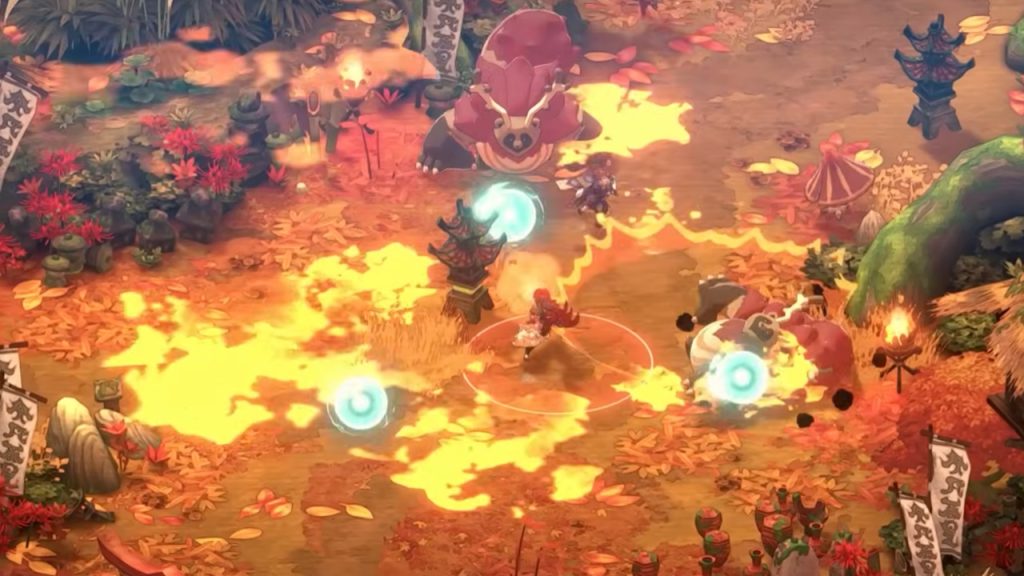
In single player, you have the option to control Kagura directly. However, you would then need to manage both joysticks simultaneously, which for me was nearly impossible with the gameplay. Therefore, my Kagura just followed me automatically. This has the disadvantage that he occasionally gets caught in enemy attacks if you’re not careful. It often happened that I could dash Tsurugi out of an attack in time, but Kagura was still fully caught in it – and died.
To ensure no run is the same as another, you can switch between the characters and thus provide some variety. Each character has different attacks as Tsurugi, which require different timings. Although they can all carry the same swords, they do play differently.
There are also other ways to keep yourself occupied for a long time. However, for me as a newcomer, all these features were overwhelming at the beginning.
There are 6 ores that can be collected. Each of these ores is needed for various things, such as building upgrades or forging a weapon. With other ores, you can purchase permanent advantages at the shrine, such as a revival in a run.
Especially at the beginning of the game, this overwhelmed me since I didn’t know which ores I should save for and which I could mostly ignore at first – especially since some can be exchanged for one another.
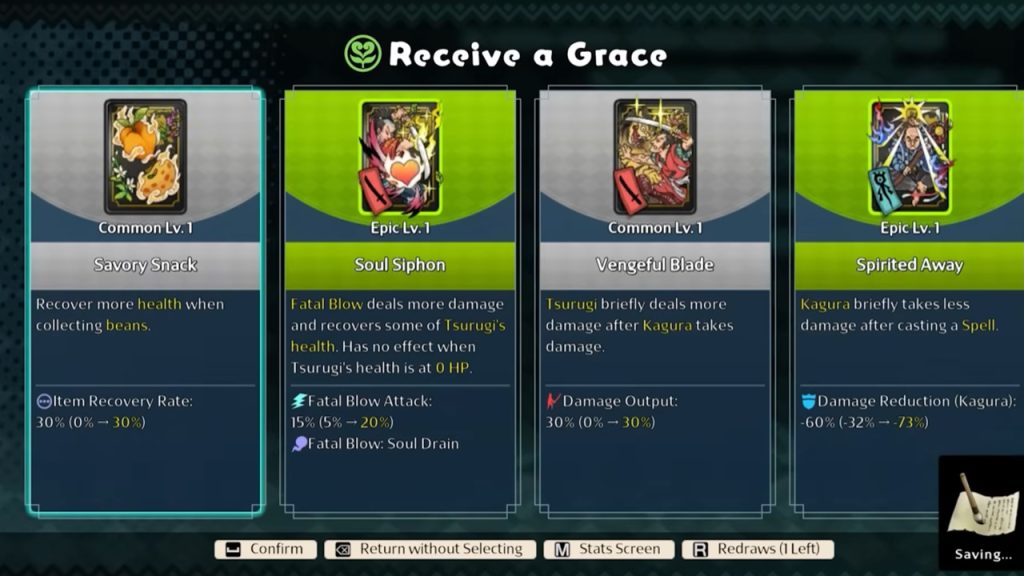
I was completely lost when it came to the favor cards. It took several hours before I understood that these are the temporary upgrades in a run. There are many categories into which the favor cards can be divided.
Before entering a new room, there is a symbol indicating which favor cards, enemies, or other surprises await you in the next room. However, there are so many favor symbols that I had to check every time what the cards and their effects on me would be. The selection was simply too vast for me at the beginning.
Additionally, there are other mechanics such as sword forging, which is a lot of fun, or leveling up in the dojo. For cozy fans like me, there’s even a small fishing minigame, but it requires a lot of time investment to be worthwhile. Here, caught fish can be exchanged for ores – as if the ores weren’t complicated enough!

The switch that transformed me from a complete beginner to a veteran
After about 4-5 hours, however, the switch came when I understood how the game worked, and I started to get used to the monotony of roguelites. At that point, I understood the effects of most symbols that awaited me in a new room and how to combine different elements to gain advantages against certain enemies.
At that moment, I had reached the point where I could slice through enemies effortlessly. Mid-bosses suddenly posed no problem for me, and I had successfully advanced to the boss room. If I failed at that point, it was only because I was too slow in dodging.
But shortly after, I had a realization, which will likely disturb the hardcore roguelite fans among you. As beautiful as the game is, it just doesn’t quite match the complexity of other representatives. After about 5 hours, my learning curve began to plateau.
Most of the favor cards in the game have passive effects. They increase damage, provide you with an extra dodging option, or slow down enemies. Additionally, there are some cards that can cause knockbacks or rain lightning from the sky.
However, what I’m missing here is creativity like in Hades. Because in that game, it’s possible for these temporary buffs to enhance each other. One example: When arrows hit enemies, they split into several smaller arrows. With further buffs, those arrows can leave fire trails or bounce off walls, turning the entire room into a hail of arrows.
When the right buffs interact with each other, it feels like you become completely overpowered. I never had that feeling with Towa and the Guardians of the Sacred Tree. No matter how many legendary buffs I found, the gameplay never changed as a result.
Accordingly, I also believe that the title can become quite monotonous over time. For this preview, we can only report on the first three chapters. Here, the boredom has been manageable, but I fear that it could stretch in the further chapters.
Towa and the steep learning curve that then plateaued
The new roguelite on Steam attracted me with its beautiful visuals, and I do not regret playing it. I had a lot of fun during the runs and was able to learn quite a bit if I ever want to play a game from the genre again.
Initially, I was a bit overwhelmed as there are many things to modify the character and thus strengthen it. By the third chapter, I had not even found all possible upgrades. But after around five hours of gameplay, I felt I understood most of the mechanics.
However, the learning curve then flattened out so steeply that I cannot imagine Towa and the Guardians of the Sacred Tree keeping me entertained in the long run. The buffs in a run are too simple and leave little creative possibility for good combinations. Only the 8 Guardians and their unique playstyles bring some variety.
Consequently, I can recommend the title to anyone who is enchanted by the visuals and does not let the initial steep learning curve deter them. Especially newcomers or those who have already played some roguelites may find enjoyment here. However, veterans could become bored over time – unless a significant mechanics surprise awaits after the 3 chapters.


In contrast to me, MeinMMO editor Benedict Grothaus has been a long-time fan of roguelites. His favorite games include Tainted Grail and Night of the Full Moon. In an article, he explains what fascinates him about the genre and why he just can’t stop losing: I am obsessed with games that I can only lose

Your opinion is important to us!
Do you like the article? Then let us know!