

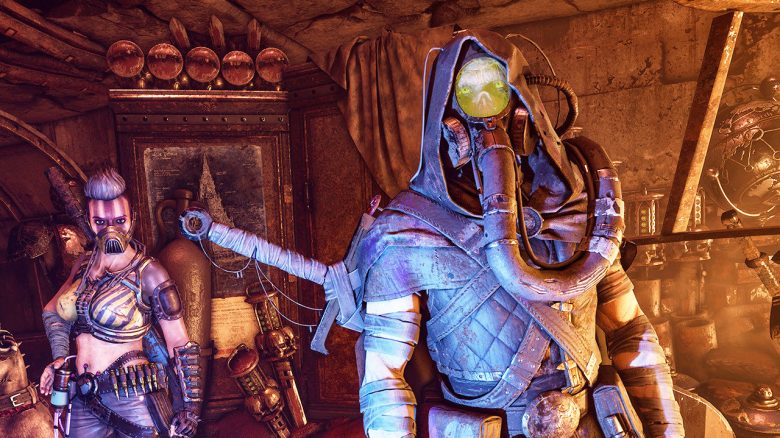
Warhammer 40,000 is known for its absurd scales. This applies not only to wars and weapons but also to the sheer mass of people that exist. To fit such a large number of people somewhere in the universe, they must be packed very closely together – in cities of enormous dimensions and dystopian circumstances.

The Imperium of Man is currently the dominant faction in Warhammer 40,000 – surpassed only by the unknown numbers of Tyranids, Necrons, and Orks. Officially, several trillion people live in the galaxy, but the actual number is likely much higher.
Such a large number of people can only be managed through structure and organization. Agricultural worlds supply food, production worlds provide weapons and technologies. Only through the processing of corpses can everyone be fed.
And then there are the Hive Worlds. Hive Worlds are the most densely populated planets in the Imperium, where one or several hive cities arise. These strictly structured cities are a dystopia in themselves.
If you find yourself, for whatever reason, in the 41st or 42nd millennium, the chances are extremely high that you will be born in such a hive… and will die there as well, without ever having seen anything else.
Necromunda is one of the best-known Hive Worlds with dozens of Hives. In the action game Hired Gun, you can explore the world:
“Hive Worlds” – The Breeding Grounds of the Imperium
Between 10 and 25% of the worlds in the Imperium are said to be Hive Worlds, where the absolute majority of humans live, with most other worlds also possessing at least one Hive. The worlds are so enormous that they cannot provide for themselves under any circumstances. Food and other goods must come from outside.
In most Hives, there are already several billion people living, most of whom are in poverty. On a Hive World, several of these Hives can exist, sometimes even directly next to each other in so-called “Hive Clusters.”
If a Hive World is ever isolated because travel through the Warp is not possible, there is an immediate great danger for all inhabitants. Famines break out within a very short time.
The most important planet in the Imperium, the Holy Terra, where the Emperor is imprisoned on his golden throne, is itself considered a Hive World, completely covered with cities – which significantly distinguishes Terra from the structure of most Hives.
Of Nobility, Bourgeoisie, and Proletariat
A Hive is generally structured, with certain rules. Necromunda serves as an example, especially because the structure of this world is documented through official rulebooks. A Hive consists of various levels:
- At the top, where the administration, nobility, and higher-ranking residents live,
- “Hab Zones,” where the majority of the population resides
- and the “Underhive,” the area at the bottom of the Hive.
Additionally, there are outer layers with shields and weapons to defend a Hive, as well as special structures within the Hive. Often, planet cores are tapped through a gigantic tube that runs through the Hive to supply it with heat and energy.
The general rule is: The higher you live in the Hive, the higher your status – and vice versa. In the upper areas, there is free electricity, good food, and fresh air, while all of this gets worse the further down you go.



Living, Working, and Dying in a Hive City
The majority of people in a Hive form something like the “middle class” with their own layers from affluent to poor. Higher up, the affluent middle class lives almost like the nobility, with real daylight and access to air and food.
Just below them, the conditions are already tougher: dimmed light, food is repurposed, and often the inhabitants are merely “wage slaves,” whose bodies are a resource for their employers.
Further down in the Hive, there are often factories that at least produce basic goods for a Hive – sometimes even for other worlds of the Imperium. It is not uncommon for surgeries and cybernetic enhancements to be done to optimize a person for their work.
The Eternal Underworld: Underhives
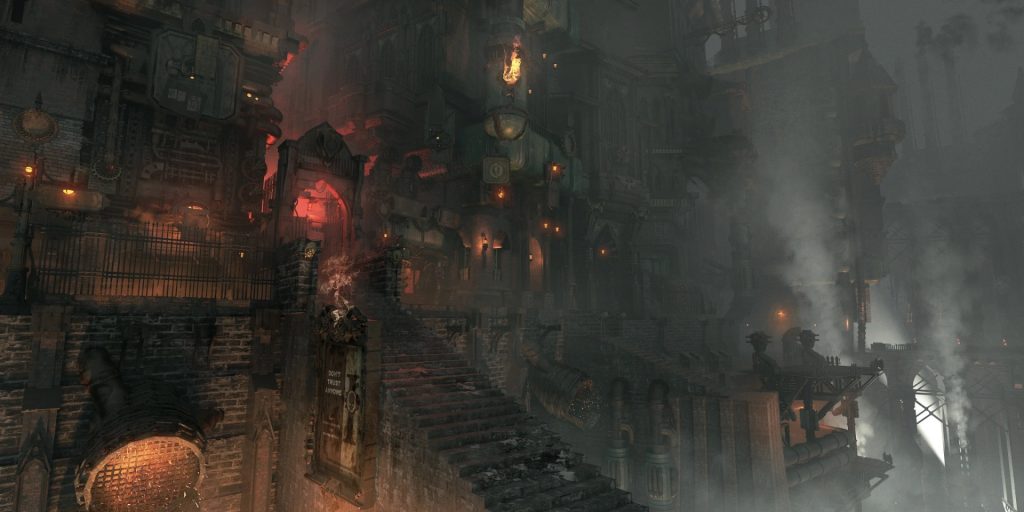
Things are really dire in the Underhives, the “bottom” of a Hive city. Here, there is no daylight, air and food come from several recycling processes, and “rain” usually consists of the toxic wastewater from the layers above.
In the Underhives, there is no real law in most places. Occasionally, members of the Adeptus Arbites enforce imperial law, but most areas are under the control of local gangs. Often, ruins of old buildings and factories shape the “city” landscape.
In the co-op shooter Darktide, you fight your way through an Underhive:
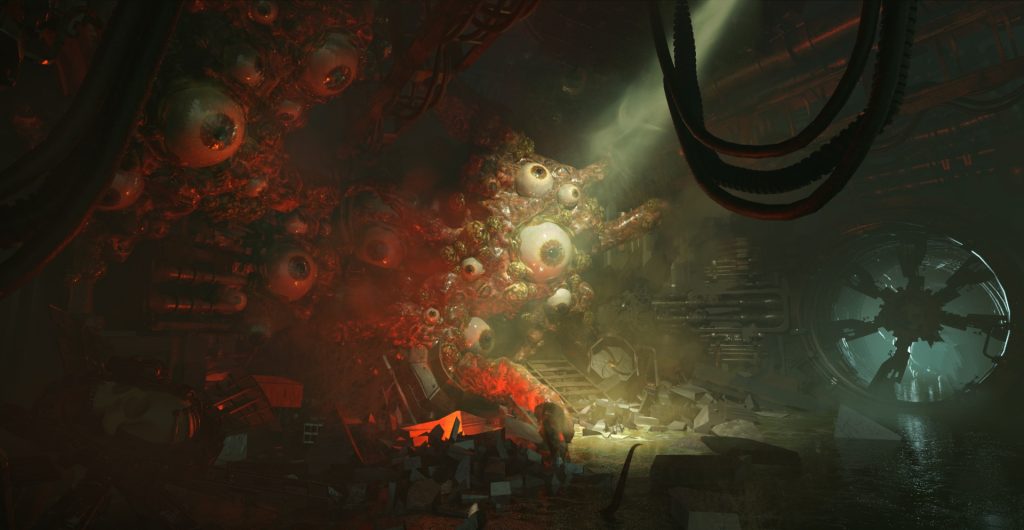
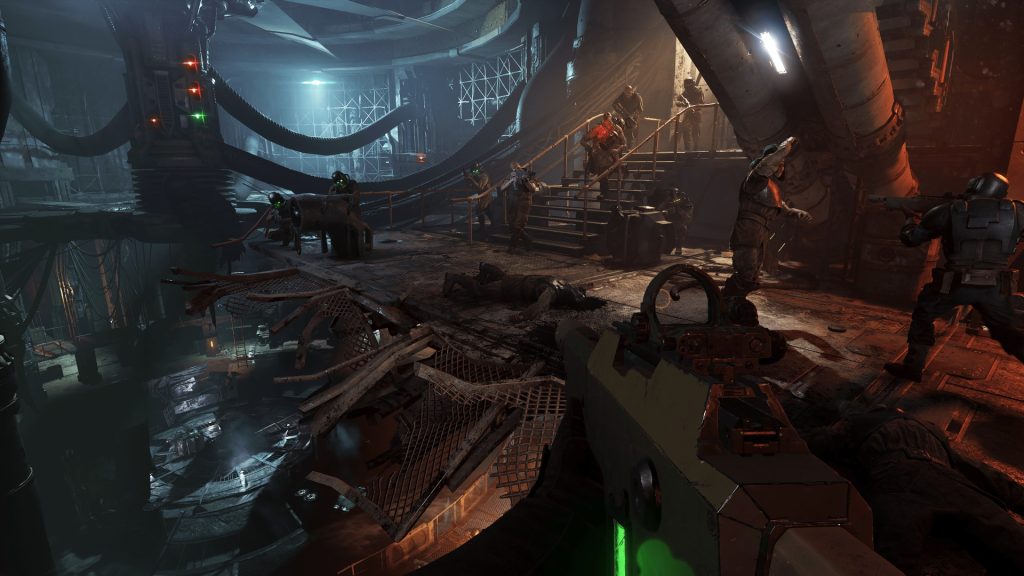
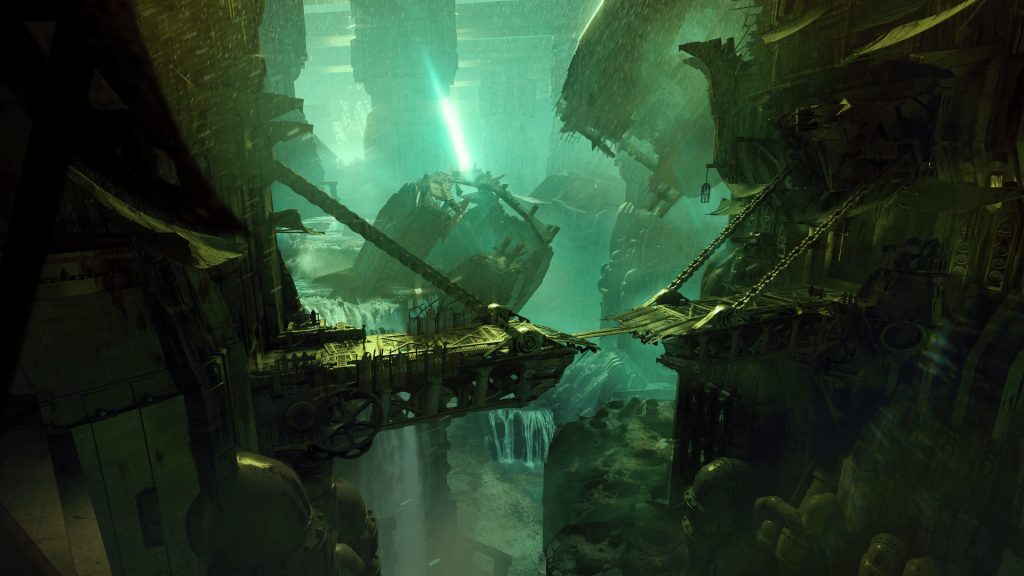
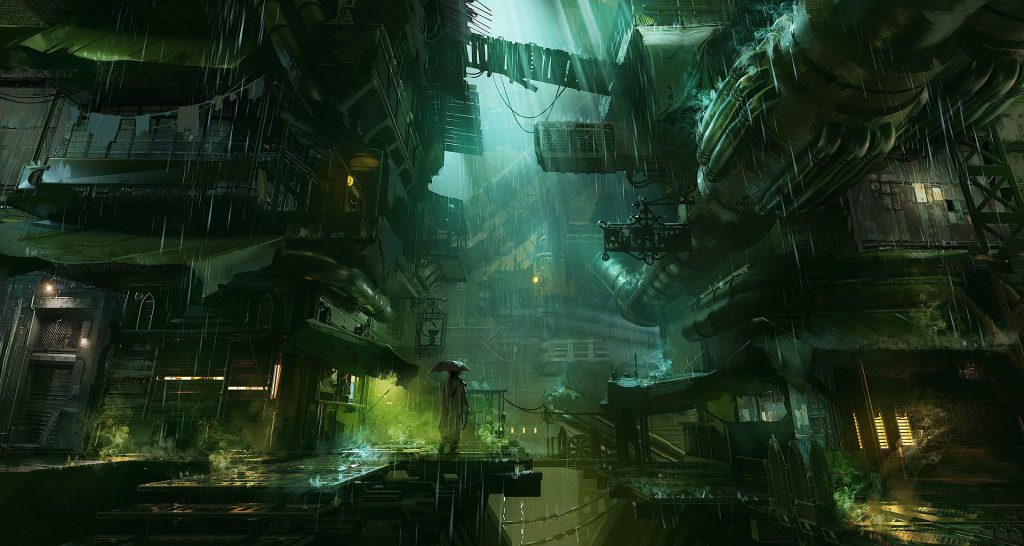
Access to energy is limited or nonexistent, and if it is available, it is strictly guarded and regulated by a powerful clan. The wastewater, toxins, and production waste create a toxic swamp beneath the Underhive.
Water and anything else that can squeeze through cracks collect in small lakes, where mutants and other dangerous creatures dwell. Sometimes such creatures are the only food that inhabitants of an Underhive receive.
Consequently, mutations and chaos cults in Underhives are not uncommon, as they are a logical consequence of the circumstances. In this part of the Hives, absolute poverty prevails with a daily struggle for survival. Those who live here likely never see real daylight and will never know anything else but the Underhive.
Even though life in Hives may sound dreadful, most people in the Imperium have likely grown accustomed to such conditions and perceive them as normal. Nevertheless, there are some tasks that surely no one would be happy to have: Life in the Imperium of Warhammer 40,000 is already tough enough, but these 5 jobs nobody really wants

Your opinion is important to us!
Do you like the article? Then let us know!