
The End of the World – Literally
A good part of Warhammer takes place in the “End Times” or the “Last Days”, literally the end of the world. Beginning with the appearance of the two-tailed comet, the downfall of the world became apparent from the year 2519.
The boundary between Chaos and reality grows weaker, and the Chaos champion Archaon rises to become the “Everchosen” of all four Chaos gods. He leads the last “Chaos incursion” that the Old World will see. You can see Archaon in the title image.



All the “almost ends” mentioned here converge on this one point and finally contributed to the destruction of the world. After many years of wars, in which Chaos powers ravaged the world, Archaon finally succeeds in performing a ritual.
Starting from the two poles, a rift opens up that consumes the entire world and plunges it into nothingness. A counter-ritual could have prevented it: In the year 2428, a ritual in Middenheim was supposed to stop the destruction.
Balthasar Gelt, one of the most powerful wizards of the Empire, tries to bind the winds of magic. This leads to the incarnations such as Ghur in Grimgork or Azry, the wind of heavens magic, in Karl Franz or Sigmar himself.
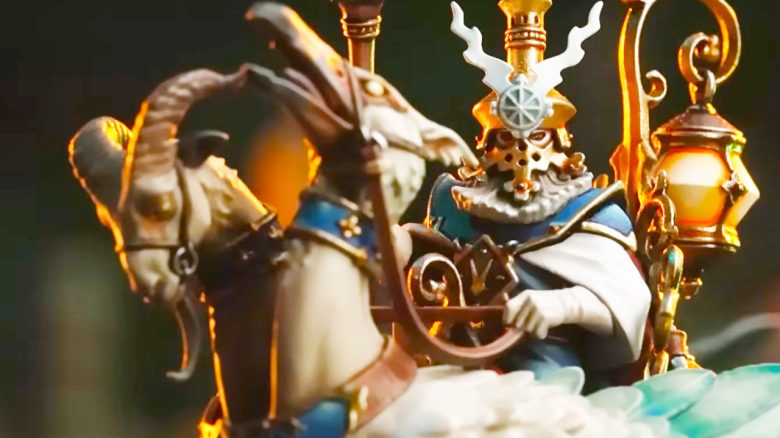
What follows the fight is the Age of Sigmar:
An power-hungry vampire, Manfred von Carstein, kills Gelt during the ritual – and the world comes to an end. What follows is a fall into Chaos, more or less literally.
Only Sigmar, some of the other incarnations, and a few other survivors remain, saved by the dragon Dracothion. They flee into a completely alien world, but Warhammer Fantasy ends – and The Age of Sigmar begins: Age of Sigmar has long been considered the least popular Warhammer, now fans are thrilled: “High Fantasy meets Heavy Metal”