A small company from Canada has been operating a successful sci-fi MMO on Steam for over 10 years: Warframe. What are they doing right, where large companies like EA fail with their games like Anthem? The head, Steve Sinclair, explains in an interview.
Which MMO is so successful?
The sci-fi MMO shooter Warframe (PC, PS4, PS5, Xbox, Switch) is a “Cinderella” story, because it started so poorly and has developed so well:
- Warframe was released in 2013 on Steam, it was “the last attempt” of the studio to somehow get by. Everything was hastily thrown together and improvised. The Community Manager, Rebecca Ford, had to voice the game AI. Today, Ford is a big name in the studio.
- Warframe stabilized at an average of 12,000 players on Steam in 2013. While most other games rapidly lose players after launch, Warframe was able to maintain and even grow these player numbers. In August 2015, it suddenly had 30,000 players
- Over the years, Warframe has seen a strong influx thanks to attractive patches: in 2017 it peaked at 62,000 players, in 2018 even at 76,000 – in recent years it has stabilized between 42,000 and 64,000 concurrent players. The studio is currently working on a new game, a fantasy MMO.
Large publishers place too much emphasis on the numbers at release
This is what the developer says now: In an interview with VGC, the head of the studio, Steve Sinclair, accuses big publishers of simply not understanding live service games properly and also evaluating such MMOs like regular games:
They think that release is an all-or-nothing thing, but that is not true. They have a financial opportunity to be persistent, and they never do. It comes out, doesn’t work, and they throw it away.
“Isn’t it a shame?”
He adds:
Is it not a shame when you invest so many years of your life into the development of these systems or the advancement of technologies or the building of a community, and then, because the operating costs are high, you get scared when you see the numbers dropping, and you leave.
We have seen this happen with amazing releases that, in my opinion, have huge potential, and I think they are discarded too soon.
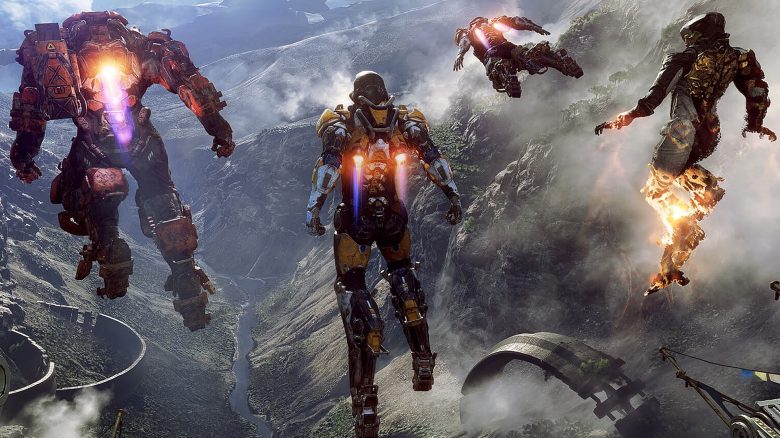
Which games does he mean? He does not say, but every MMO fan will probably think of Anthem, which resembled Warframe and had enormous potential that was never realized.
EA even wanted to revise Anthem and had a team work for a year on a concept for Anthem Next or Anthem 2.0. But when the time came to decide whether to really go through with it, EA thumbed down.
EA gave up Anthem in favor of a new Dragon Age. With Apex Legends and the sports games, they had other irons in the fire.
NCSoft is also considered a studio that gives up “western MMORPGs” too soon, such as WildStar or City of Heroes. FunCom was similarly accused of this by fans with Age of Conan.



Are there also examples of large publishers who have done it right? Yes, Ubisoft has long supported and improved two games, The Division 1 and Rainbow Six Siege, that had their weaknesses at release. However, with The Division 2, they failed to do that.
Bethesda has treated The Elder Scrolls Online well and – with some exceptions – Fallout 76 as well.
Square Enix is known to have saved Final Fantasy XIV. Fans of the MMORPG have thanked the mind behind the game’s rescue, Naoki Yoshida, a thousand times since then. He is greatly revered. In fact, there are several MMOs or live service games, as they are called today, that have turned it around after a bad launch: 6 MMOs and online games that managed to turn it around after a bad launch