

[vc_row][vc_column][vc_column_text]
The buy-to-play fantasy MMORPG Guild Wars 2 has attracted many admirers and fans since its release in August 2012. Some have remained loyal to the game, while others have not.
Like no other game, Guild Wars 2 emphasizes the solidarity of a server community or guild. Additionally, GW 2 gives its players the feeling of being an explorer in an unknown, exciting land where new stories are constantly unfolding.
We have packed our backpacks and ventured into the vastness of Guild Wars 2 to introduce you to the game.
The classes, races, masses, and the question: What am I playing now?
 The original Guild Wars was somehow different. While the game’s competitors were huge giants like World of Warcraft or Everquest, the first Guild Wars occupied an outsider niche. This attracted many hardcore players, who especially praised the PVP.
When Guild Wars 2 launched amidst great hype and rave reviews, the developer ArenaNet had some surprises in store that would shake up a stagnant MMORPG world. The first was the class design. Guild Wars 2 abolished the holy trinity of Tank, Healer, and Damage Dealer. A sacrilege at the time!
Each class was meant to be able to tank a bit, have decent self-healing capabilities, and be able to deal damage. The latter is self-explanatory. The intention was primarily to free healers from their supposed yoke, long lamented since time immemorial.
The Mesmer is a particularly sophisticated class that relies on illusions, clones, surprise attacks, and other tricks. It is somewhat of a mix between a wizard and a cloak-and-dagger duelist, like one might find in the France of the Three Musketeers and Cardinal Richelieu.
Tell me what weapon you wield, and I will tell you what skills you have
Another innovation in game design is that classes change their abilities with the weapon they are currently using. A warrior wielding a bow has an arsenal of skills that one would associate with a hunter in other games. Thus, it is possible to design and play a ranged fighter with incredibly strong armor in Guild Wars 2.
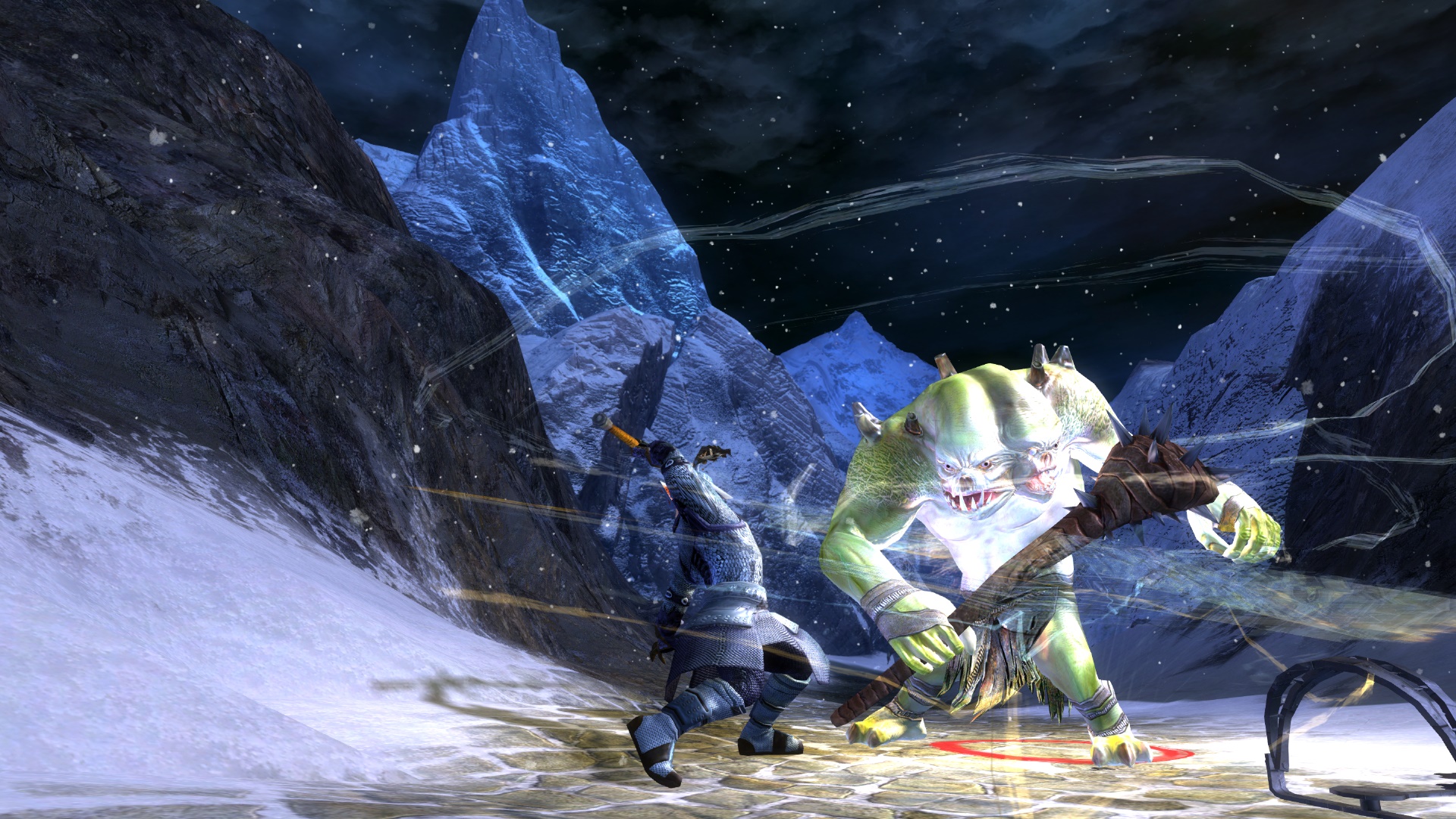
If the same warrior picks up a sword in his right hand and a war horn in his left hand, he becomes a melee fighter who can buff and support the group through the war horn. If he carries a two-handed sword, he has a skill set reminiscent of the barbarian from Diablo 2. Conversely, if he takes a shield in his off-hand, he is considerably more defensively oriented.
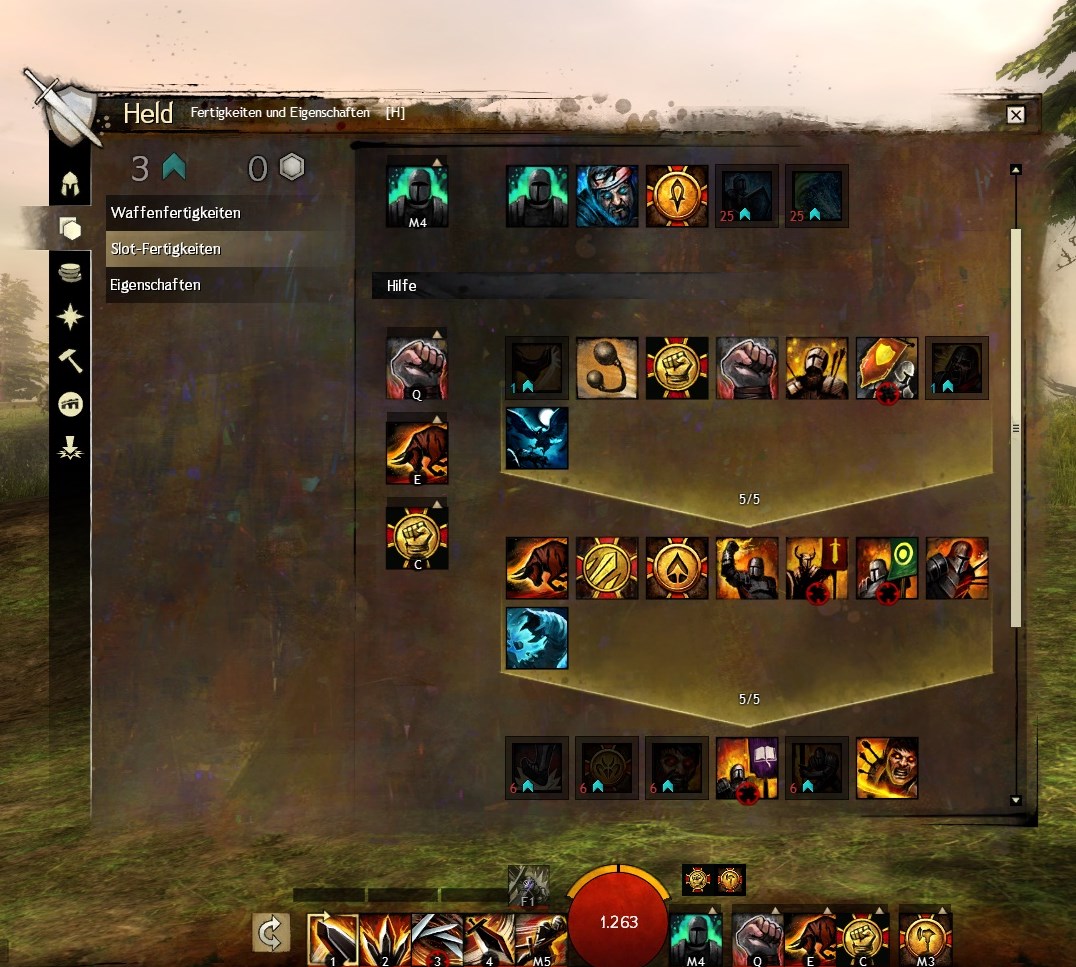
These weapon differences apply to all classes. At first glance, it seems that the characters have an incredibly high number of ways to develop and specialize. This is certainly somewhat true, but there is no elaborated skill tree with combinations of various skills like in other games known.
Once you have committed to a warrior running around with a two-handed weapon and decided on certain class and ultimate skills, the quick bar will be quite sparsely populated. Of course, you can switch at any time, but even with another weapon, the final selection will still be limited.
The selection of abilities in the game sometimes seems as if you are standing with a tiny plate before a huge buffet. Although you’d ideally like to shovel 20 things onto the plate, there is only room for 6.
In any case, the class and skills system is an innovation that brings surprisingly many variations and benefits.
The peoples of Tyria: Less Tolkien, more Manga
The different races available determine the “personal story” of the main character and have effects on the gameplay that go far beyond merely changing the starting area.
The peoples of Tyria include:
- the Charr, a cat-like warrior race with a bloody past
- the Norn, a hardy northern people accustomed to cold and deprivation
- the Humans, a race full of contradictions and opposites
- the Sylvari, a nature-bound people wrapped in myths and legends
- and the Asura, a small, highly intelligent, and super-cute species
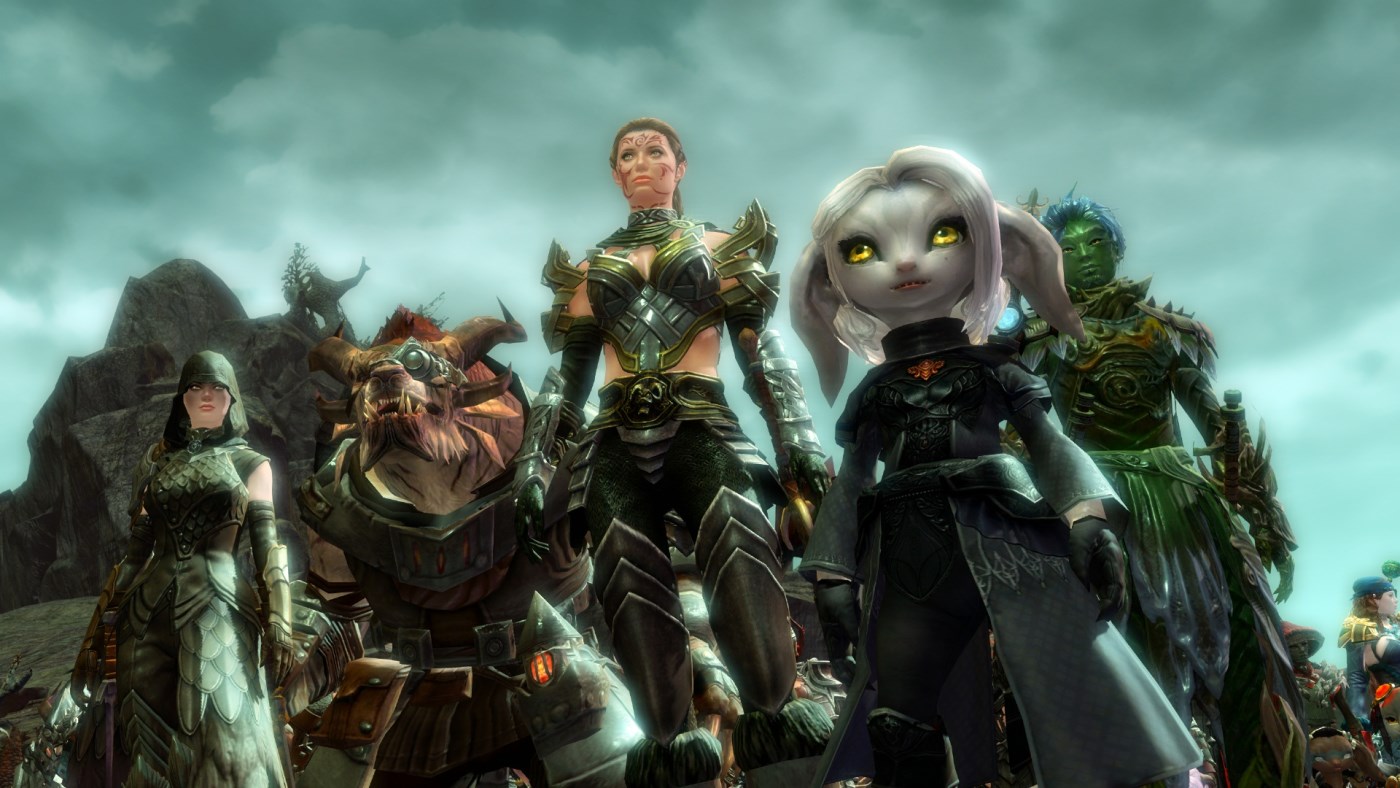
Even at the selection of races, it’s clear that the universe of Tyria has nothing to do with standard Tolkien fantasy. While Sylvari appear somewhat similar to elves in orientation, there are numerous differences and nuances in detail and the well-crafted story quests. It is exciting to discover and get to know the various peoples, their stories, and ideas. The world of Guild Wars 2 is not a generic fantasy, but a world with history, personality, and character.
The gameplay: The dynamic events
The revolutionary element in Guild Wars 2 is the gameplay or how one shapes the ordinary day of an adventure. While in competing games, a hero arrives in an area, accepts quests, and then gradually works through them, he moves much more freely in GW 2.
[pull_quote_center]The player reaches a new zone and experiences adventures.[/pull_quote_center]
Dynamic events happen around him. In a certain area, there are “quests,” but they are modern and not so formally designed.
For example: The brave Mesmer reaches an area that has a clear problem: Perhaps meteorites are falling from the sky and crushing deer that need to be saved, or there are way too many sharks in the pond (ArenaNet put a lot of effort into underwater combat) or something else is amiss. Intuitively, the hero now follows his natural urge to do good, and is rewarded in-game for it.
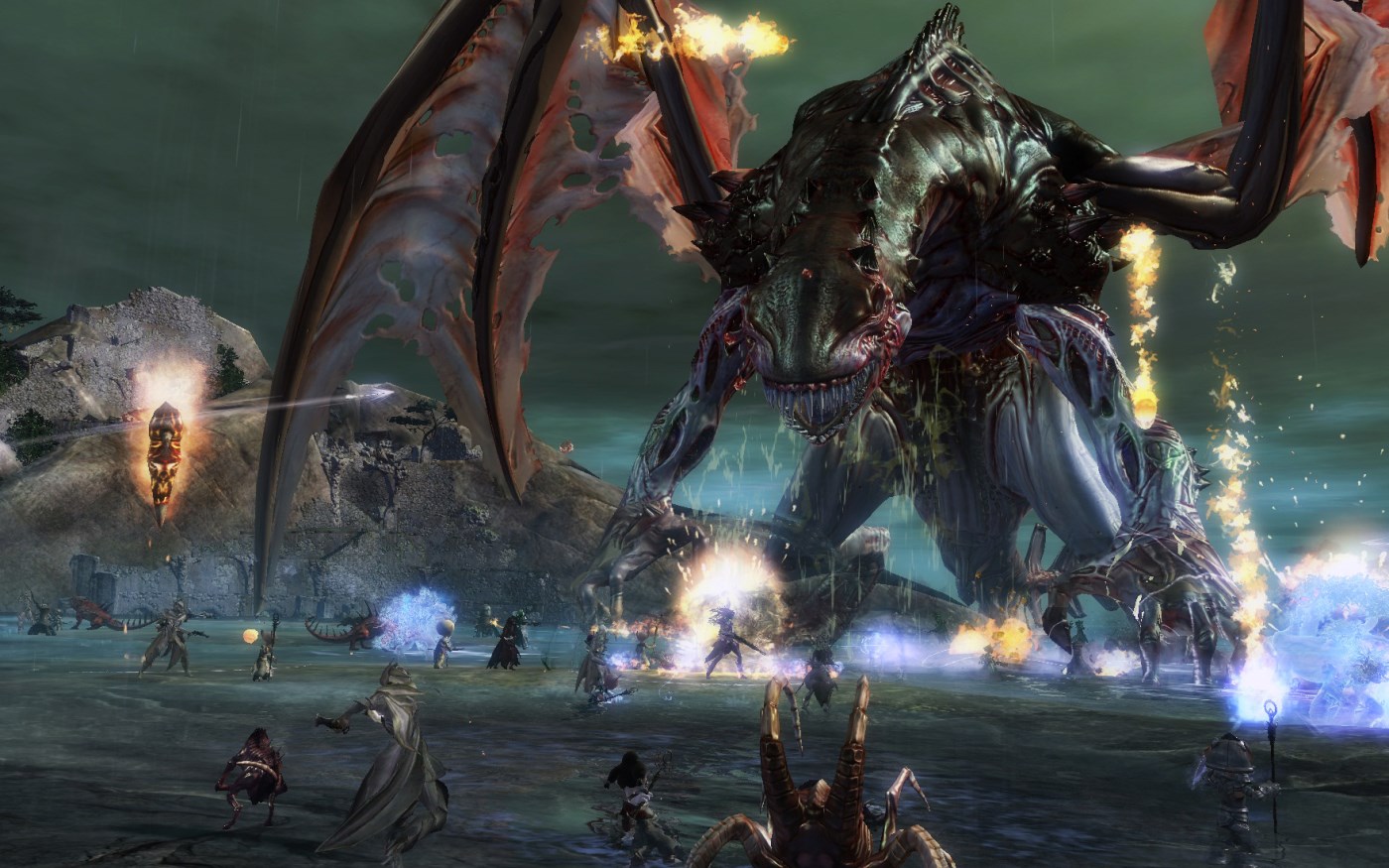
When major events occur – when a dragon lands or an ogre tribe goes amok again – the individual player doesn’t have to worry about stepping on the toes of any guild if they just want to see what happens. The big events are like a big family gathering: Everyone is welcome, everyone can take what they want from the buffet. And the more, the better.
War of the Worlds instead of Ganking
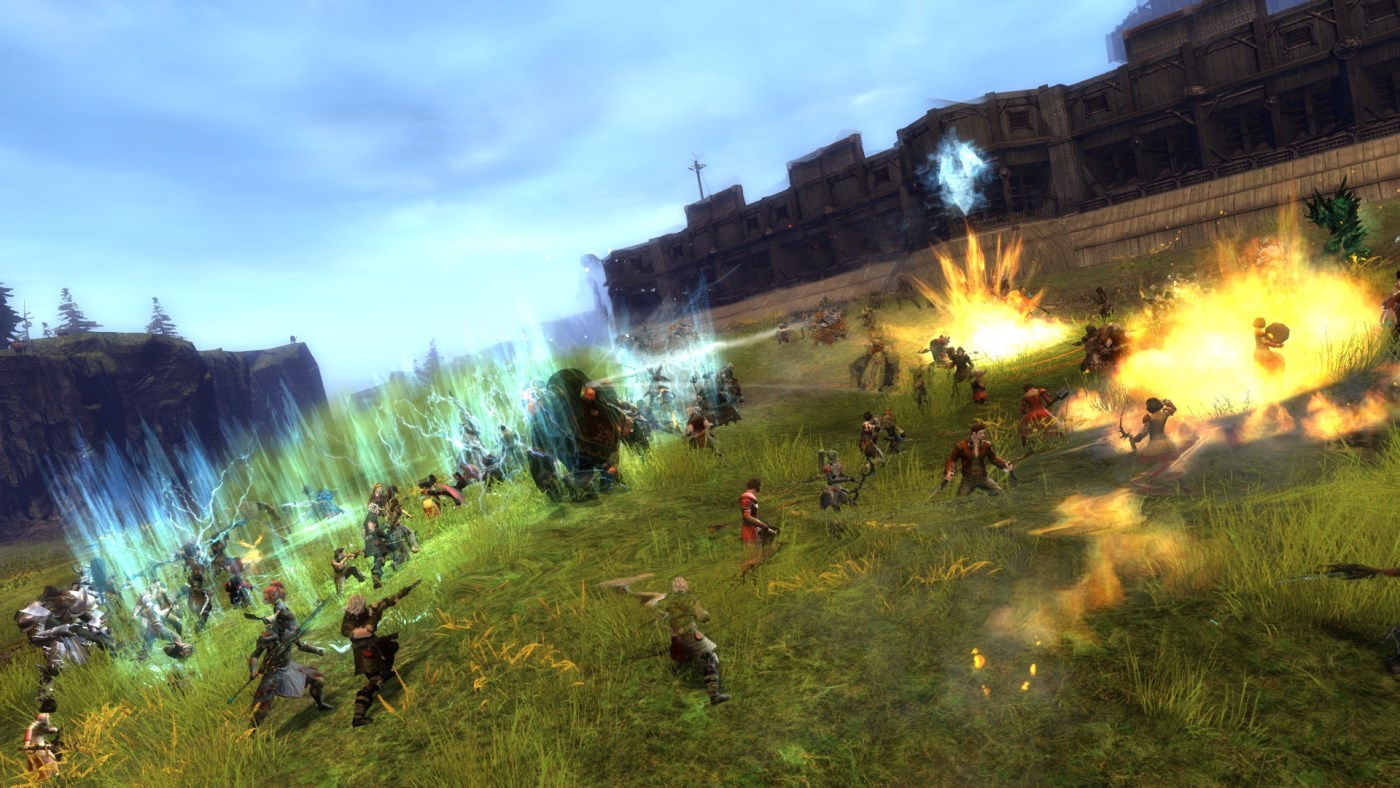
This somewhat chaotic and anarchistic game principle, where something happens around me and I react to it, is taken to the extreme in PVP. While in other games things are neatly organized and clear, Guild Wars 2 feels dynamic and fluid: Everywhere seems to be on fire. Wherever you look, there is something to do, and the adventure has no beginning and no end.
In PVP, entire servers collide. Three worlds participate in a battle. But fans of battlegrounds or arenas will also get their money’s worth. ArenaNet remains true to the roots of the first Guild Wars. The coordination of players is supposed to determine victory and defeat, and significant gear advantages from optimized equipment do not exist.
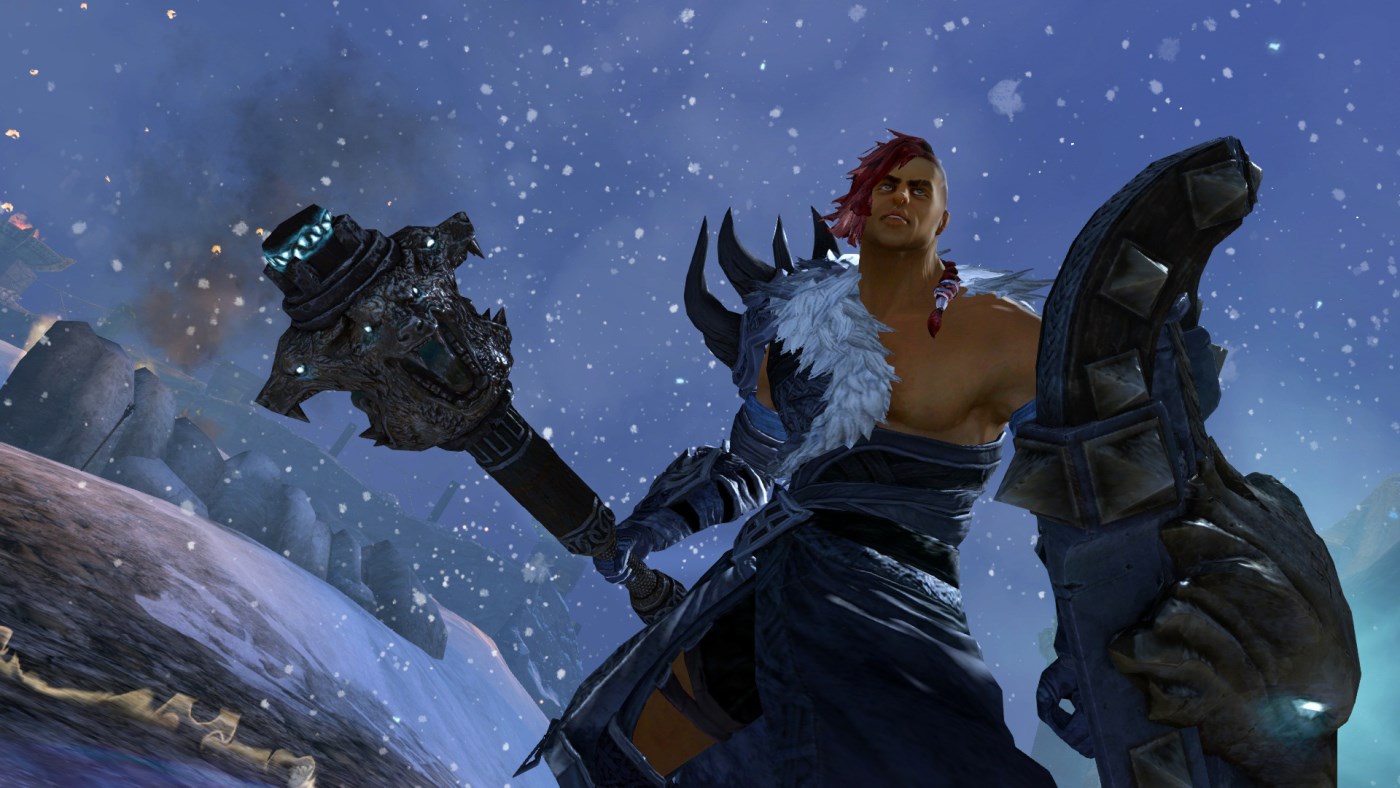
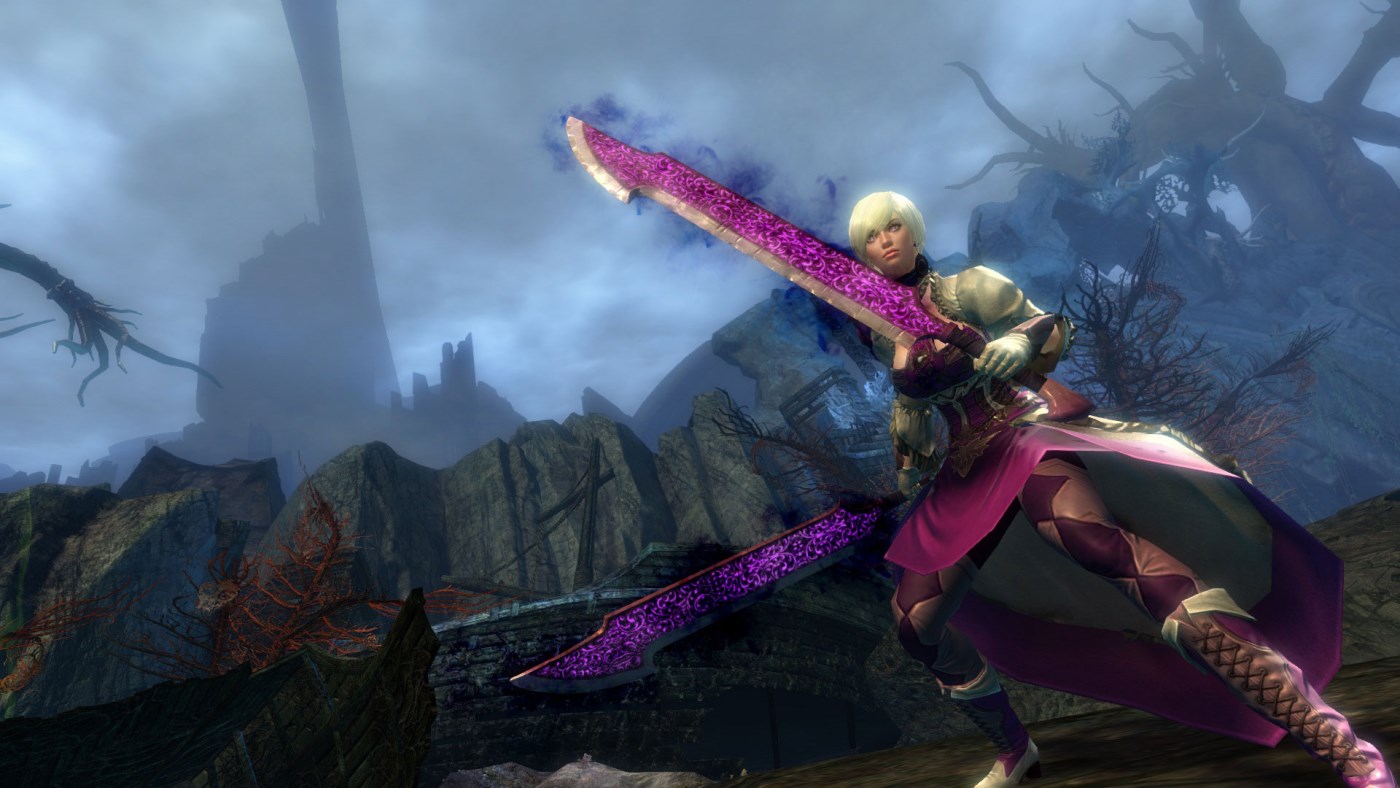
Overall, GW 2 breaks away from the convention of faster, higher, further – for max level characters, gear improvement is more about style. The game offers an incredible variety of earnable style items – there should be something for everyone, here are a few examples:

Innovative design decisions create the discreet charm of GW 2
Through some clever design decisions, a player can continually set their own goals that do not necessarily have to relate to a linear development of the character. When a single zone or map is completely completed, a premium reward is given. But a zone is not considered complete when all “quest points” are checked off as though they were on a to-do list. No, to fully explore a zone, it might also include climbing a series of plateaus to reach a mountain peak and take in the beautiful view.
This dynamic game principle has been adopted by ArenaNet even in the expansions and is followed consistently. While other games bring new content into the game at fixed intervals, which is simply added to the existing mass, Guild Wars 2 regularly features small stories occurring in the game that are only available for a limited time. With this concept of the “living world”, there is always something to do, and some story in Guild Wars 2 is continually advancing. This fits well with the rest of the game.
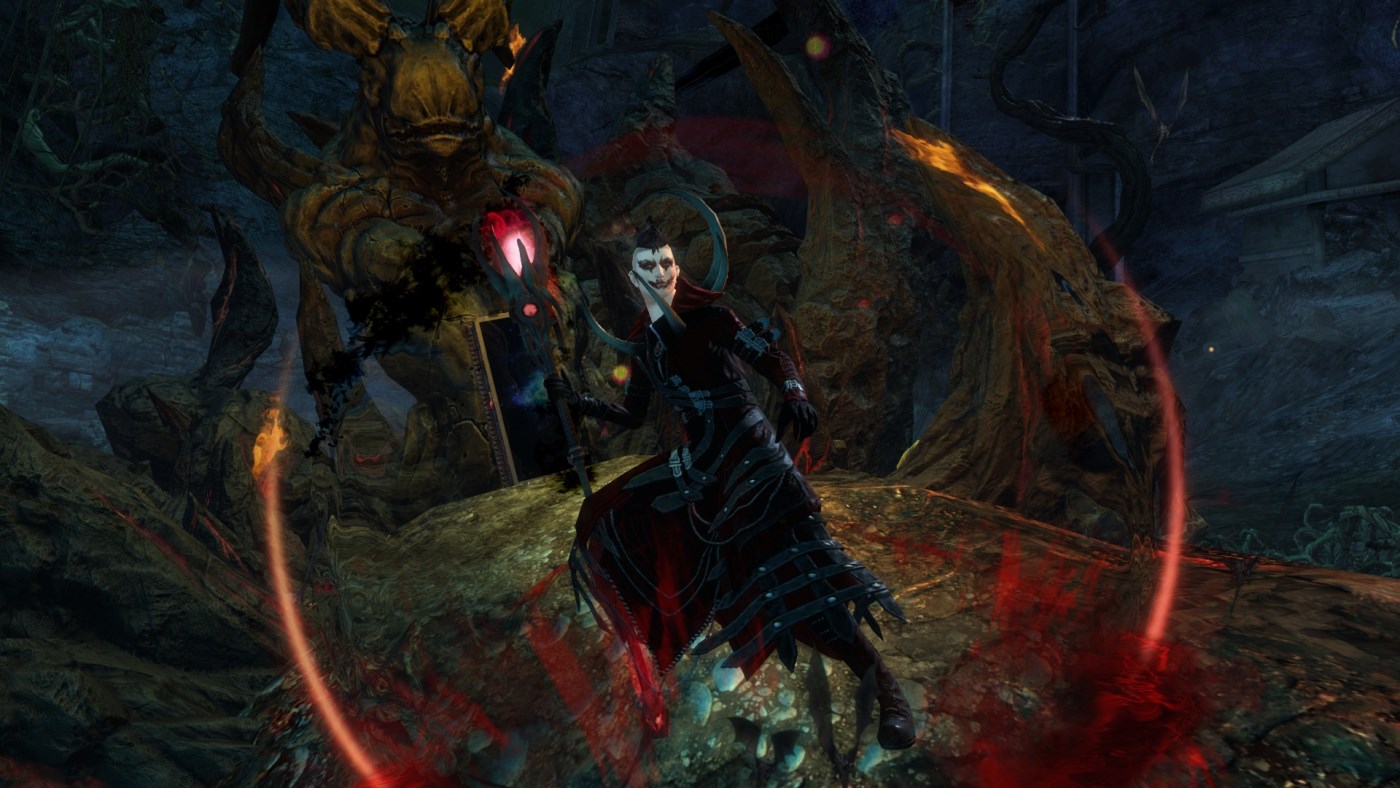 The living story regularly brings new momentum to the game!
[pull_quote_center]Guild Wars 2 breaks with many conventions of the fantasy genre that have made it predictable and cozy over the years, but also somewhat bland.
This anarchistic approach of Guild Wars 2 should definitely be worth a visit for anyone who is looking for something new.
The conclusion on Guild Wars 2
[/vc_column_text][/vc_column][/vc_row][vc_row][vc_column width=”1/1″][vc_tabs][vc_tab title=”Conclusion by Schuhmann” tab_id=”1389464876-1-92″][vc_column_text]
In the long run, like with any MMORPG: One needs people to play with regularly. Otherwise, you level it up like a single-player and then feel somewhat lost about where the journey should go. I particularly missed the instance finder (which is already available now).
GW 2 was for me (and many of my friends) a short excursion into something completely different after a long period of the well-organized WoW, but none of us stuck around. However, no one regretted the excursion.
Since there are no monthly fees, I certainly intend to check in regularly with Guild Wars 2 to see what direction the game is developing in. I am curious. The 35 euros or so were definitely a good investment. If you calculate it in euros per hour of engagement, MMORPGs are unbeaten. And in GW 2, the sometimes very annoyingly implemented freemium stuff is absent, which bothers me in other games.
[/vc_column_text][vc_column_text]
Everywhere around you, there is activity and movement. The idyllic landscapes, which are very diverse, compel you to stop and enjoy the surroundings! There’s also a ton to do in the game, and you decide for yourself what you’d like to do: from dynamic events to exploration to thrilling mass battles.
However, not everything that glitters is gold: I’m not comfortable with the dungeons, as I belong to the old school and prefer to structure fights against captivating bosses with a tank, DPS, and healer. Furthermore, the bosses could benefit from a few more mechanics. And the fascination with dynamic events diminishes after a while, but essentially that is nitpicking at a high level, as there really isn’t much to criticize otherwise. Players who don’t want to turn away from classic gameplay may not be satisfied in the long run.
As Schuhmann already mentioned, Guild Wars 2 is also great for playing something different. After all, there are no subscription fees and new content is continually added. You can’t go wrong with a purchase, especially since the acquisition cost is around 25 € – quite low.
[/vc_column_text][/vc_tab][vc_tab title=”Pros and Cons” tab_id=”1389471459477-2-9″][vc_row_inner][vc_column_inner width=”1/2″][vc_column_text]
Pros
[intense_icon type=”thumbs-up” size=”1″ color=”#81d742″ /]Many dynamic events round off good quest design
[intense_icon type=”thumbs-up” size=”1″ color=”#81d742″ /]Great atmosphere in a world that is inviting to be explored!
[intense_icon type=”thumbs-up” size=”1″ color=”#81d742″ /]Successful world vs world and arena PVP
[intense_icon type=”thumbs-up” size=”1″ color=”#81d742″ /]Innovations bring momentum to the genre (no fixed roles in dungeons, no linear progression, no classic quest hubs, etc.)
[intense_icon type=”thumbs-up” size=”1″ color=”#81d742″ /]Regular continuation of the story through the living story
[intense_icon type=”thumbs-up” size=”1″ color=”#81d742″ /]Impressive world bosses and generally many group events
[intense_icon type=”thumbs-up” size=”1″ color=”#81d742″ /]A unique area for each race, along with a personal story
[intense_icon type=”thumbs-up” size=”1″ color=”#81d742″ /]Customization through style items and skill choices leaves little to be desired
[intense_icon type=”thumbs-up” size=”1″ color=”#81d742″ /]Active, action-oriented combat system
[intense_icon type=”thumbs-up” size=”1″ color=”#81d742″ /]Very fair business model without subscription
[intense_icon type=”thumbs-up” size=”1″ color=”#81d742″ /]Interesting crafting system
[/vc_column_text][/vc_column_inner][vc_column_inner width=”1/2″][vc_column_text]
Cons
[intense_icon type=”thumbs-down” size=”1″ color=”#dd3333″ /]Boss enemies in dungeons sometimes have too few interesting mechanics
[intense_icon type=”thumbs-down” size=”1″ color=”#dd3333″ /]Only a small number of selectable weapon skills
[intense_icon type=”thumbs-down” size=”1″ color=”#dd3333″ /]Due to the different approach, there’s a risk of not getting warmed up to the game drastically compared to the classics
[intense_icon type=”thumbs-down” size=”1″ color=”#dd3333″ /]Long-term motivation for solo players is questionable
[intense_icon type=”thumbs-down” size=”1″ color=”#dd3333″ /]Dynamic events sometimes feel too similar
[intense_icon type=”thumbs-down” size=”1″ color=”#dd3333″ /]Even if the graphics are good overall, they can feel a little blurry today
[/vc_column_text][/vc_column_inner][/vc_row_inner][/vc_tab][vc_tab title=”System Requirements” tab_id=”1389473984514-3-8″][vc_column_text]
[intense_icon type=”cogs” size=”1″ color=”#000000″ /]Minimum System Requirements for Windows:
- Windows® XP Service Pack 2 or higher
- Intel® Core™ 2 Duo 2.0 GHz, Core i3, AMD Athlon™ 64 X2 or better
- 2 GB RAM
- NVIDIA® GeForce® 7800, ATI Radeon™ X1800, Intel HD 3000 or better (with 256 MB video RAM and support for Shader Model 3.0 or better)
- 25 GB of free hard drive space
- Broadband internet connection
- Keyboard and mouse
[intense_icon type=”cogs” size=”1″ color=”#000000″ /]Minimum System Requirements for Mac:
- Mac OS®X 10.7.X or higher
- Intel® Core™ i5 or better
- 4 GB RAM or better
- NVIDIA® GeForce® 320M, ATI Radeon™ HD 6630M, Intel HD 3000 or better
- 25 GB available hard drive space
- Broadband internet connection
- Keyboard and mouse or equivalent
[/vc_column_text][/vc_tab][/vc_tabs][/vc_column][/vc_row]

Your opinion is important to us!
Do you like the article? Then let us know!