
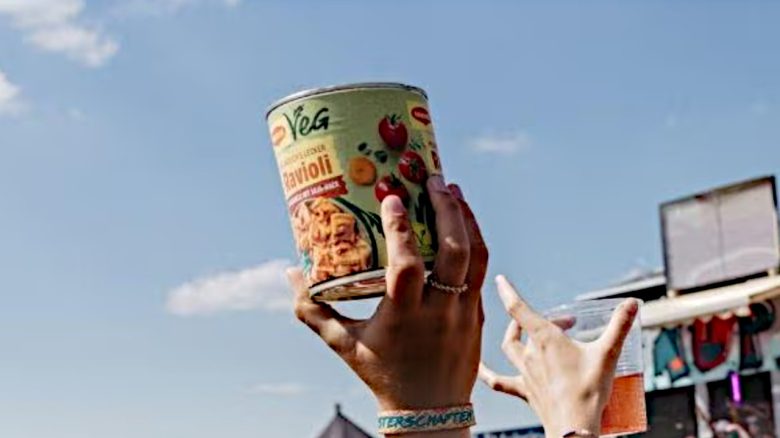
Germany has hidden reserves to supply the population in case of emergency. The Minister of Agriculture wants to further expand the stocks, using convenience products like ravioli.
Many states build reserves to supply the population in emergencies. The Federal Republic of Germany is also stockpiling supplies in more than 150 warehouses. This is stipulated by the Food Security and Preparedness Act (ESVG).
The reserves mainly consist of products like rice, wheat, oats, legumes, and condensed milk to ensure food security for the population.
But now, Agriculture Minister Alois Rainer stated in the “Berlin Playbook Podcast” by Politico that there must also be complete meals that can be eaten directly. His idea: An international ravioli reserve.
Boxes of Convenience Products for Emergency Supplies
This is what the minister says: In the podcast, the minister explained that we are currently in a difficult security policy situation. For this reason, he wants to improve and expand food security, i.e., the existing emergency supplies. He explains in the podcast:
We are currently in a security policy situation that makes us all think. For me, it is important that, in addition to the supply of armaments, food security plays a major role.
I want to expand this into a national reserve with already prepared products that can be consumed right away when heated. Then we might be talking about canned ravioli or canned lentils or other things. (…) My approach would be to involve the private sector, the large grocery chains. They have the supply chains, and they have storage capacity.
The costs for this expanded food reserve are estimated at 80 to 90 million euros. Der Tagesspiegel (Paywall) reports that the current food reserve is said to cost the state about 27 million euros each year.
Everyone Should Have an Emergency Supply at Home
What should one have at home in general? For emergency supplies at home, the Federal Office for Civil Protection and Disaster Assistance (PDF file) recommends having a supply for at least 10 days at home, ideally for up to 14 days, similar to the recommendations of the federal government. Important components are:
- sufficient drinking water (about 14 liters per week and per person)
- non-perishable food like canned goods (vegetables, fruits, fish)
- dry products (rice, pasta, lentils), biscuits, crackers, honey, and sugar
- cash in small bills
- emergency bag with important documents
- necessary tools, including can openers and pocket knives



The federal government wants the German population to work more. But most people are already working too much. This is now shown by a report from the Federal Statistical Office. At least: Compared to the previous year, the overtime has slightly decreased, but is still high: Merz demands more work from the Germans, but one in five in Germany is already working too much overtime.