

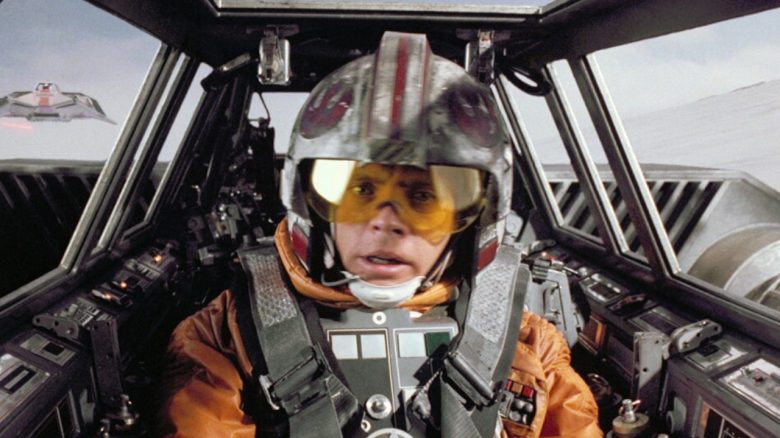
Most fans of Star Wars agree that the movies created under the control of George Lucas are among the best. This is mainly due to a secret that the filmmaker has always followed.
George Lucas invented his grand space saga Star Wars in the mid-1970s. Among other reasons, because he wasn’t allowed to adapt another major sci-fi franchise. He directed the first film himself, then he handed over that position – until the prequels, which brought a new trilogy starting in 1999.
Especially these three films have faced criticism to this day. They are said to be poorly written, not particularly well directed, and acted. Over the years, the opinion of many fans has become more positive. However, one aspect made Lucas’s films worth seeing upon their release: the interplay between the visuals and the music of John Williams.
Behind this lies a rule that George Lucas followed, and which later was neglected in the Disney films.
An old virtue from the early days of cinema
What is the rule? George Lucas knows film history well and continually references it in his works. In Star Wars alone, there are many allusions to old war films. Lucas seems particularly taken with the silent film era of cinema. Their rule: since there are no dialogues, image and music become even more important.
In the book “The Making of Episode 1 – The Phantom Menace” (via fandomwire.com), the director explains how significant the influence of silent films on Star Wars was:
The Star Wars films are essentially silent films, as they are stories told visually. In silent films, the relationship between image and music is everything. A large part of the narrative and emotions is conveyed through the music.
George Lucas
When watching Star Wars, it becomes clear what Lucas means. Many sequences rely on the successful combination of striking images and sometimes thrilling, sometimes touching music. The melodies of John Williams are world-famous, and almost everyone can hum them.
In contrast, the dialogues by Lucas are rather notorious for not being particularly well-written. They often sound wooden, and the characters do not come across as real people when speaking. Luke actor Mark Hamill once protested against this.
Fortunately, Lucas allows the characters to remain silent in many important moments, turning these scenes into silent films accompanied by music.
A prime example of this is the destruction of the Jedi Temple in Episode 3, or the duel between Obi-Wan and Anakin. In both scenes, there is very little dialogue, instead, the interplay between images and music prevails.

Malicious tongues might now say that this rule has been forgotten since the sale of Star Wars to Disney. In Episodes 7-9, much is over-explained, and the plot often rushes from one action highlight to the next. Instead of allowing the images and music to take effect, too much is explained that actually needed no explanation.
In the end, it is of course a matter of taste what one personally prefers. Knowing George Lucas’s approach to the staging of his films helps one understand his style better. What do you think? Do you prefer the old or the new episodes of Star Wars? Feel free to let us know in the comments. Among other things, one of the actors from the sequels had a big problem: Mark Hamill did not like Luke in Star Wars 8, creating his own dark backstory that still makes little sense

Your opinion is important to us!
Do you like the article? Then let us know!