Some players believe that anti-aliasing would make games worse. However, the feature has an important function.
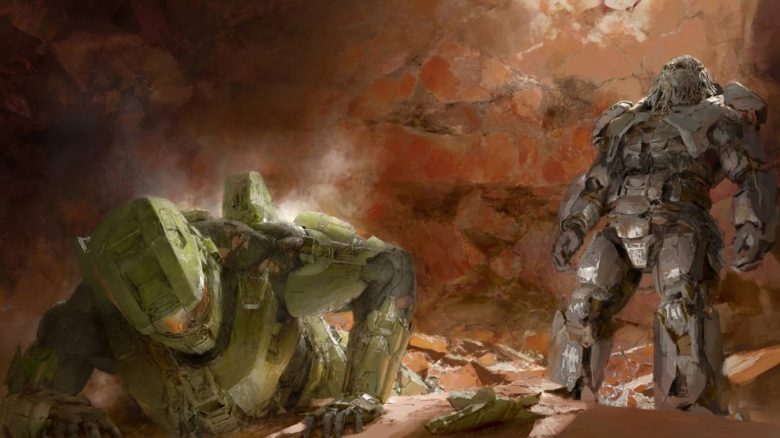
What are players currently discussing? In a thread on reddit, players are currently debating whether anti-aliasing is harmful to games and performance. For example, the thread starter explains, “It’s insane how modern games are being destroyed because of this. With every new game that comes out now, it seems like Vaseline is being smeared on the screen,” illustrating this point with an example from the shooter Halo: Infinite.
He shows a still image with anti-aliasing turned on and off. Some explain that this is precisely the problem, because one cannot show the advantages with a still image.
Anti-aliasing improves image quality, TAA helps weaker PCs and consoles
What is anti-aliasing anyway? Anti-aliasing simply means “smoothing edges.” Pixels are typically rectangular. Anti-aliasing ensures that transitions between objects appear rounder and softer. This creates a more realistic image, as there are fewer sharp edges caused by pixels.
TAA is a special form of anti-aliasing and refers to temporal anti-aliasing: The technique uses multiple individual frames to calculate the smoothing. This requires significantly less power, but has the drawback of creating motion blur. Many people are upset about this in the thread on reddit.
Why is this used today? Not everyone can afford a high-end PC with modern components to play all titles. TAA is used especially by older hardware and game consoles to reduce the performance load. Users are willing to accept the motion blur when frame rates are already low. This ‘fakes’ a smooth experience to the human eye even at low FPS.
A user with a high-end PC might complain about TAA, but other users with slower hardware are likely grateful to developers who integrate TAA and other features into their games. These players feel understandably marginalized by “power users.”
In general, it is advisable to enable anti-aliasing if you have the computing power for it: As this reduces image noise, the image quality increases significantly. If you do not have the corresponding hardware, you can save a lot of performance by turning off anti-aliasing and potentially significantly increase your FPS.


What is another problem? Another criticism is the example provided by the thread starter. Some users do not believe this can be the real image quality: One user writes, “So this somehow feels like a very low TAA setting or upscaled from a very low-resolution image example.” The user adds:
The only way to compare AA in games is to render a game on your own hardware and switch between AA and no AA. A static image or a recorded video will always be heavily compressed, which causes the image without anti-aliasing to look better than it actually does in real-time.
Others add that Halo: Infinite is technically a difficult game anyway: To make a case for how bad anti-aliasing is would be the worst possible example.
Criticism of DLSS: Another technology in games is currently also under criticism. Many players believe that features like DLSS lead developers to spend less time optimizing their games. In the end, the games may not run at all without the “miracle technology”: