

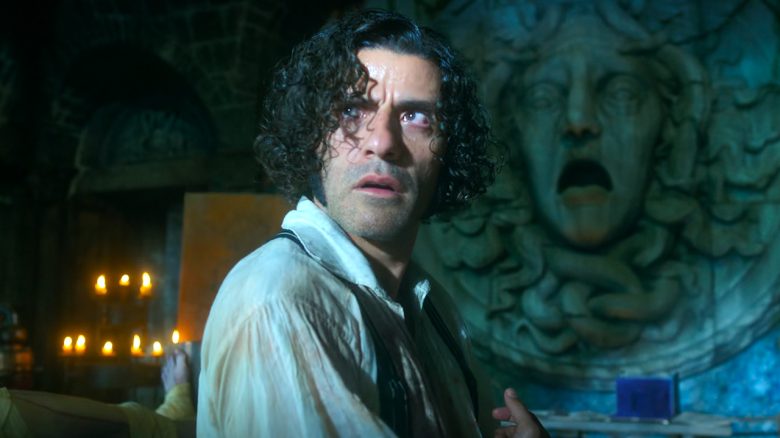
On Netflix, the new film by Guillermo del Toro premieres on November 7th. It is an adaptation of the well-known novel “Frankenstein” by Mary Shelley, which has been adapted many times. What makes this version different – or even better?
Viktor Frankenstein is a legendary figure of horror literature. Perhaps even more famous is his monster, that creature he assembles from various body parts and then, in a bold attempt to play God, brings to life.
The story has been adapted numerous times, with the version from 1931, in which Boris Karloff played the monster, being the most well-known. When people think of the creature, they likely envision him. It is not easy to come close to this adaptation.

Guillermo del Toro, director of Pans Labyrinth, Shape of Water, Hellboy or the short-lived franchise Pacific Rim, has taken on a real mammoth project when he decided to adapt this story again. He has emphasized multiple times in the past what a big fan he is of the source material, and that the old films are very close to his heart. For him, Frankenstein’s monster is a “personal messiah“, he said in an interview with NPR.
On Netflix, his version of Frankenstein premieres on November 7th. MeinMMO author Christoph Waldboth has already seen the film in a limited theatrical release and explains what it does better than the old classic.
The Human Monster
Is the film worth it? Del Toro tells in the first half of the film about how Viktor Frankenstein grows up, becomes a scientist, and eventually develops ambitions to create an artificial being.
He succeeds, of course. The monster lives, but it is frightening, incredibly powerful, and at the same time unpredictable. Its intelligence is quite limited, and it only learns to speak after some time.
The second half of the film is then told from the perspective of this creature. And here it quickly becomes clear what the great strength of del Toro’s adaptation is. It places the monster itself even more in the center than the original from 1931. Its depiction by actor Jacob Elordi feels profoundly human.
We can read its thoughts and emotions anytime from its face. The monster is not a patched-together abomination but deep within it sleeps a human soul. This allows us, the viewers, to form a much deeper bond with the character than was possible with Boris Karloff’s performance.
After all, the creature’s fate is very tragic: it realizes that wounds and other injuries cannot harm it. The monster is immortal but longs for death. It is lonely in life and is always chased or shunned by people.
Guillermo del Toro makes it so that the creature grows on you. This is not really surprising, since the director is an expert at bringing fascinating monsters to the screen. Just think of the faun from Pans Labyrinth or the amphibian man from Shape of Water. They are all portrayed by real actors in costumes, not by soulless CGI figures from a computer. Del Toro once again shows that his heart beats for the monsters on the fringes of society – even when they do not always act correctly.



A Feast for the Senses, but Not Perfect
Is the film flawless? No, not at all. But first, let’s talk about the positives: Besides the monster itself, the audiovisual presentation of the story is especially commendable. Every image looks simply breathtaking, whether it shows magnificent castles, filthy basements, or laboratories filled with limbs. This is also typical of del Toro – stylistically, the director simply knows how to do it. A particular highlight is the sequence where the monster is brought to life during a terrible storm.
Things are different when it comes to the pacing. The two halves of the film differ significantly from each other. While the first half explains a lot and the characters become real chatterboxes, the second half is dominated by silence. When the story follows the monster, it becomes much more atmospheric and quieter, unfortunately, this abrupt change in pace feels a bit awkward.
Some characters, like the newly added character played by Christoph Waltz, were unnecessary – they unnecessarily inflate the already long two and a half hours. Acting-wise, especially Oscar Isaac as Frankenstein and the aforementioned Jacob Elordi as the monster make a good impression.
Who is the film suitable for? Those who know Frankenstein should give the new version a chance. It doesn’t introduce much new or different but offers a deeper monster as an added value. Those who do not know the story should definitely take a look, as it has lost none of its fascination since its first appearance in 1818.
One thing should be said: Do not expect a horror film. Guillermo del Toro clearly places the tragic character and the philosophical thoughts of the source material in the foreground. This leads to eerie moments, but real horror is hardly present, even though there are some hard spikes of violence.
If at all possible, watch the film in one of the last theater showings (big screen!) otherwise choose the straightforward way through Netflix. Unfortunately, not all of the Mexican director’s works have been successful at the box office, and one particular failure still bothers him: Guillermo del Toro still regrets that one of his most important films flopped so badly

Your opinion is important to us!
Do you like the article? Then let us know!