


In FIFA 16: Ultimate Team, chemistry plays an extremely important role. Until now, one could only read: “In FIFA Ultimate Team, you need strong chemistry if you want to build the best possible team,” says EA Sports.
The widespread opinion among FIFA players is accordingly: The better the team chemistry, the stronger my team is. This is obvious and understandable. But unfortunately, that is not entirely true. We are looking at the exact numerical impact of chemistry on your Ultimate Team.
Team Chemistry and Player Chemistry
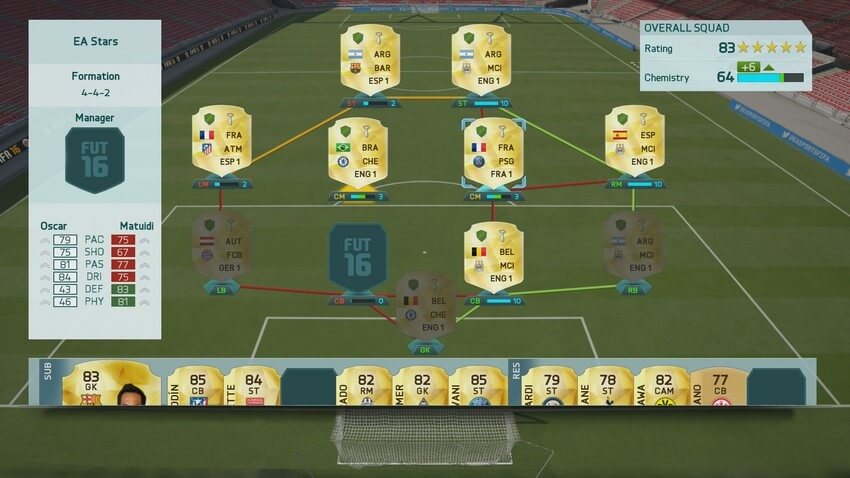
How much chemistry influences your players’ attributes has perhaps been the biggest secret in FIFA Ultimate Team. A team chemistry of 100 is good; anything below that is less good; everyone knows that by now. Essentially, this is true. However, it is not just the obvious team chemistry, which is displayed in the upper right during the lineup, that affects your players but especially the player chemistry. One must distinguish between:
1. Team Chemistry: is always visibly displayed in the upper right during the lineup. Team chemistry consists of all player chemistry values. It varies between 0 and the maximum value of 100.
Calculation: Team chemistry = Player chemistry 1 + Player chemistry 2 + … + Player chemistry 11
This formula allows for a total value of 110. However, theoretical values above 100 do not have a greater effect than the maximum value of 100.
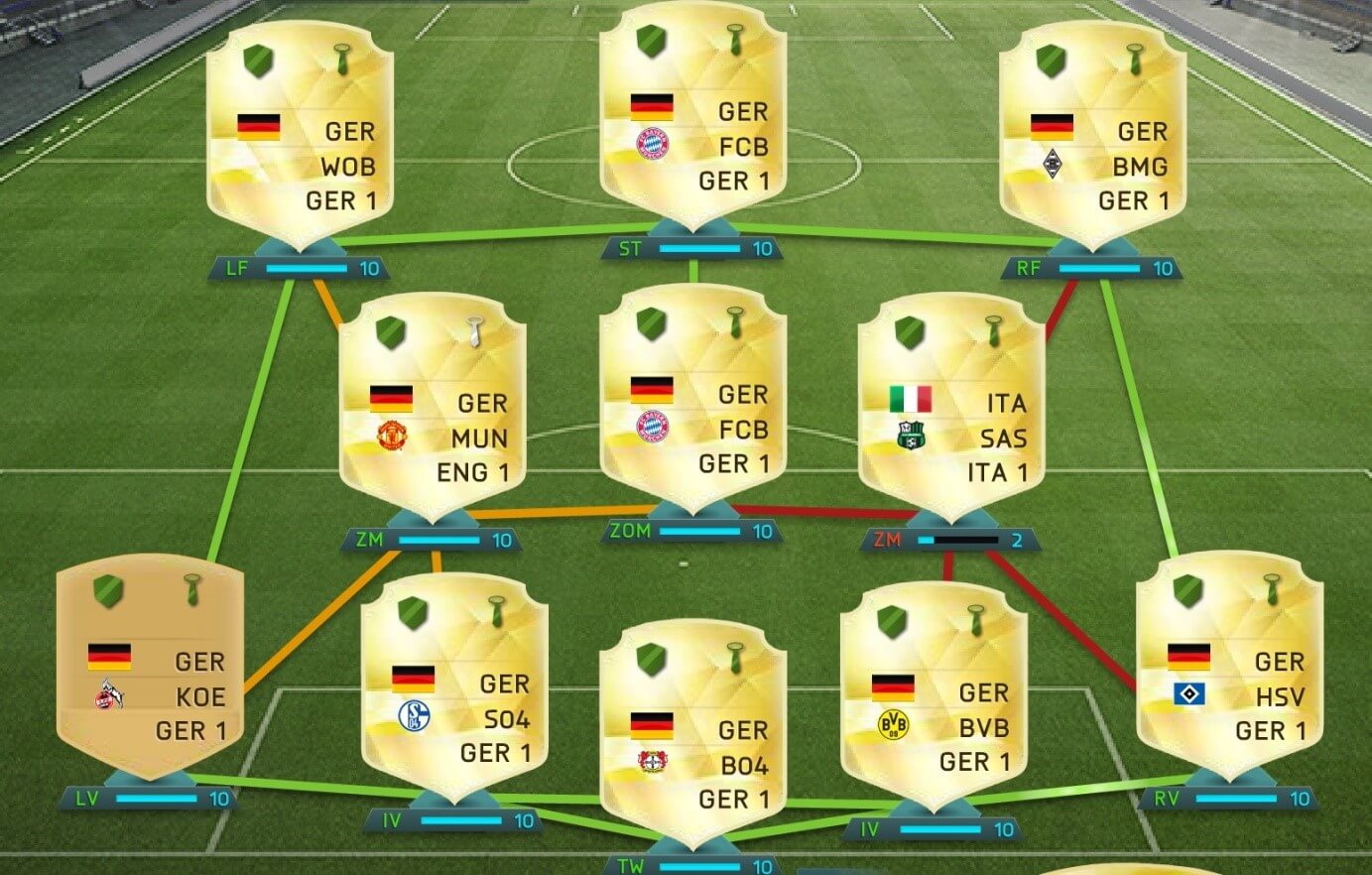
2. Player Chemistry: you can check this when you “flip through” your active team with the right stick (in the web app this is done by scrolling). In the following image, the player chemistry values are displayed with blue bars below the player card. The maximum value is 10 per player.
Player chemistry consists of: position, connections with teammates (red, orange, green), manager bonus, and loyalty bonus. We will describe how it is calculated in detail later in this guide.
What is the relationship between Team Chemistry and Player Chemistry in the game?
Initially, it is important how the chemistry value is weighted in the game, that is, directly on the pitch. The average of all eleven player chemistry values is a remarkable 75%, with team chemistry contributing the remaining 25%. It is therefore significantly more important ‒ and this is indeed surprising ‒ to focus on strong player chemistry (ideally 10 per player) than to achieve team chemistry of 100.
How does this affect my players’ attributes?
The following equation shows how chemistry value is calculated for each individual player in the game:
Chemistry = (Player chemistry x 0.75) + (Team chemistry x 0.25)
An example: A player with an individual chemistry of 10, playing in a team with 90 team chemistry, will perform better than a player with player chemistry 9 and team chemistry 100 (as: 9.75 > 9.25). In short: player chemistry has a triple weighting on your players’ attributes, while team chemistry has only a single weighting. Therefore, pay particular attention to the individual chemistry of your players!
How is Player Chemistry composed exactly?
Here, the equation is:
Player Chemistry = Position/Connections + Manager Bonus + Loyalty Bonus
This is significantly more complicated to calculate than the equation for team chemistry. We will try to present the variables as clearly as possible.
Positions and Connections
This value is the trickiest to determine. It depends on the position a player occupies and the teammates in his environment. It is important that the nationality, league, and club match as much as possible.
The following table shows the relationship of connections (Links) and positions:
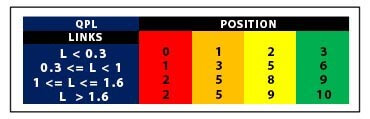
The colors of the positions indicate how well the player is positioned: red means completely wrong, orange means that this position has little to do with his natural position, yellow indicates a decent relationship to the position, and green shows the natural positioning.
The following table illustrates all possible combinations:
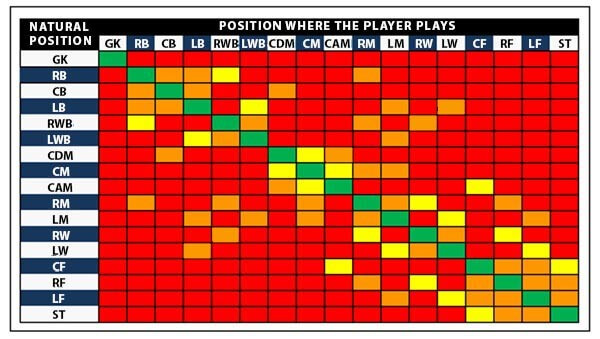
In the first table, the L (Links) must also be highlighted: this value measures the intensity of the relationship of the player with his teammates.
3 means: same nationality and club,
2 = same club but different nationality, or: same nationality and league but different clubs.
1 = same league but different nationality and club, or: same nationality but different league.
0 = no match.
Depending on how the connections and the position are combined, the maximum value of player chemistry 10 can already be achieved here. In short: just make sure that your players play in their positions and that nationality and club match as much as possible; then it cannot go wrong.

Manager Bonus
If the league or nation of the manager matches with a player, the player chemistry value increases by 1. However, the bonus cannot be higher than 1, thus one match is completely sufficient.
Loyalty Bonus
If a player is drawn from a pack by oneself or has completed 10 matches with a player bought on the transfer market, there is a loyalty bonus added to the chemistry value of 1. This value cannot be increased.
What about Legends on Xbox?
Legends also need good chemistry. However, since they are not assigned to any league or club, they behave a bit differently. Here, player chemistry is calculated as follows from the relationships with teammates:
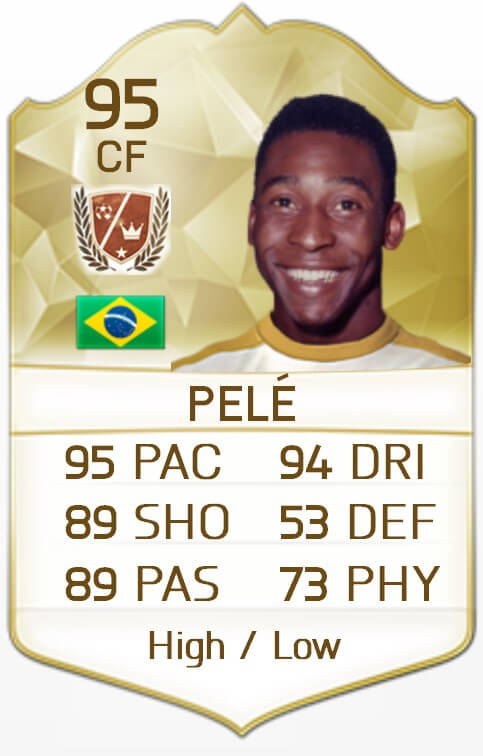
3 = Legend of the same nationality (green)
2 = Legend, but different nationality, or: no legend, but the same nationality (also green)
1 = Neither a legend nor the same nationality (orange)
0 = Legends cannot have red connections with other players.
In total, player chemistry can theoretically reach the value of 12, but anything above 10 has no stronger effect on individual chemistry than the maximum value of 10.
Phew, that’s it for now. All in all, the conclusion remains that chemistry in FIFA 16: Ultimate Team is anything but easy to decipher.

Your opinion is important to us!
Do you like the article? Then let us know!