
What was intended as a temporary solution for a formatting software continues to accompany Windows to this day: This small detail from 1994 still causes limitations on many Windows computers.
What is it about? In 1994, the developer Dave Plummer was working at Microsoft on a problem that should have been solved quickly: A tool for formatting disks needed a simple user interface.
The solution was deliberately kept simple and accessible. However, this “temporary” approach was only partially revised for a long time (gry-online).
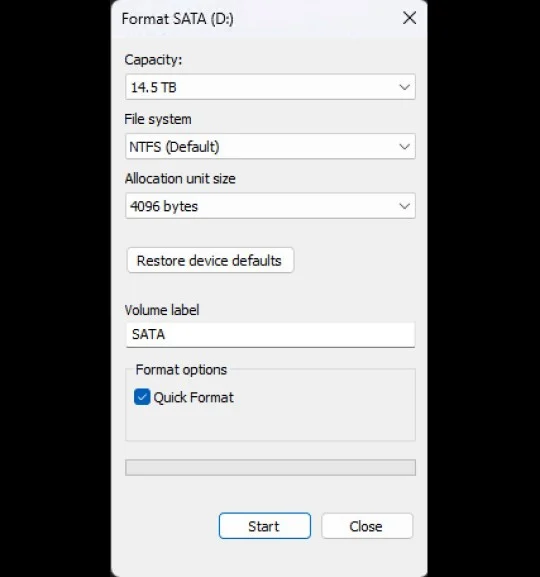
The result: a limit that still exists in many computers running Windows 10 or older – the maximum size of 32-GB partitions when formatting.
FAT … what?
Why does FAT32 play such a significant role? FAT32 is one of the best-known file systems out there. It was developed to support as many devices as possible. FAT stands for File Allocation Table.
USB drives, consoles, cameras, or televisions still rely on FAT32 because it works almost everywhere. This wide compatibility ensures that the system, despite its age, is far from vanished.
The problem, however, is not the file system itself, but the tool that Dave Plummer developed back then. Because FAT32 does not actually come with this limitation (RPTU).
The 32 GB limit is only created by the Windows formatting tool. This imposes an artificial restriction when creating FAT32 drives, a throwback to the original temporary solution from the 90s.
Why does Windows only allow 32 GB for FAT32? In 2021, the former software developer Plummer published an explanation on his YouTube channel regarding how this limitation came about.
As Plummer explains, he intentionally chose this limit. Larger partitions could have caused performance issues back then, and he wanted to encourage users to move towards more modern file systems in the long run.
According to the Polish online medium Gry-Online, the tool, therefore, remained practically unchanged.
First Change with Windows 11
What changed with the big update? With Windows 11, Microsoft has significantly raised the decades-old limit. While formatting was previously capped at 32 GB, newer versions of Windows now officially allow formatting FAT32 partitions up to 2 TB. This matches the actual technical ceiling of the file system (The Verge).
However, the change is not consistently implemented everywhere: In the classic formatting dialog, the old limit may still appear in some cases (Microsoft Blog Post).


Even small decisions, like those made by Dave Plummer over 30 years ago, can resonate in everyday use for decades. Today, most computers come with the pre-installed operating system Windows. But many companies still add additional applications that harm your PC’s performance.