

Während Unternehmen in den Vereinigten Staaten Rekordgewinne einfahren, sinkt der Anteil der Arbeitnehmer am Wohlstand. Die Ökonomin Diane Swonk spricht von einem „Gefühl des Verrats“ – und warnt vor Folgen für Gesellschaft, Demokratie und den Umgang mit KI.
Um welche Ausgangslage geht es? Eine neue Analyse aus dem „Economic Compass“ der Wirtschaftsprüfungs- und Steuerberatungsgesellschaft KPMG zeigt eine Entwicklung,
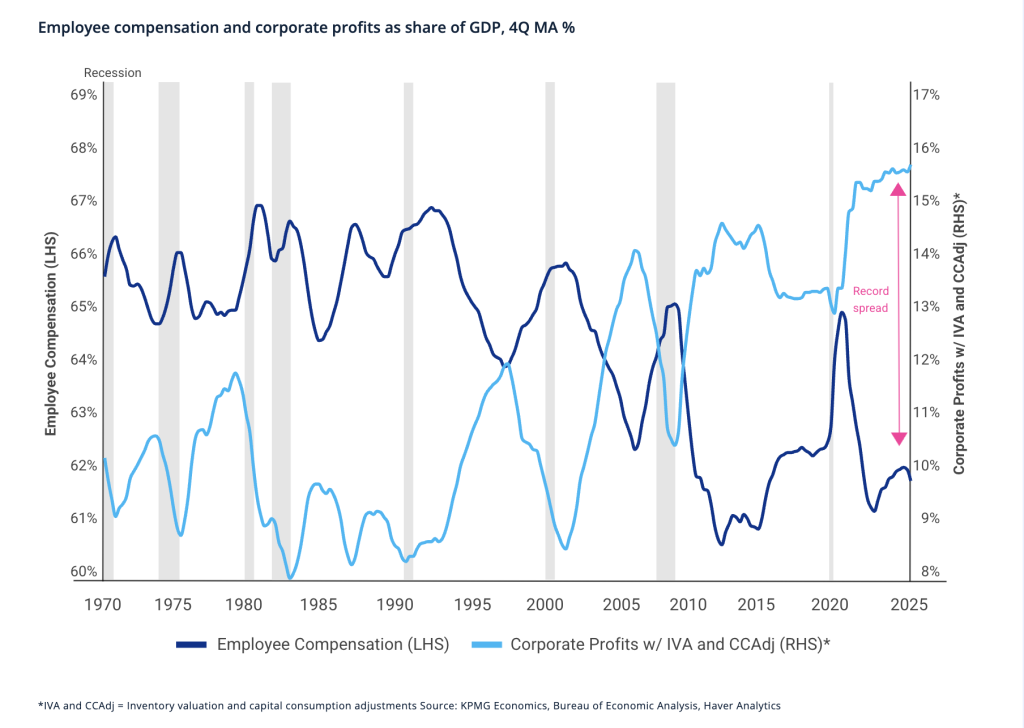
- Unternehmensgewinne machen laut Bericht 15,85 % der gesamten US-Wirtschaftsleistung aus – 1982 waren es noch rund 8 %.
- Gleichzeitig ist der Anteil der Arbeitnehmervergütung am Bruttoinlandsprodukt von 66,6 % auf 61,9 % gesunken.
- Laut dem Magazin Fortune (Artikel hinter Paywall) ist der Unterschied zwischen Kapital und Arbeit damit so groß wie nie. Der Fokus liegt also auf der relativen Verschiebung der Verteilung, nicht aber auf absoluten Lohnkürzungen.
Die erfahrene Wirtschaftsexpertin Diane Swonk hat sich die Ergebnisse der Studie angesehen und zeigt sich erschrocken. Sie spricht sogar von einer „unterschwelligen Strömung des Verrats“.
Wer ist die Expertin? Die Analyse stammt von Diane Swonk. Sie ist Chefökonomin und Managing Director bei KPMG US, einem der weltweit größten Wirtschaftsprüfungs- und Beratungsunternehmen. In ihrer Rolle bewertet sie makroökonomische Entwicklungen für Unternehmen, Investoren und politische Entscheidungsträger.
In einem Social-Media-Beitrag auf LinkedIn schreibt sie (aus dem Englischen übersetzt):
Dieses Diagramm verfolgt mich. Ein Freund nennt es das ‘Revolutions-Diagramm’. Ungleichheit schafft soziale und wirtschaftliche Instabilität.
Die Aussage Swonks nimmt Bezug auf die im Report veröffentlichte Grafik:
In ihrem Beitrag erklärte sie, dass dieser Vertrauensverlust weltweit und über mehrere Jahrzehnte hinweg zu beobachten ist, insbesondere jedoch in den Ländern des globalen Südens.
Für viele schlechter als erhofft
Wie sieht die wirtschaftliche Realität aus? Auf dem Papier wirkt vieles stabil: Die Inflation kühlt sich nach Rekordhoch 2022 in den USA ab, das Wachstum hält sich, der Konsum bricht nicht ein (Statista). Doch laut Swonk verdecken die Gesamtdaten eine wachsende Spaltung.
Laut Fortune wird das US-Konsumwachstum seit der Pandemie fast ausschließlich von den reichsten 20 % der Haushalte getragen. Für die unteren 80 % reicht das Einkommen vielerorts lediglich aus, um mit der Inflation Schritt zu halten. Gleichzeitig steigen Lebenshaltungskosten in Bereichen wie Wohnen, Energie, Versicherungen oder Kinderbetreuung weiter.
Swonk spricht deshalb von einer „unterschwelligen Strömung des Verrats“ – etwas im wirtschaftlichen Narrativ sei zerbrochen.
Einmal mehr KI
Welche Rolle spielt KI bei der Unsicherheit? In diese ohnehin fragile Lage platzt nun eine weitere Unsicherheit laut Swonk: Künstliche Intelligenz. Laut der Expertin verweisen CEOs bereits auf KI, um Einstellungsstopps oder Entlassungen zu rechtfertigen – noch bevor echte Produktivitätsgewinne messbar sind.
Das könne kurzfristig sinnvoll erscheinen, langfristig jedoch gefährlich sein. Denn wenn Menschen den Eindruck gewinnen, dass technologische Innovation vor allem Jobs vernichtet und Ungleichheit verstärkt, wächst die gesellschaftliche Ablehnung gegenüber KI (KPMG).
Gerade für Branchen wie Tech und Gaming, die massiv auf Automatisierung und KI setzen, könnte das zum Problem werden.
Diane Swonk fasst die Analysen wie folgt zusammen:
The result is an economy that appears resilient but feels increasingly fragile. […] Growth has held up, yet the connective tissue that supports labor markets, investment, and global cooperation is fraying. Workers are more anxious, investors more herdlike, and markets … more vulnerable to shocks than headlines suggest.
Das Ergebnis ist eine Wirtschaft, die widerstandsfähig erscheint, sich jedoch zunehmend fragil anfühlt. […] Das Wachstum hat sich gehalten, doch das Bindeglied, das Arbeitsmärkte, Investitionen und globale Zusammenarbeit stützt, bröckelt. Arbeitnehmer sind ängstlicher, Investoren verhalten sich eher wie eine Herde und Märkte sind anfälliger für Schocks, als es die Schlagzeilen vermuten lassen.
Diane Swonk KPMG Economic Compass
Die analysierten Entwicklungen lassen sich zwar nicht 1:1 auf den europäischen Sektor bzw. Deutschland übertragen, sind jedoch aufgrund der hiesigen Entwicklungen ähnlich (WSI & WSI)



Der Anteil am wirtschaftlichen Kuchen verschiebt sich laut der Expertin langfristig zugunsten der Unternehmen und KI spielt dabei eine verstärkende Rolle.
Dass viele CEOs selbst einräumen, dass KI bislang weder Produktivität noch Beschäftigung messbar verändert hat, passt dabei ins Bild. Trotzdem wird die Technologie bereits als Begründung für harte Einschnitte genutzt. Warum diese Diskrepanz brisant ist und was das für Arbeitnehmer bedeutet, lest ihr hier: Tausende von CEOs haben gerade zugegeben, dass KI keinen Einfluss auf Beschäftigung oder Produktivität hat

Deine Meinung ist uns wichtig!
Gefällt dir der Artikel? Hast du irgendwelche Kommentare? Sag uns, was du denkst!





























Kommentare
Es sind spannende Zeiten. Ich bin gespannt, wie lange sich diese Form des Kapitalismus, die soziale Markwirtschaft, noch halten wird.
Ich hatte bis dato immer geglaubt, das der Kapitalismus die Mehrheit der Menschen/Konsumenten benötigt, um sich selbst zu erhalten, zu wachsen, das System gezwungen ist, anderen Wege des Konsumentenerhalts zu finden, wenn die Zahl der Arbeitslosen wächst – doch jetzt sind es also nur 20%, die für den Konsumwachstum sorgen. Ergo wird es für die Industrie bequemer, sich nicht um die 80% kümmern zu müssen, wenn die KI weiterhin die Berufswelt „revolutioniert“ und Millionen Menschen auf die Straße setzt.
Firmen haben Menschen schon immer durch Maschinen ersetzt wenns billiger war. Firmen müssen schauen das sie konkurrenzfähig sind. Für den “Konsumentenerhalt” ist grundsätzlich der Staat da, indem er Steuern einzieht und verteilt. Das heisst natürlich nicht das Firmen nicht auch was für die Arbeitnehmerbindung tun können und sollten.
Das Problem was wir haben das sich speziell große Firmen den Steuern entziehen und der Staat guckt zu. Deshalb die zunehmende Differenz die im Artikel angesprochen wurde.
Ich würde sagen der gesamte Rechtsruck in der westlichen Welt zeigt Recht deutlich das wir am Ende sind.
Nur hat die Wählerschaft noch nicht verstanden das sie statt Verbesserung ihre eigene Ketten schmieden.
Genaugenommen zeigts das die Politik versagt hat,die Denke der Leute hat sich ja nicht geändert nur das Wahlverhalten. Garniert wird das dann immer mit Endzeit Szenarien. In den letzten Jahrzehnten wurde erst vor den Grünen gewarnt dann den Linken und dann den Rechten. 😉