

The multiverse of Dungeons & Dragons houses a vast array of diverse creatures and personalities. Some of them may seem familiar for good reason, as they are based on myths and stories from the real world. We have selected 8 particularly iconic ones for you.
Which creatures are rooted in the real world? In the lore of D&D, there are plenty of creatures, monsters, and characters that players can encounter. Many of these are inspired by stories, fairy tales, myths, and folklore that find their place in various corners and cultures of reality.
For example:
- Dragons (Worldwide legends, for example in Europe or Asia)
- Unicorns (Worldwide legends, especially in Europe)
- Pegasus (Greek)
- Ogres (French)
- Giants & Trolls (Scandinavian)
- Genies / Djinn (Arabic-Islamic)
- Banshees (Irish)
- Rakshasa (Hindu)
- Naga (Indian)
- Kenku (Japanese, “Tengu” there)
- Onryo (Japanese)
- Oni (Japanese)
- Couatl (Aztec/Mayan, “Quetzalcoatl” there)
- Balor (Irish god of destruction, in D&D they are powerful demons)
- Fairies, Dryads & Pixies (Celtic & Scandinavian legends)
And many more. During your adventures, you are bound to encounter at least one creature that has such an origin in our world. However, there are some personalities and creatures that hold a more influential place in the multiverse of Dungeons & Dragons and also play a larger role in the myths of our world. We have taken a closer look at exactly those for our list.
How was this list created? We have selected 8 particularly iconic personalities and creatures that find their place in both our world and the multiverse of D&D. We aimed to select different ones to offer something for all directions.
We address which myths they are based on and what place they occupy in the multiverse of Dungeons & Dragons. Additionally, we have included their surroundings in the descriptions to provide a better overview.
With our table of contents, you can jump directly to the ones that interest you the most:
Titania & Oberon

Titania and Oberon are considered archfey in Dungeons & Dragons. They are among the most powerful fey beings in the Feywild, a wild parallel world to the material plane filled with magic and unpredictability. Everything is more vivid, colorful, and intense there – but also more capricious and erratic. It is home to many fey creatures and those who descend from them, such as Eladrin, Dryads, Pixies, Satyrs, and Fey dragons.
Titania is the queen of the Summer Court and represents the dual aspects of nature, such as beauty & wildness or flora & fauna. However, Titania is also associated with grace, light, and powerful nature magic, while Oberon often leads the so-called Wild Hunt as the guardian of nature.
Both are popular choices for players who want to play a warlock with an archfey pact. They provide an exciting connection to the Feywild for many campaigns and stories.
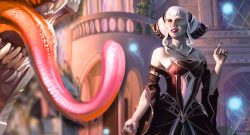
Both Titania and Oberon, as well as the Wild Hunt and many of the fey, find their place primarily in European myths in our world. Titania and Oberon originate from one of the most famous works of William Shakespeare: “A Midsummer Night’s Dream” from 1595. In this, both play a significant role as rulers of the fairies.
The myth surrounding the Wild Hunt also comes from Europe. In folklore, the Wild Hunt describes a ghostly procession of riders, spirits, and hounds that hunts through the sky or forests at night. It is often interpreted as an omen of war, death, or misfortune. Depending on the region, different figures lead the hunt.

Your opinion is important to us!
Do you like the article? Then let us know!