
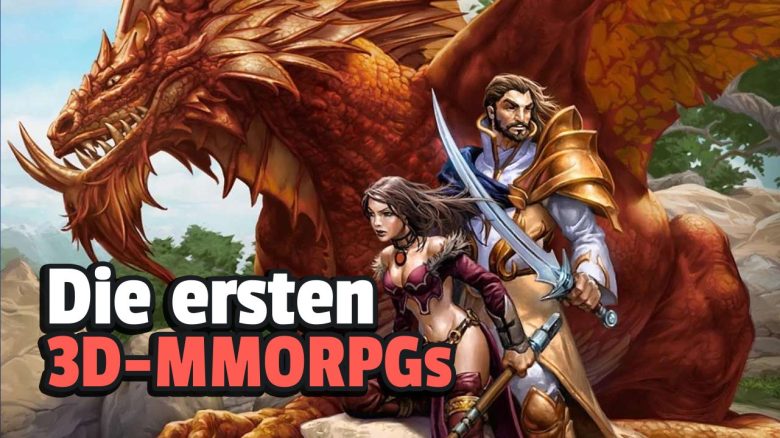
The genre of MMORPGs has fascinated and thrilled millions of players for decades. In a multi-part report, MeinMMO editor Karsten Scholz sheds light on the roots, development, and future of online role-playing games. Part 2 focuses on the first 3D MMORPGs.
After the first part of the multi-part MeinMMO report on the genre of online role-playing games focused on the pioneers of the 1970s, 1980s, and early 1990s, we are now entering the era of the first MMORPGs with 3D graphics.
Which games paved the way for today’s genre kings? Why was there no major hit before 2004 that could elevate the genre from niche to mainstream?
Part 1: The pioneers of online role-playing games
Part 2: The first 3D MMORPGs
Part 3: The extraordinary success of WoW and its reasons
Part 4: The peak of MMORPGs and the failure of WoW killers
Part 5: The great drought and the flight to other genres
Part 6: The status quo of the MMORPG genre and the future
The beginning of a new era
When Meridian 59 was released in 1996, an exciting phase began for all fans of online adventures. The still-playable classic catapulted the genre of MMORPGs into the 3D age, although moving objects were still represented in 2D. A few hundred players could fit into each version of the game world.
The gameplay focus initially centered primarily on PvP duels. Virtual death was severely punished – through the loss of maximum hit points as well as all belongings, which could be looted by other players.
The publisher 3DO referred to the game at the time as MMPRPG, or a “Massively Multi-Player Role-Playing Game” – without the “Online”. The standard term “Massively Multiplayer Online Role-Playing Game” (MMORPG) was only coined a year later by Richard Garriott.
Ultima Online is one of the major milestones of the MMORPG genre:
One classic chases the next
The same Garriott, who became known as “Lord British” through his Ultima role-playing series, had his own MMORPG candidate in Ultima Online. From 1996 onwards, various other online RPGs appeared, in all shapes and colors.
While Ultima Online relied on an isometric 3D view and a subscription model, games like Tibia (1997) used 2D graphics and a free-to-play access. Besides the popular fantasy theme, developers increasingly turned to alternative settings like science fiction (Terra, 1996) or horror (Dark Eden, 1997).
Notable footprints in gameplay were left by not only Ultima Online but especially by EverQuest (1999), Runescape (2001), and Dark Age of Camelot (2001). DAoC especially impressed with its three-front war between the realms of Albion, Hibernia, and Midgard.
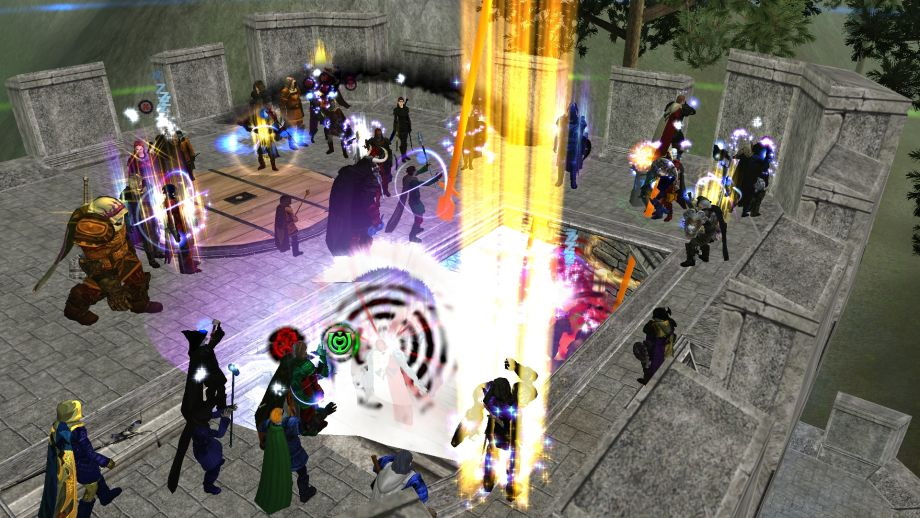
Runescape, on the other hand, attracted countless players with its low barriers (browser game plus freemium model) and even managed to set some entries in the Guinness Book of Records – such as for the most registered players (over 254 million) in 2017 (via Guinness World Records).
In “the first EverQuest,” the overall package of a huge game world, 14 classes, twelve races (plus their alignments, divided into good, neutral, and evil), countless special abilities (such as mastering the Troll language), guilds, and much more excited players.
By the way, there was almost a lawsuit because the EverQuest developers were heavily inspired by a text-based multi-user dungeon representative named DikuMUD (from 1991).
So much so that at times even the accusation was made that parts of the code for EverQuest had been copied. On the official website of DikuMUD, there is still a final statement about it today:
“The DIKU group is proud that the ‘DIKU feeling’ has found its way into such an entertaining and award-winning game as EverQuest.”
What was happening in Asia meanwhile?
With the start of the 3D era of MMORPGs in the West, the first significant online role-playing game also emerged in Asia. Nexus: The Kingdom of the Winds became the first million-seller of the genre in 1996 despite its 2D graphics.
Two years later, Lineage – also in 2D – followed with an even greater success, bringing in billions of US dollars in revenues for NCSoft, along with direct successors (Lineage 2 was already released in 2003, using a 3D engine), mobile spin-offs, and modernized clients.
Other Asian milestones of that time include Phantasy Star Online (2000) – which was developed not for PC, but for the Dreamcast – as well as Final Fantasy XI (2002), Maple Story (2003), and Fantasy Westward Journey (2004, which is among the most successful online games of all time in China).
The great fascination of 3D MMORPGs
Entering an online role-playing game for the first time during this pioneering period must have been an unforgettable experience for any player. After all, you were in a often huge, persistent online world. Moreover, the understanding of multiplayer took on a new dimension.
You could encounter other players everywhere to team up, fight, or just chat (MMORPG chats were practically the precursors to today’s social networks). In what other games of that time was that possible?
Even open worlds were not yet a PR buzzword that could be slapped onto almost every genre. Even single-player role-playing games with 3D engines and a large open world were something special (and often randomly generated, as in Elder Scrolls II: Daggerfall).

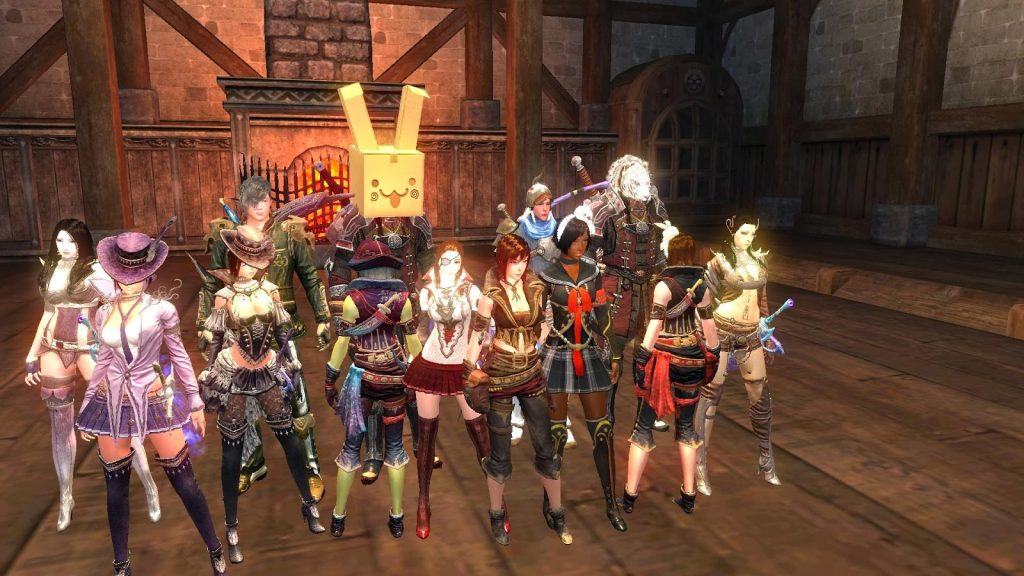
A special social experience
MMORPGs radiated even more fascination once stable communities formed on the servers, where guilds, as well as individual players, could make a name for themselves. Veterans of Dark Age of Camelot would probably now rave about nighttime telephone chains that successfully fended off attacks from the enemy faction.
If such a community of like-minded individuals stays together long enough, friendships and even lifelong relationships can form, accompanied by beautiful memories of guild meetings, challenges overcome together, or special in-game events like competitions, weddings, or role-playing actions.
Lack of internet expansion prevented the bloom of MMORPGs
In this first generation of 3D MMORPGs, there were already some titles that achieved strong sales and subscription numbers. EverQuest reportedly sold three million units by the end of 2004 and reached a peak of 550,000 paying subscribers.
Nevertheless, the genre had not yet reached the mass market broadly up to that point. This had mainly two reasons:
- Anyone wanting to experience an MMORPG needed a home PC with sufficient performance and internet – an expensive hobby.
- The online role-playing games from the 1990s and early 2000s often offered high entry barriers, little comfort, and potentially frustrating penalties (such as for character death).

For context: According to the State Media Center, in 1997, only 6.5 percent of Germans aged 14 and over regularly used any online services. No wonder. There was neither Facebook nor Twitter or TikTok, nor an internet flat rate.
Every online minute inflated the monthly telephone bill. It was no fun using a slow telephone modem back then (DSL or even fiber optic were still pure fiction). The subscription fee was charged on top of various MMORPGs.
These conditions only changed comprehensively in the mid-2000s, from which one game could benefit immensely. But that will be addressed in the third part of our report. Until then, you can pass the time with the following special: The 15 currently best MMOs and MMORPGs 2024

Your opinion is important to us!
Do you like the article? Then let us know!