

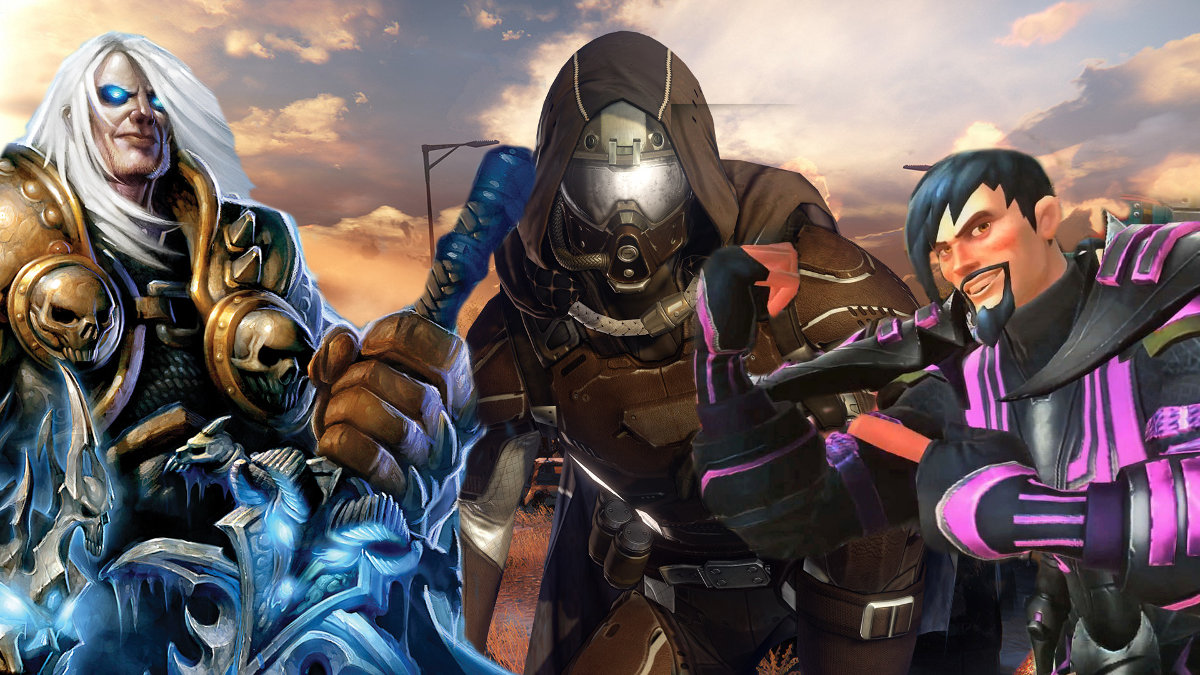
MMOs must be designed so that players can brag about their achievements in them. We will explore this steep thesis using three examples: Destiny, World of Warcraft, and WildStar.
In our special feature, we address three questions that resonate in the MMO scene:
- Why did WildStar fail?
- Why do major US magazines write about seemingly trivial player achievements in Destiny?
- And what on earth is Blizzard thinking with the tweeting in World of Warcraft?

The drama surrounding Everquest Next has its silver lining: The head of the entire EQ franchise, David Georgeson, the guy with the ponytail from the Landmark video, found himself suddenly without a job. By itself, that’s nothing great, okay. But Georgeson used his free time to write a series of articles for the US site mmorpg.com about how an MMO must be structured to succeed. And it’s not just anyone writing, but an industry veteran who really knows how things work.
MMOs must be designed so that players can brag
The most interesting among many theses: An MMO must be structured so that players can brag about their achievements. That they tell their friends about their performance in the game and gain respect for it. And for that, it is essential that those they tell about their successes know the game.
With “I was the first to solo kill the big Pumuckl on our server”, only someone who has been thoroughly beaten by the big Pumuckl before will be able to relate and understand what a dangerous bastard the big Pumuckl is and what a feat it is to defeat him. Okay, Georgeson wasn’t talking about the Pumuckl, that’s my addition, but the idea hopefully is clear!
Now, “players play to brag” is one of those theses that players understandably first reject: Much like Porsche drivers reject the idea that they must compensate for something.
No, one plays for the community, for the story, for the great design ideas, the social components, one isn’t easily manipulated by a little trinket, the ego is fully under control – and they drive the Porsche because it’s a really good car. At most, one might say: “Yeah, there’s some truth to that idea, but that applies to others, not to me.”
Let’s take a look at this thesis using three games. How is it with “successful” games, where everyone knows the big Pumuckl, how does it work with not-so-successful games, and how is it with WoW. And one might have to agree, perhaps gritting their teeth, that there is something to the idea and that it even explains why some games are so successful and others are not.
The current Pumuckl: Crota in Destiny

Destiny is currently a game that is so big and played on so many levels that the biggest triumphs are duly recognized. When, for example, the US site Polygon, which would much rather talk about sexism in video games, the indie boom, and Amiibos, now reports that a player solo completed the final boss Crota, readers may ask: “What’s up with that? Isn’t anything happening in other games? Aren’t there any extraordinary achievements?”
And the honest answer is: Sure, but it’s just less interesting.
Almost every player faces Crota in Destiny. In the 6-member group in normal mode, then later on “hard”. Even the “normal” player is aware of the difficulties that Crota presents. And therefore, they can assess the achievement of doing it alone on “Hard” when they themselves are struggling nicely in the significantly easier “Normal” mode in the 6-member group.
Here, the pursuit of glory works wonderfully. There is a massive player base that can accurately assess what lies behind an achievement. And the idea of being that one who is at the center of such a story once motivates and drives players. And it’s not just for the glory that there is acknowledgment. Anyone who takes Crota down in a particularly creative or funny way can expect a global pat on the back.
This holds true on a smaller scale as well: Those who share a really good Crucible round in Teamspeak or how they carried their team in the Nightfall earn respect. That feels good. MMOs do not take place in a vacuum, but in a social structure and for that, other players are needed.
The nostalgia Pumuckl: In World of Warcraft, EVERYONE tells you what they have achieved
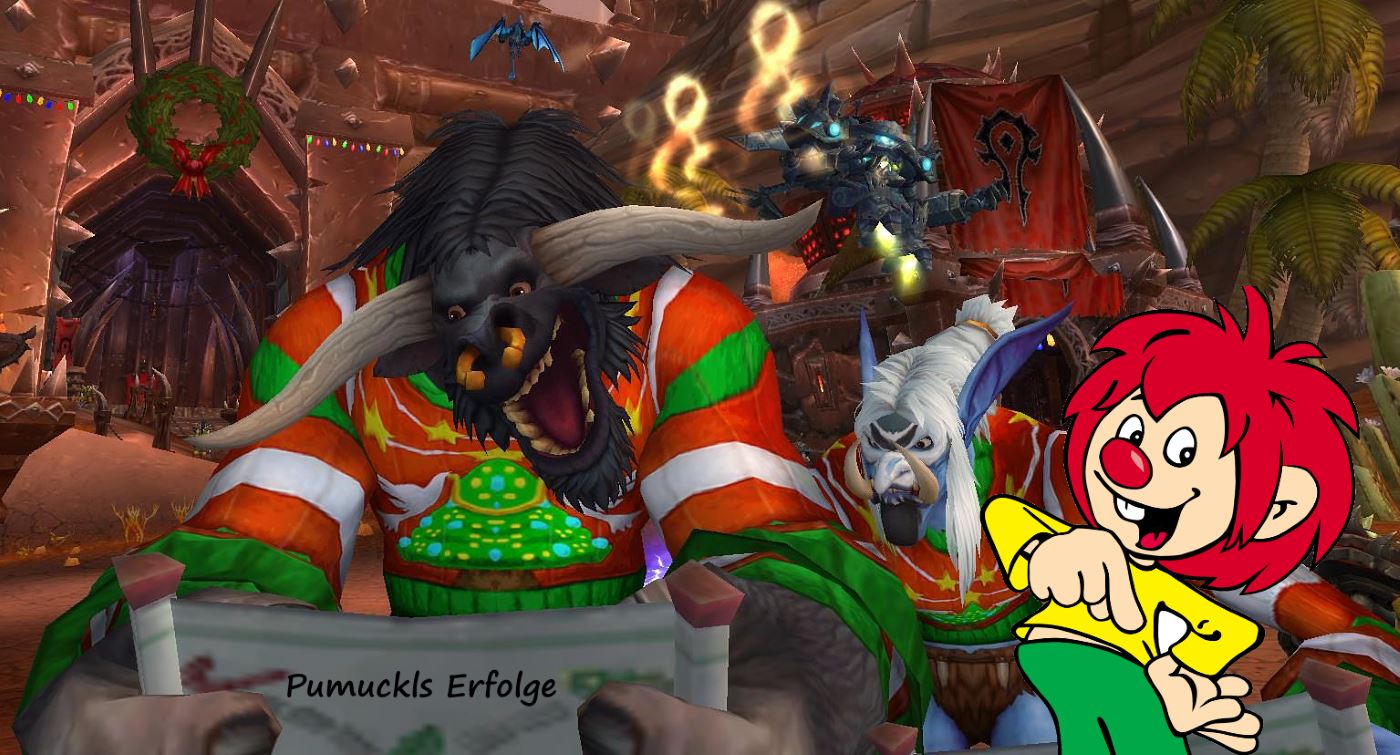
I’ve often encountered the phenomenon in World of Warcraft myself. There, it almost always had a nostalgic component. Most players don’t tell you what they’ve done recently or even in the last two years in WoW, but they talk about what they achieved in the golden days.
Six years ago, one told me about what he had achieved four years earlier in Classic WoW, at a time when you had to pull a wagon through Azshara and practically kite a skyscraper-like end boss to death over hours with a cotton ball to complete such a legendary, epic quest that Blizzard, after thousands of players lost their minds over it, graciously decided to nerf or better yet, remove from the game.
Otherwise, it’s common in WoW to argue about how long one has been there and how long one has played a class to project authority.
This likely stems from the fact that very few in WoW can actually show something and most of it comes down to how patient and persevering one has been. Many achievements in WoW result not from skill, but from patience.
Blizzard has established and ritualized the “showing off” to such an extent that it’s no longer fun, and one has to go to great lengths to still be something special: Everyone has their pets, mounts, titles, was there for some special kill, has seemingly achieved something.
The problem lies in the fact that many “important titles” and “mounts” are still easily obtainable years later. Cross-realm play has dissolved the classic structures that forced players into the confines of a server and a community. In the past, you knew who was at the top on your server, but not anymore.
“Glory” and “achievement” still play a role in World of Warcraft: even if a “World First Kill” in WoW today doesn’t receive the same recognition as it did when it was the Lich King. Back then, the names of those involved in the top guilds were known, and they enjoyed a sort of “celebrity” status. We seem to have moved away from that today. Streamers now take on that function, not necessarily the best players anymore.
Maybe WoW is a good example of what happens when developers try too hard to force bragging in a game so that everyone feels they have achieved something. The success, however, undoubtedly vindicates Blizzard.
The no-name Pumuckl in WildStar: When a boss falls that no one knows, is the MMO dead?
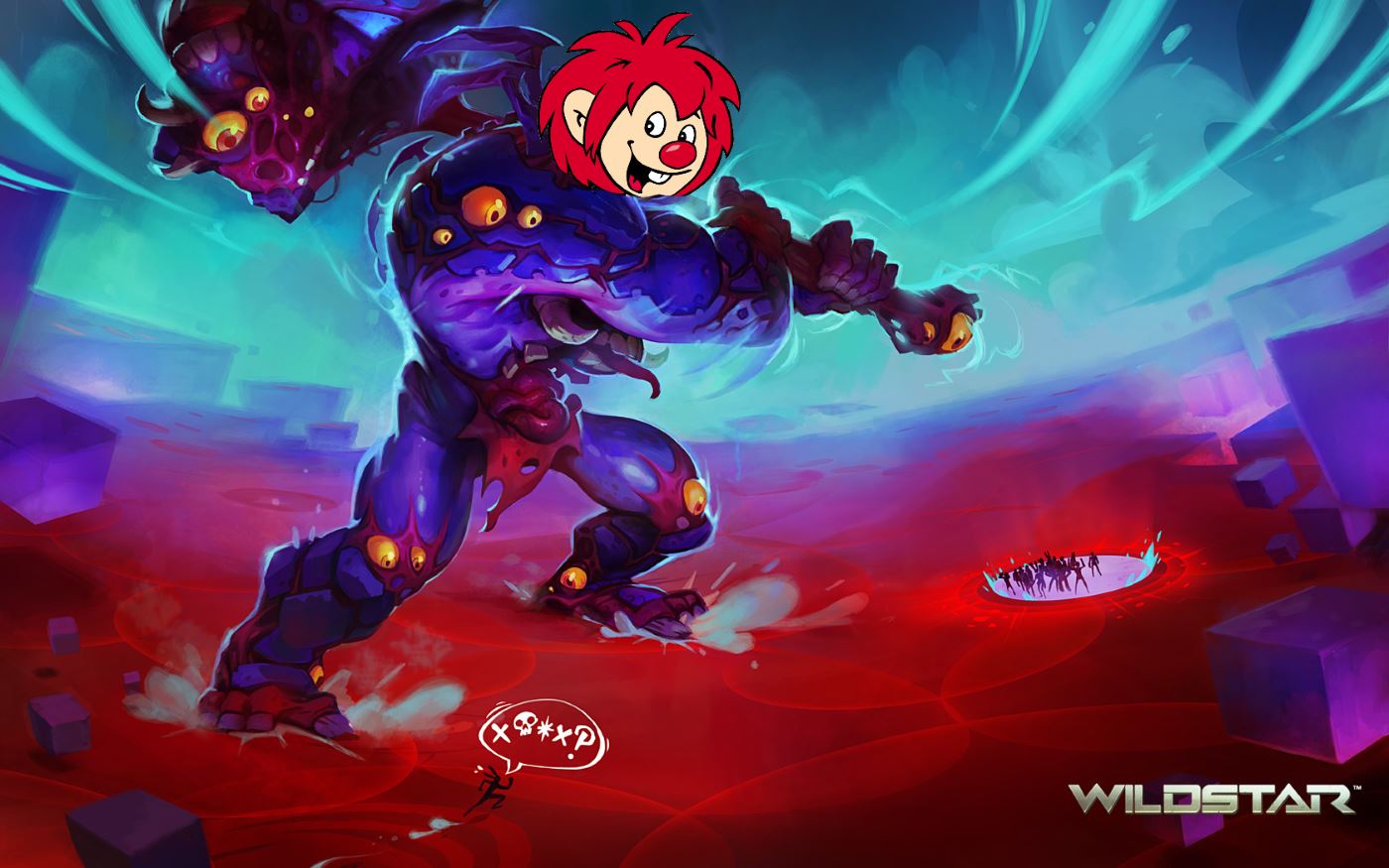
The glory system was likely the downfall of the MMO WildStar. Many pondered (including us for hours) why the game had so little success and indeed, Georgeson’s thesis could be responsible for that.
WildStar wanted hardcore players. More than anything else, they want their achievements to be recognized. What good is achieving a World First if no one cares?
On the fan site readycheck, there was an open chat during WildStar’s early days where you could eavesdrop on the conversations of players. For months, two raiders who had switched from WoW to WildStar enthusiastically discussed the hardcore approach, then increasingly disillusioned about WildStar’s raid scene. And the death sentence could be read in one of the last chats.
They wanted to go back to WoW and were looking for a strong raid guild. But the raid achievements in WildStar over the past months were of no interest there.
A blow to the ego. Being one of the few hundreds who were tough enough to take down a boss in the sci-fi MMO means nothing when no one cares, even though it was incredibly hard.
If you look at the subreddit for WildStar today, you find plenty of kill videos of bosses. Here, not just the first “special” kill counts, but players simply post a neat achievement of their guild.
It’s understandable to crave recognition: While the World First video by Paragon in the last raid tier reached 770,000 clicks on YouTube, the World First of Ohmna, the final boss in WildStar, was viewed by merely 24,000 souls.
So we are ego monsters… what’s the big deal?
It’s undeniable: There’s more truth to Georgeson’s thesis than any of us would like to admit. But it’s not so bad. Humans are driven by a desire for recognition.
And if MMOs are a mirror of our society: Why should it be any different here?
Perhaps, critics have alleged for years, they make it too easy for us to gain recognition, reward us generously for minimal effort, and shower us with the successes and gratifications we so often seek in the real world but fail to achieve.
And perhaps, one might say, there’s a danger in that: That the constant bombardment with small successes and triumphs, as WoW practices, feels so good, appeals to us so much. But it indeed feels good to us and we like it so much – who could resist this lure in a world where a “well done” is so rare?
Blizzard, at any rate, seems to believe in its successful model: With 6.1, every player can now tweet their achievements.
Destiny is orienting itself to the WoW success model: Why not introduce player titles for special achievements alongside the Grimoire cards? The path from “natural bragging with rare achievements” to the sense of accomplishment for everyone seems to be laid out. Although even now, the constant rewards with special items or the prospect of them explains the extreme addictiveness of the game.
And WildStar? It’s currently undergoing a transformation and wants to reward players much more often and frequently. When WildStar was being developed, the developers listened to the players. They demanded brutally tough performance checks, and only the toughest should have a reason to brag about their accomplishments. If they had been honest with themselves, they might have said: Give us something to brag about, but… don’t make it so hard.

Your opinion is important to us!
Do you like the article? Then let us know!