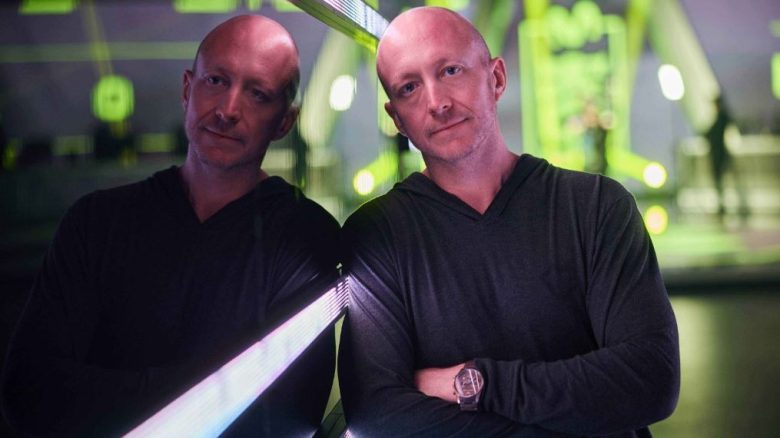
The Valorant Game Changers program is considered a pioneering model for promoting inclusion in esports and female players. MeinMMO editor-in-chief Leya Jankowski spoke with Daniel Ringland, Head of Valorant Esports, in an interview about the program and the positive impacts of promoting inclusion.
In a world where esports continues to grow, one question remains in focus: How inclusive is the scene really?
Riot Games has provided an answer with the Valorant Game Changers, which has repeatedly been highlighted as a positive initiative in the scene. The program was created by Riot Games to specifically offer more opportunities and visibility to women in Valorant esports. It consists of high-profile tournaments and regular competitions designed to create a more inclusive, representative, and safe competitive environment. Game Changers tournaments are exclusively for women and marginalized genders.
We had the opportunity to speak with Daniel Ringland, Head of Valorant Esports, to get an exclusive behind-the-scenes look at the Game Changer program. In this interview, he reveals how the vision for inclusion has been part of the plan from the beginning, how to deal with criticism, and what the ultimate goal is for a more diverse and exciting esports future.
Planned from the start: The inception of Game Changers
MeinMMO: Valorant was released about five years ago. What was the original vision for inclusion and equality in esports at that time, and how has it evolved since then?
Daniel Ringland: Game Changers was actually part of the esports plan from day one. The game came out, and six months later, we launched the first version of the VCT (Valorant Champions Tour). Even in the early planning phases, we knew that we wanted to build a more inclusive esports scene. We understood that this would not happen on its own and that we needed to take action to enable this.
So it was part of the plan from the beginning, and from Anna Donlon, Head of Valorant Studios, to the entire organization, there was a consensus that Valorant should be an inclusive game and therefore should also have an inclusive esports scene. Game Changers was essentially the starting point, one of the first things we thought about.
MeinMMO: Apparently, you have done a lot right, as Game Changers is a showcase project for how to initiate change. What makes the topic of inclusion in esports so important to you personally?
Daniel Ringland: I believe one thing that has particularly stood out to me since I moved and started working on Valorant, but also just playing the game, are the negative consequences of a non-inclusive and non-diverse player base.
When I moved here, I had a group of colleagues and friends with whom I played every Thursday. The group was roughly half male and half female. Sometimes I was in a game with one of my female colleagues and would hear what they had to endure. It was really terrible.
I find the situation appalling when I see female friends of mine having to experience the downsides of a non-inclusive esports and gaming environment. At the same time, I feel fortunate to work for a company like Riot, where we immediately take action to fix something we see as broken or wrong. I think nothing is as sobering as witnessing something like this firsthand and seeing friends or people you care about go through it.
That really motivates you to say, “Okay, we can do better, we should do better, and we will try to do better.”
Separate leagues for men and women: a “protected space”
MeinMMO: I regret that your female colleagues and friends had to have such experiences, but I’m glad you were there to witness it firsthand. It is so important to also get support from men. You have created a showcase format that has been very positively received in the scene. Where did the idea for separate leagues for women come from?
Daniel Ringland: The idea originated because we spent a lot of time talking to high-ranking female Valorant players to understand what they see as the main issues and what their experiences are like.
We held detailed focus groups, and what we repeatedly heard from these women was that they felt that the normal path to becoming a professional was not a “protected space.” They used this term very often: “a protected space.”
We found it important to create such a place. That was the first step in creating a protected space where women can compete with and against other women without having to worry about all the other concerns they have.
From there, the idea came: We spoke with the Game Changers players, heard that they wanted a protected space, and Game Changers is our attempt to create exactly that.
The balancing act of separate leagues
MeinMMO: I must admit that I am personally a bit torn between the concept of a protected space and the separation of leagues. There are also many discussions online about this: “Does it really promote equality, or does it rather hinder it?” How do you see this criticism? Could it also be a problem that the teams are separated to achieve the ultimate goal of equality in esports?
Daniel Ringland: It is a very fine balance. Last year, we had the first Game Changers LAN tournament in Istanbul. We flew in many of the non-competitive Game Changers players, and our team from Los Angeles was there to help us conduct a focus group to understand the perspectives of the players.
We found that there are two groups of players within the Game Changers community. Some want to become professionals; they want to play in the Challenger Leagues and the VCT, end up on stage, and lift the trophy. Then there are players who just want to play in the Game Changers ecosystem and for various reasons do not want to go further.
Game Changers must work for both groups, even though they have very different needs. Some see Game Changers as a springboard to mixed tournaments, while others see it as their ultimate goal. And they need each other to compete against.
It’s a difficult balance because our vision ultimately remains a diverse Valorant esports ecosystem where it is normal to see teams with men and women in a few years. For that to happen, women from Game Changers need to transition to the main ecosystem. Therefore, it is a fine balance because you really have to address both groups.



The fine balance: Springboard or ultimate goal?
MeinMMO: This is interesting because it sounds like there are different needs and some may not want to advance into the currently male-dominated tournaments. This raises the question: Is there an ultimate goal for Game Changers to transition into mixed teams, or do you want to serve both needs as a long-term goal?
Daniel Ringland: I would put it this way: My wish is that a woman who is currently playing in Game Changers and wants to transition to the VCT—which we call the “mixed ecosystem,” but let’s be honest, right now it only involves men—should be able to do so.
If she wants to stay in Game Changers because she enjoys it there, she should also be able to do that. We want Game Changers players to feel that they have the choice and the path to get to the VCT.
Sometimes we internally refer to Game Changers as a “ramp” or “springboard” to the VCT. So we need to ensure that this path exists. It is our job to pave that way so they can take it if they choose to.
Stories of players as inspiration for other women
MeinMMO: Part of the problem is also underrepresentation. The big names usually come from men, similar to football or other male-dominated sports that also receive less media attention. I must honestly admit, we at MeinMMO are similar: We write about the big male names because they are well-known and people are interested in them, and thus one gets caught in a vicious cycle. How are you addressing this problem and the inequality in representation, and how do you promote female professional players?
Daniel Ringland: I believe we are trying to inspire by presenting role models.
When you look at the Game Changers Champions, you see that we create a lot of high-quality features and video content that tells the stories of the players and highlights their uniqueness in the tournament. The idea behind this is that it can be inspiring by showcasing the story behind the person and building her profile.
This year, we slightly changed our content strategy for Game Changers: We report less on pure results but more on the background stories of individual players. This is meant to build personalities and inspire other women to look at these examples and say, “That’s really cool, I can imagine that too.”
And we have found that these contents are received very well. People are interested in hearing the stories of these players.
MeinMMO: That is a very clever idea. That is something we also find: People like to read about people and their stories, not just about numbers. However, I have one last question about the mixed teams. What would need to happen in your view for this to occur more frequently and be successful for all involved?
Daniel Ringland: We believe that Game Changers does a great job of being a protected space where women can compete and improve. Game Changers Champions is quite a big tournament and a significant investment for us.
We think the next step is to create an actual space for mixed play, where the only teams competing are teams with men and women. This year, for example, we recently announced a new tournament called Project Blender.
It takes incentives to start with mixed teams
MeinMMO: What exactly is Project Blender?
Daniel Ringland: It will start with 1,024 teams, all of which will compete against each other. Over the course of the tournament, we will add Challenger League teams and then VCT teams. In the end, two teams will remain, and there will be a winner.
We will create preferred entry spots for mixed teams so they do not enter at the 1,024-level but rather later in the tournament. The idea behind this is to encourage organizations like KC and G2, which have two rosters, to deploy not one men’s and one women’s team, but perhaps two mixed teams.
We had hoped this would happen organically, but it seems we need to create incentives for the teams to say, “Okay, let’s give it a try.”
And we are confident that these mixed teams will perform very well. I think this is another tool we need to create more incentives for mixed teams.


Women do not receive the same support as men
MeinMMO: That’s something often seen in online debates where many men claim: “Women just play worse and aren’t as good at gaming, which is why they can’t keep up with male teams,” even though there are no physical disadvantages like perhaps in football or swimming. What would you say to these people?
Daniel Ringland: Last year, we had a tournament called “Spotlight,” in which only mixed teams could compete. I was at the finals and spoke to many of our Game Changers players who were there.
They were overwhelmed by how much better they became when they received the full support that male teams usually get. Suddenly, they had a coach, an analyst, and an entire support team, and they felt they had improved significantly in just a few days.
So, if we create more opportunities where women receive the same advantages as men, which is currently not the case, this gap will close.
MeinMMO: How is it that they usually do not receive the same support?
Daniel Ringland: I think it’s a vicious cycle. In the perception of players and fans, male players are better, so they receive more attention.
This of course leads to more investment to provide them with the best coaches and analysts. Here, programs we are designing can intervene and break this pattern to ensure that everyone has access to the same type of support. Then everyone can improve and grow equally.
MeinMMO: What do you want to do in the future to ensure that inclusion and equality remain a central part of Riot and Valorant’s esports?
Daniel Ringland: I think we are lucky to work at Riot because the company is truly committed to this. Anna Donlon, who runs the Valorant studio, has told us internally that we are committed to Game Changers and that it is not a program that will just disappear. We will continue it for as long as necessary to achieve our vision.
The awareness that this topic is important to the company helps a lot. It ensures that it is taken seriously throughout the organization. We know it is important, we know we will keep trying, and we will not give up.

Diversity means more exciting gameplay
MeinMMO: Before we come to the last question, how would your ideal vision of equality in esports look?
Daniel Ringland: My ideal vision is that you tune into the VCT, whether in the EU or America, or perhaps watch your favorite Challenger League, and there are just teams with men and women. That would be completely normal because you are used to seeing it.
That is the vision we have for Game Changers. We simply want to create a mixed and diverse esports scene, and we will help achieve this goal.
MeinMMO: Wouldn’t that also just be more entertaining?
Daniel Ringland: Absolutely. I think more diversity also means more diverse gameplay. Valorant is a game where you hope that different people play it in very different ways, so you never see the same gameplay twice.
If you have a more diverse group of players, you will naturally also see more diverse gameplay, and that is more interesting for fans. It would be really good for everyone.
Tips for women to succeed in esports
MeinMMO: That’s a very good point; I have never thought of it that way. It’s true that games also become more exciting through different line-ups. I only have one last question for you. What advice would you give to young women considering a career in esports?
Daniel Ringland: As a pro player or rather behind the scenes?
MeinMMO: Maybe both?
Daniel Ringland: Okay, for those who want to take their competitive game to the next level, there are different competition levels to get into. Here in Germany, for example, we have Project Queens, which is a great starting point. If you take your game seriously and have the option to become a pro, it’s a good way to form a team and compete there. From there, if you do well, you can get into Game Changers. That is definitely the path on the pro side.
If it’s about getting into esports in general, I often get asked this. It’s about thinking about the skills you need for the role you are aiming for in esports. Maybe someone is interested in content creation; they might consider working for a team to make fun videos. It’s really about learning those skills and then bringing them into esports. Esports teams and tournament organizers need many of the same skills as many other industries. So I would say: Choose a craft, learn it, get really good at it, and keep the passion to want to apply that craft in esports.
MeinMMO: Thank you very much for your perspective and the conversation, Daniel.
Mixed teams are not yet the norm, but first steps have been taken
The interview with Daniel Ringland illustrates that the path to a more inclusive esports is still long. Currently, imbalances in media representation and support for female players are clearly noticeable. However, Riot Games has taken a decisive step with Game Changers to break this vicious circle and create a protected space for women.
The program is an important start to give female players the opportunity to fully realize their potential and act as role models. Projects like Project Blender, which actively create incentives for mixed teams, show that Riot continues to work on building the bridge between separate leagues and mixed tournaments.
Although the vision of an esports scene where mixed teams are the norm has not yet been achieved, it is a concrete goal that is being worked towards thanks to these initiatives.
There are also slow breakthroughs in other esports titles, as we saw in 2025 in Counter-Strike: For the first time in history, 5 women qualified for a major tournament in Counter-Strike