

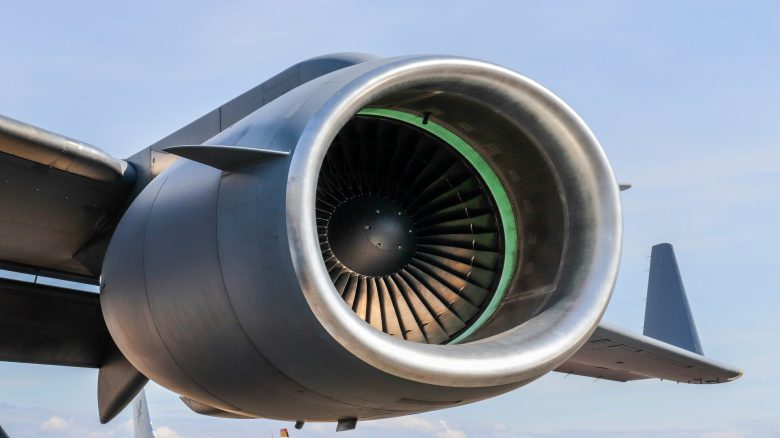
To operate their massive AI data centers, tech giants are now relying on old aircraft engines. While they provide power quickly, they also create new environmental and supply issues.
Why is the AI industry turning to aircraft engines? The demand for power for AI data centers has skyrocketed in recent years. However, many of these new “hyperscale” centers often wait years for a regular grid connection. That’s why companies like OpenAI and xAI are now opting for a rather unusual solution: decommissioned aircraft engines converted into mobile power plants.
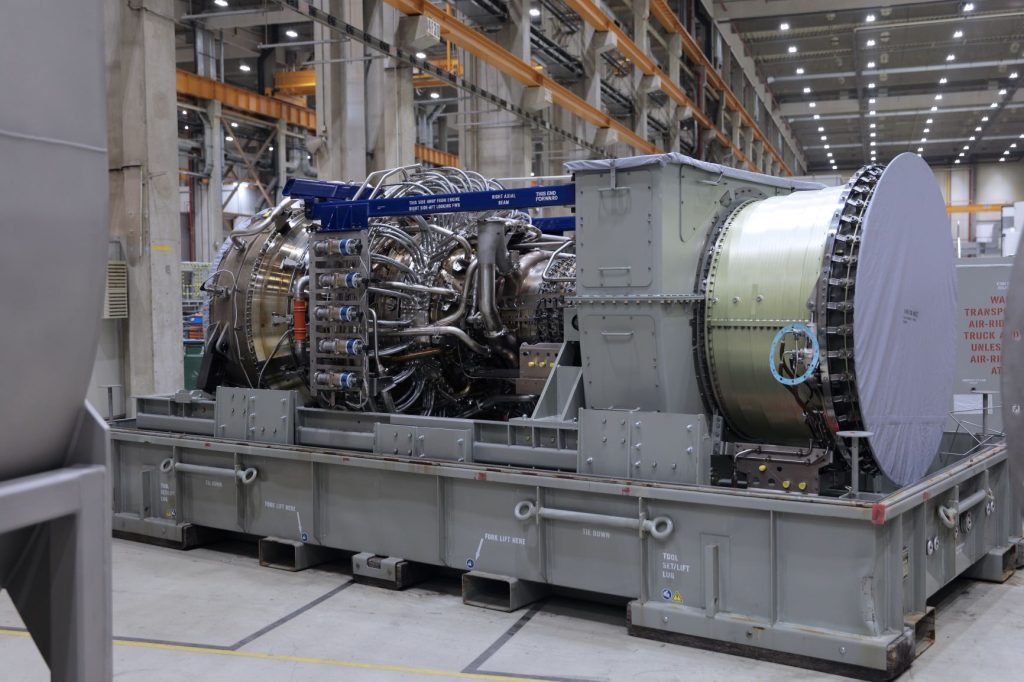
These so-called aeroderivative gas turbines originally come from aviation, but have long been a staple of mobile power supply – for instance, on offshore platforms or in military technology. They provide rapid, modular, and relatively independent energy.
A GE LM6000 turbine can deliver 50 megawatts in under ten minutes (via Gevernova). ProEnergy even offers complete systems on trailers that can be operational in less than 30 days (via TomsHardware).
How significant is the rush for these turbines? Demand has reached historic proportions. According to Bloomberg and Siemens Energy, over 60% of all gas turbine orders in the USA are directly linked to AI data centers.
Manufacturers like GEVernova and Siemens Energy report delivery times extending to 2028 or even 2030 – many companies are now paying millions just to secure production slots (via TomsHardware).
OpenAI’s partner, Crusoe Energy, recently ordered 29 LM2500XPRESS turbines to provide one gigawatt of power for the “Stargate” project – a kind of mobile jet-driven power plant in West Texas (via Tom’s Hardware). Even Elon Musk’s xAI is relying on methane turbines for its new supercomputer – which has already led to initial environmental conflicts (via Tom’s Hardware).
Stopgap Solution with Significant Environmental Consequences
What issues does the use of turbines bring? The short-term solution comes at a high cost – environmentally and infrastructurally. Even if modern turbines are equipped with catalysts, they emit CO₂, nitrogen oxides, and other pollutants.
In Tennessee, residents have already protested against xAI’s methane turbines – some facilities are reportedly operating without full permits (via SELC & Politico & Times).
What happens next? The forced increase in turbine orders demonstrates how overwhelmed the existing infrastructure is with the AI boom.
The usage behavior of AI-based everyday applications like ChatGPT has become an integral part of the digital lives of many. The current JIM Study (Youth, Information, Media) shows that 62% of youths use AI applications like ChatGPT – most frequently in the context of school/homework (65%), for fun (52%), or when searching for information (43%).
AI usage is also omnipresent in companies. According to the market research institute bitkom Research, for the first time, more than half (57%) of companies are dealing with AI. One in five companies (20%) is already using AI. A year ago, it was only 15%.
While GPU production by Nvidia and others has ramped up due to the continuous expansion of use, the expansion of energy supply remains a massive bottleneck. This means that not all technological advancements progress at the same speed and can, therefore, only be begrudgingly equipped with the necessary supply.

The transformation of digital infrastructure brings not only technological advancements but also massive challenges for the environment and network stability. As the world’s data centers upgrade with jet turbines to satisfy the AI hunger, AI models themselves are also evolving rapidly – sometimes even too quickly: Experts have bypassed CAPTCHAs using ChatGPT

Your opinion is important to us!
Do you like the article? Then let us know!