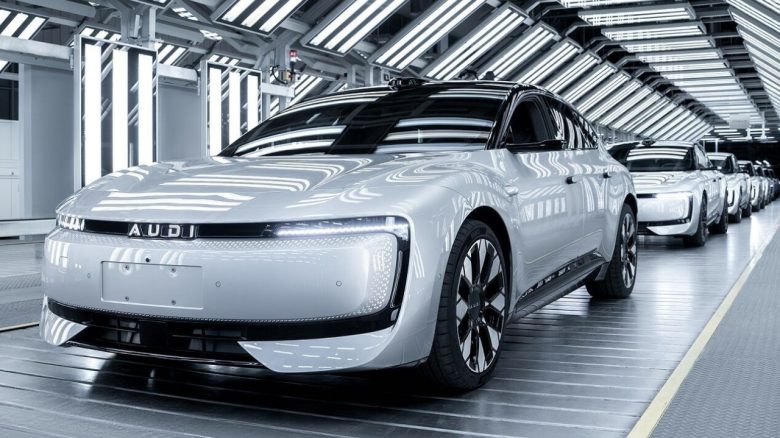
A YouTuber examined an electric car from Audi that is currently only available in China. A similar model would cost significantly more in Germany.
The YouTuber JP Performance GmbH featured a particular electric car from the German company Audi in a new video, which cannot be purchased in Germany. The Audi E5 Sportback is currently only available in China and is set to be sold there for the time being.
Nevertheless, the YouTuber is impressed and primarily complains about the large price differences. The luxury car with over 700 horsepower costs about 30,000 euros in its base version according to a seller in China, while similar vehicles in Germany often cost double that.
You can watch the full video here:
Audi aims to conquer the Chinese market with an electric car, costs about 30,000 euros
What kind of vehicle is this? According to official press release from Audi, the Audi E5 Sportback was unveiled in August 2025. The E5 Sportback is a so-called joint venture between Audi AG and the Chinese state-owned company SAIC.
The car features several peculiarities, such as omitting the iconic Audi rings and relying solely on lettering. The maximum performance potential is 787 horsepower, with a top speed of 240 km/h.
The YouTuber JP Performance compares the E5 with the Audi A6 E-Tron, which he claims is based on a similar performance and size class and is therefore comparable. Here, the price for the base version starts at a minimum of 64,500 euros, which is double what the base version of the E5 Sportback would cost in China.
Why does the car cost “only” about 30,000 euros in China?
The market in China is fundamentally different from that in Europe. In China, wages, energy, and many raw materials like steel are generally cheaper than in Europe, which lowers the production costs per vehicle. The advantage is particularly significant in batteries, as Chinese companies can produce batteries about 15% cheaper than European manufacturers. This is stated by Business Insider magazine.
Additionally, the state subsidies in China should not be underestimated: subsidies for factories and battery production, low-interest loans, and strong support programs for electric vehicles.
Such measures reduce investment and capital costs, allowing for lower final prices, especially in the domestic market. Chinese manufacturers also calculate that low profits in the home market are compensated by higher margins in the EU, which explains the large price differences between China and Germany for the same model.
For German manufacturers, the opposite is often true: they reduce prices in China in order to remain competitive with local brands. This is reported by Süddeutsche Zeitung.



In China, there has been a shift in the production of vehicles for some time. Many dealers are facing such a large oversupply of cars that they now even sell new cars as used ones. One reason why the state now wants to intervene in production to prevent even bigger problems: China produces so many cars that even new cars have to be sold as used ones now