

Everyone knows Godzilla, but how realistic is it that the giant creature exists in the real world? An astrophysicist has examined the question and comes to a definitive conclusion.
Godzilla is one of the most famous monsters in film history and has been wreaking havoc in cities around the world for 71 years. But how realistic is it that such a gigantic kaiju really exists? This question was addressed by the podcast StarTalk.
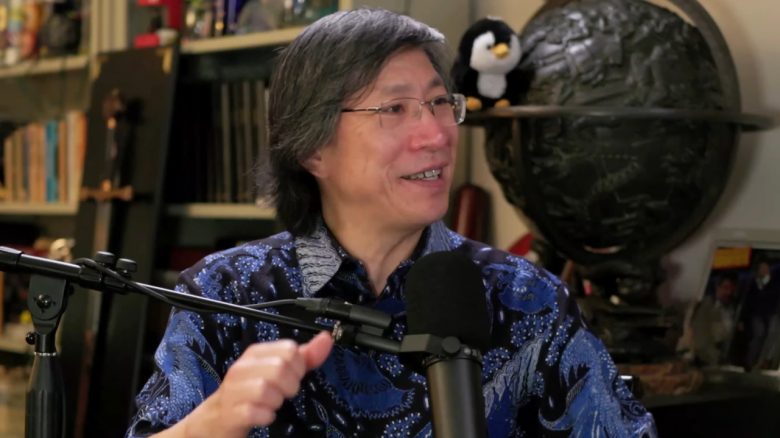
There, astrophysicist Neil deGrasse Tyson (who has also made appearances in series and films) discusses scientific topics with pop culture references alongside his guests. In an episode (via YouTube) from October 28, 2025, he sat down with Charles Liu, another astrophysicist, to talk about Godzilla. The sad result: Godzilla probably could not exist.
Physically impossible
Why could Godzilla not exist? In the StarTalk episode, the scientists discuss various sci-fi monsters and also bring up Godzilla. After talking about different aspects of the franchise and other kaiju, they discussed Godzilla’s biggest problem: size.
Being both nimble and so large, according to Liu, is physically impossible
. This has to do with mathematical forces
. For example, if one were to double one’s height, one actually increases overall by a factor of 8. Since you grow not only in height but also in length and width, you must calculate 2 times 2 times 2. Therefore, you would have eight times the volume.
At the same time, you would also be 8 times as heavy. The larger you become, the heavier the entire body becomes. Liu uses an example:
- If you become 10 times larger, you become 1000 times more massive
- However, the legs only increase by a factor of 100 in their cross-sectional area.
- Thus, the bones would need to be 10 times stronger to support the entire new weight.
- This is because strength does not depend on the total volume, but on the cross-sectional area of the muscle.
Godzilla weighs so much that it would be physically impossible: All known bones would break, all known muscles would tear. He would merely be a lump of protoplasmic material, as he could not support himself, let alone walk happily.
Considering that he has grown in various films due to radioactive radiation, he would not be able to hold himself up.
In this context, they also explain that a flea, which can jump many times its size, would also be impossible at human size. It would collapse under its weight.
Dinosaurs were also large but had advantages
Why were dinosaurs able to grow so large? One of the largest known dinosaurs (the Patagotitan) is indeed not quite as large as various Godzilla versions at 37.5 meters and 60 to 70 tons, but how could it support its body? There are only theories and clues, as the Natural History Museum explains.
It could partly be due to their posture, but also to the long necks of sauropods. This means they do not need to make quick movements and can get food from trees. Another important factor could have been their bones. They were hollow and filled with air. Dinosaurs also had a more efficient energy consumption than mammals.
But even when comparing Godzilla to dinosaurs, he is still a different ballgame: The smallest Godzilla version is the one from the first film. It was 50 meters tall and supposedly weighed 20,000 tons (via Wikizilla). Holding such weight is likely physically impossible for any being.
A fun fact about large animals: Blue whales are the heaviest animals in the world at up to 180 tons, and they can only survive because water supports the large mass. Such an animal could not exist on land.


Godzilla has many different variants with various sizes, characteristics, and external features. A German director also tried his hand at the cult monster, but it did not go well: in 1998, a German director filmed Godzilla, but it was so poorly received by the Japanese that they took revenge 6 years later

Your opinion is important to us!
Do you like the article? Then let us know!