

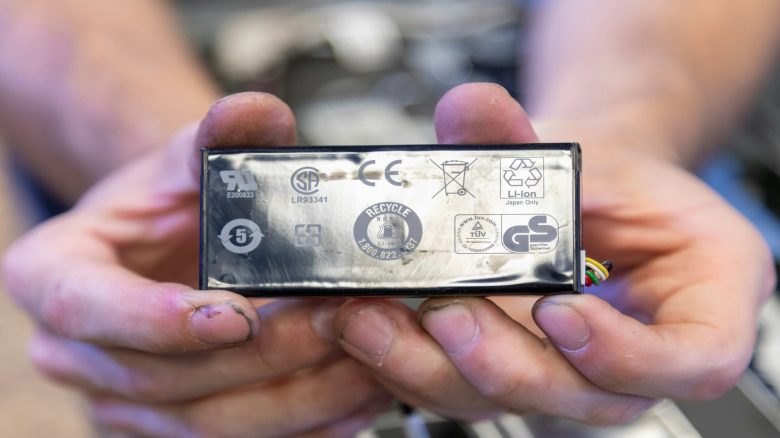
A gigantic lithium deposit has been discovered in a crater of an ancient, inactive supervolcano in the USA. Experts suspect that the deposit could supply the global battery market for decades and displace current market leaders.
What was discovered and why is it so special? According to three researchers, the possibly largest known lithium reserve in the world has been found in the McDermitt Crater on the border of the US states of Nevada and Oregon. The crater is the remnant of a supervolcano eruption that occurred around 16 million years ago (ScienceAdvances).
The researchers estimate that there may be between 20 and 40 million tons of lithium there – significantly more than in the currently largest known deposits like the Salar de Uyuni in Bolivia (Earth.com). For comparison: Bolivia’s salt flat contains an estimated 10.2 million tons.
The estimated market value of the deposit is around 1.5 trillion US dollars (NDTV).
Finite resources and infinite conflicts
Why is the find so relevant? Lithium is the lightest alkali metal and occurs in small amounts in minerals such as spodumene, petalite, lepidolite, and amblygonite, as well as in magmatic rocks and some mineral springs. It is industrially obtained by the electrolysis of a melt of lithium and potassium chlorides. The metal has a variety of applications and is primarily used today for lithium-ion batteries in electric vehicles; other uses include pharmaceuticals, pyrotechnics, electronics, and aircraft manufacturing (IG).
With the find, the ranking of the largest lithium production could for the first time be reshuffled. Until now, Australia and China, as well as some South American countries, have been dominant nations in exports (IG). Furthermore, the increasing demand could at least be met in the short term, provided that consumption does not rise excessively (TomsHardware).
What open questions are there? Although the find offers enormous economic and geopolitical opportunities for the United States and national production, there is also criticism – especially from environmental experts and Indigenous groups.
Despite their potential, the McDermitt Caldera is already an inhabited area with people, wildlife, and water sources. Actions in the coming years will determine whether the lithium beneath the crater can actually be mined (NDTV).
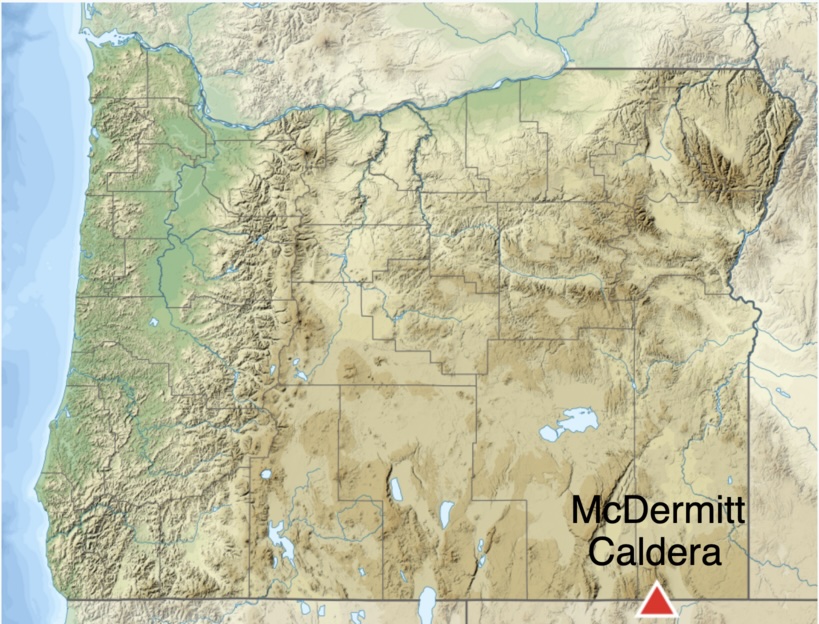
Image source: Wikipedia
The potential mining site, known as the Thacker Pass project, would be in an ecologically sensitive area that holds cultural significance for local communities. However, lithium has already been mined nearby for years. The new find essentially expands the potential extraction area of valuable ores (Earth).
According to Human Rights Watch, there are already significant local conflicts and human rights violations related to mining companies:
Companies like Lithium Nevada can easily secure mining rights thanks to a U.S. law from 1872, which grants U.S. citizens, including companies, nearly unrestricted opportunities for mineral exploration on federal land – mostly land taken from Indigenous peoples – without significant consultation with the Indigenous population and without their free, prior, and informed consent – a violation of international human rights law.
Translated from English via HRW



The discovery of this vast deposit could stabilize the supply situation in the global battery market in the medium term. This means: fewer supply bottlenecks, potentially lower prices, and more independence for the USA from other markets. However, it is still uncertain whether mining will be allowed. Electric vehicles are generally the largest consumer market for lithium. It has now even become clear that according to a study, electric car drivers buy a new car four times more often than gasoline drivers

Your opinion is important to us!
Do you like the article? Then let us know!