

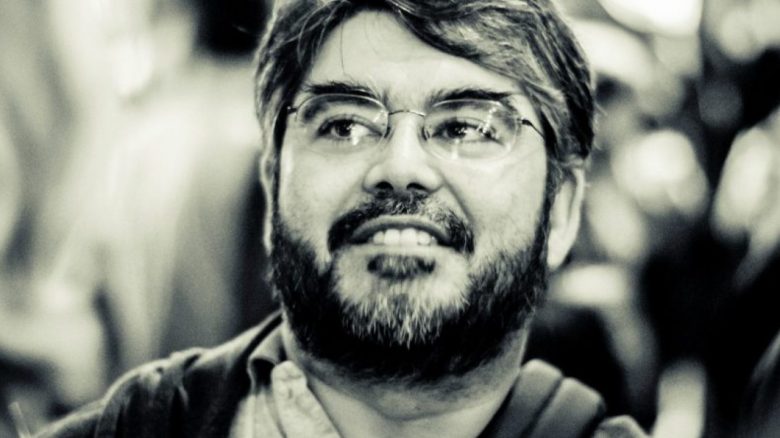
Raph Koster, Lead Designer of Ultima Online and Head of EverQuest 2, spoke at a conference about the future of gaming. He himself has compiled data on development costs and is also looking at the general situation in the world. He fears less innovation and yet higher costs.
How does Koster justify his concerns? For the 30th anniversary of Edge, an international video magazine, some developers commented on how gaming will evolve over the next 30 years. While the topic of AI was a significant point for many speakers, Raph Koster expressed a different view.
He asked colleagues from the industry in 2018 what the budget for development looks like and compared the data with old figures:
I compiled all the data, adjusted for inflation, and plotted it in a chart. This way, I found out that budgets for game development are increasing exponentially by a factor of ten per decade.
These high costs would simultaneously ensure that game developers are hindered in their creativity. The “Return on Investment” is supposed to be particularly difficult for new ideas, as there is always a risk of burning a lot of money. That’s why many large studios rely on tried-and-true methods or try to copy and improve successful indie concepts.
However, Koster hopes that within the next 10 years there will be a “platform breakthrough” that will put everything back on track. What exactly he means by that is, however, unknown.
It fits, however, that currently, especially old titles are still very much in demand. Games like Minecraft, Fortnite, or even MMORPGs like WoW or FFXIV remain among the most popular titles, even though they are already over 10 years old.
Service games remain, but displace story-driven games
How does Koster see the development within the genres? The developer believes that service games will remain dominant in the future. They generate the most revenue. He is a fan of subscription models and not necessarily of Free2Play games.
However, the service model is critical for games that have a strong focus on storytelling:
I prefer to play narrative games – regardless of what I do for a living. But that doesn’t matter. I think they are disadvantaged in such a market.
But not only the industry itself, but also economic and environmental factors are part of his presentation. He fears high energy costs, both for developers and servers as well as consumers.
We will enter an energy crisis, and then we won’t be able to afford video games as energy consumers anymore.
Koster made an interesting statement in an interview with us back in 2020: MMORPG legend reveals: Baking and planting flowers is more important to players than killing.
Does Koster view everything negatively? No. He can imagine that MMOs are used to implement real things that help humanity. As an example, he mentions planting a tree, where technology could track the “stats” and thus encourage people to take care of it.



Much of what people will play in 10 years is already in development
Is Koster alone with his negative opinion? No. At the same event, Jade Raymond, who previously worked on Assassin’s Creed at Ubisoft, spoke. She assumes that there won’t be any major innovations anytime soon and explains:
History has shown that people tend to overestimate the speed of change. The likelihood is high that many of the games we will be playing in ten years are already in development today.
It remains to be seen whether the video games of the coming years can actually deliver innovations or whether we will first experience a “business as usual” phase.
What do you think about Raph Koster’s statements? And how do you see the recent developments in the gaming industry?
In 2020, the developer was a guest in our livestream as part of Find Your Next Game: MMORPG father explains what MMO means and what it entails.

Your opinion is important to us!
Do you like the article? Then let us know!