6. The Desolation of Smaug (2013)
The second part of the Hobbit trilogy by Peter Jackson has a similar problem as its successor: there is too little material to tell for a film lasting nearly three hours. It fills these gaps with characters like Legolas or Tauriel, who do not appear in the book and whose actions were created for the film. Whether one likes this is a matter of taste.
The highlight of the film is certainly the dragon Smaug, voiced in the English original by Benedict Cumberbatch. He seems wonderfully menacing and not merely like a lifeless CGI creature.
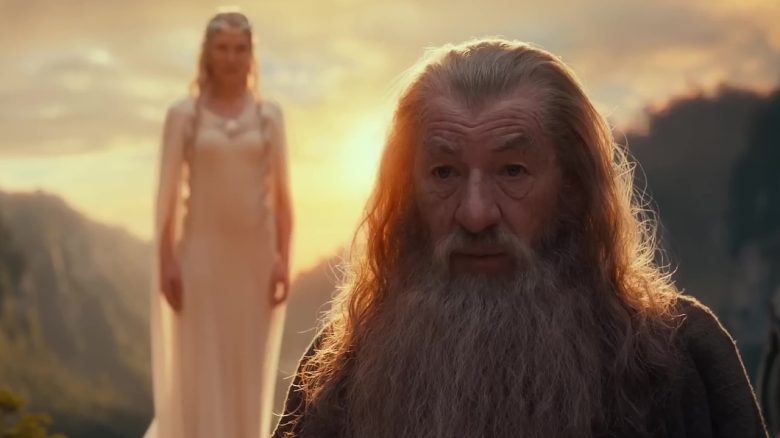
5. An Unexpected Journey (2012)
How great was the joy to embark on a new adventure in Jackson’s version of Middle-earth with the first part of the Hobbit trilogy. The beginning is very well done – one feels immediately transported back to the Shire.
Once the journey begins, iconic scenes like the encounter with the trolls or Bilbo’s meeting with Gollum create memorable moments. In between, as often in Jackson’s trilogy, there is too much fighting for too long without it being particularly exciting. As the kickoff of the trilogy, however, the film is successful.
4. The Lord of the Rings (1978)
Few lists would place this animated film at number 4. It has nothing to do with the animated The Hobbit film or The Return of the King. Rather, we have a film that only tells the first two parts of the trilogy and pretends at the end that the story ends there.
Why then is it ranked so highly? The film was enormously style-defining for Jackson’s films. Individual scenes were sometimes adopted with little change, especially in terms of camera perspectives. On YouTube you can find a good comparison video on it.
Animations and the expressions of the characters shine with numerous details – which is due to the rotoscoping technique. Here, real actors are filmed and then redrawn. While this leads to sometimes surreal results, overall the film convinces with its atmosphere and the enormous influence it had on later adaptations.
The last three places can be found on page 3.