
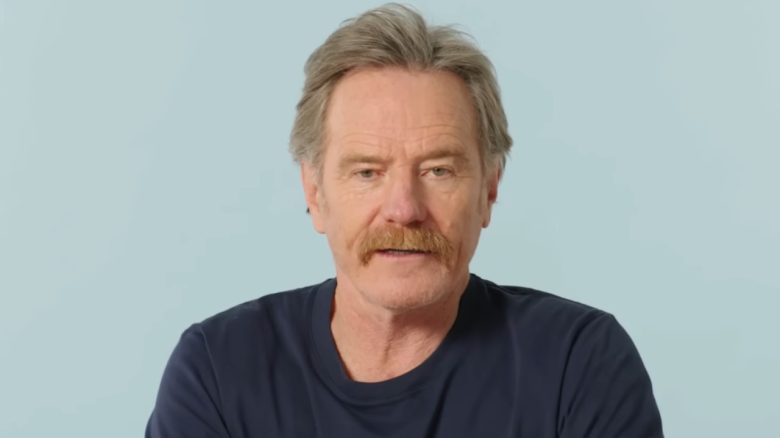
The American actor Bryan Cranston (known from series like Breaking Bad or Malcolm in the Middle) has opposed the use of his face and voice for AI, and won. Together with OpenAI, the actor is ensuring that he and his colleagues are better protected.
Who is it about? Actor Bryan Cranston initially became known for his role as Hal in the series Malcolm in the Middle, but gained massive success as “Heisenberg” in the series Breaking Bad. His face and especially his sometimes frightening expressions are well known and have now, along with his voice, been used for AI.
The video AI Sora 2 from OpenAI was recently released, and even though access to the app is still somewhat limited, it has already spread widely. Users can “upload” their face and voice to the application, allowing for AI-generated videos to be created with them in the future. Characters like Pikachu also appear in the videos.
Actor Bryan Cranston has also been made available to the AI, resulting in videos featuring the actor. However, the Breaking Bad star did not consent to this use.
Actor fights against AI
What has Bryan Cranston achieved? Bryan Cranston reached out to the actors’ union SAG-AFTRA to make contact with Sora 2. OpenAI responded quickly and improved its safety measures by implementing a new system.
Now, actors must explicitly consent to the use of their face and voice before they can be included in the AI. Bryan Cranston has thus created an improvement, not just for himself, but also for his fellow actors.
In a joint statement on X from SAG-AFTRA, OpenAI, and Bryan Cranston, the actor said:
I was not only deeply concerned about myself but about all performers whose work and identity can be exploited in this way. I am grateful to OpenAI for its policies and for enhancing its safety measures and hope that they and all the companies involved in this work respect our personal and professional right to control the imitation of our voice and appearance.
Bryan Cranston via X
What is behind it? Feeding AIs with the faces and voices of well-known personalities to create new videos and images is not a new phenomenon. While this can also generate funny content, it can equally take a different, more unpleasant direction:
- In Germany, the Twitch streamer Marcel “MontanaBlack” Eris was “used” for an advertisement for a perfume. Also without his consent.
- Content creator Jasmin Gnu addressed the dangers, especially for female influencers, in a standalone video already. Deepfakes, which can also be used for sexual content, pose a great danger.
These two examples show how quickly misinformation can spread with or about individuals.


The German Twitch streamer Kevin “Papaplatte” Teller can also be seen in the video AI Sora 2. However, the content creator voluntarily provided his face and voice. More about this can be read here on MeinMMO: Twitch streamer Papaplatte appears in strange videos on TikTok, but they are not created by him

Your opinion is important to us!
Do you like the article? Then let us know!