

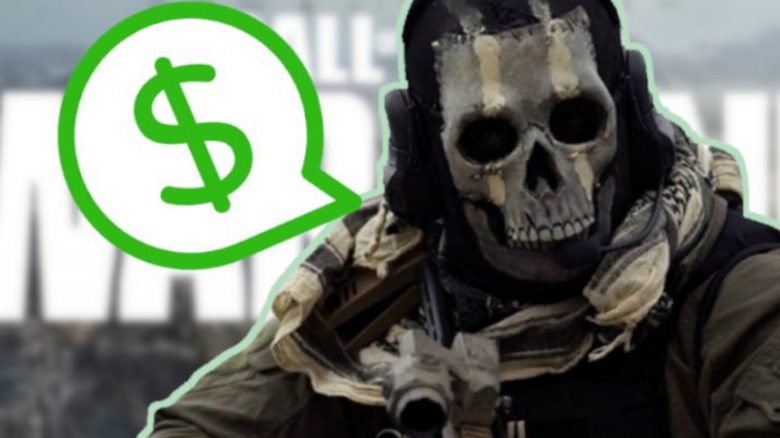
Meanwhile, publishers Activision Blizzard have 9 studios. However, each one of them is more or less involved in a single franchise: Call of Duty! Find out here what is in the big CoD factory and what comes out of it.

Who is currently working on Call of Duty? When a studio is acquired by Activision Blizzard, the employed developers should bring a certain passion for shooting, weapons, and soldiers, as it seems inevitable to work for the popular Call of Duty franchise.
Recently, this was the case with the studio “Toys for Bob”. They had developed the game “Crash Bandicoot” in 2020, but now they are – in addition to supporting Crash Bandicoot – also part of the CoD machine and are diligently putting out content for Season 3 of Warzone. By the way, Crash Bandicoot is one of the top 5 co-op games for Xbox Series X and S.

Thus, all new studios owned by Activision Blizzard are somehow working with CoD. In addition to the previously mentioned Toys for Bob, they are:
- Activision Shanghai is involved with CoD Online
- Demonware is responsible for server support
- High Moon Studios (formerly Destiny) also supports Call of Duty
- Beenox has been a CoD studio since Black Ops III
- Raven Software has supported CoD development for 11 years
Additionally, there are the three main CoD studios, Treyarch, Infinity Ward, and Sledgehammer, which each release a new CoD on an annual basis.
Only the studio Blizzard itself is not actively developing a CoD game, but they sell the thing via their webshop.
A studio from Activision Blizzard that has not worked on Call of Duty was Vicarious Visions: But they also had to provide support services. They first developed the PC version of Destiny 2 for Bungie – now Activision has assigned the studio to Blizzard: They are now working on the Diablo franchise.
Does the CoD factory prevent new games?
Studios either make CoD or nothing at all: At Activision, it seems there is not much else being developed besides CoD. Studios that were acquired by the publisher and did not join the CoD team were ultimately dissolved, and their employees and resources were redistributed to other studios that work on CoD. Among these dissolved studios are names like Grey Matter Interactive (Return to Castle Wolfenstein) and Neversoft (Guitar Hero 6).
CoD content instead of new games: This focus on CoD, in turn, prevents the creative energy of developers from flowing in another direction. An example here is Raven Software, which before its acquisition by Activision in 2010 developed a string of its own successful games, including the highly praised Jedi Knight: Jedi Academy. But since 2010, Raven Software has only been active as a support studio for various CoD titles and has not produced or continued any of its own games. This is unfortunate for everyone who would have liked to see a sequel to Jedi Academy and more.
What’s behind it: It seems that a studio acquired by Activision either has to develop CoD or will soon disappear. On the other hand, CoD is currently a major and successful franchise for the publisher that needs to be continuously developed. This requires a fresh influx of developers and resources to meet the high demands of the target audience.
Because masses of players gather daily on the servers, and constantly new content and patches are needed to satisfy the demand. Additionally, each year a completely new game in the series must be released, which in turn is integrated into the popular battle royale version Warzone. Without a large pool of developers, the CoD machine would hardly be able to keep running, even if much potential for new creative ideas surely falls by the wayside.
Activision Blizzard seems to be the publisher that has understood how a service game can satisfy the unrelenting hunger of players: They do not let just one studio work on it, but several. They wanted to do the same with Destiny, but those plans ended when Bungie parted ways with Activision Blizzard. With Call of Duty, they are now trying this model again. Apparently with some success.
What is your opinion on the big “CoD machine”? Is this large focus on a franchise given its success a no-brainer for Activision, or would you prefer it if the publisher would let the acquired studios do something original again?

Your opinion is important to us!
Do you like the article? Then let us know!