Pokémon GO focuses not only on online gameplay but especially on playing together on-site. We spoke with the Pokémon GO team about this in an interview.
During gamescom 2025, we met the Pokémon GO team for an interview: On the exhibition grounds, Pokémon GO was represented with the “Pokémon GO Road Trip” – including its own truck.
Real PokéStops and small battle arenas were set up around, and there were also increased spawns in the game around the truck. For Niantic, Mark van Lommel from the Pokémon GO team tells us, the truck is an opportunity to bring on-site events to places that might not qualify for a GO Fest.
“This is something we’ve been envisioning for a while, and we’re very glad that we could realize it this summer and finish the fantastic tour here in Cologne during gamescom,” says van Lommel: “We are always looking for ways to make live events and the Pokémon GO experience more accessible to trainers.”
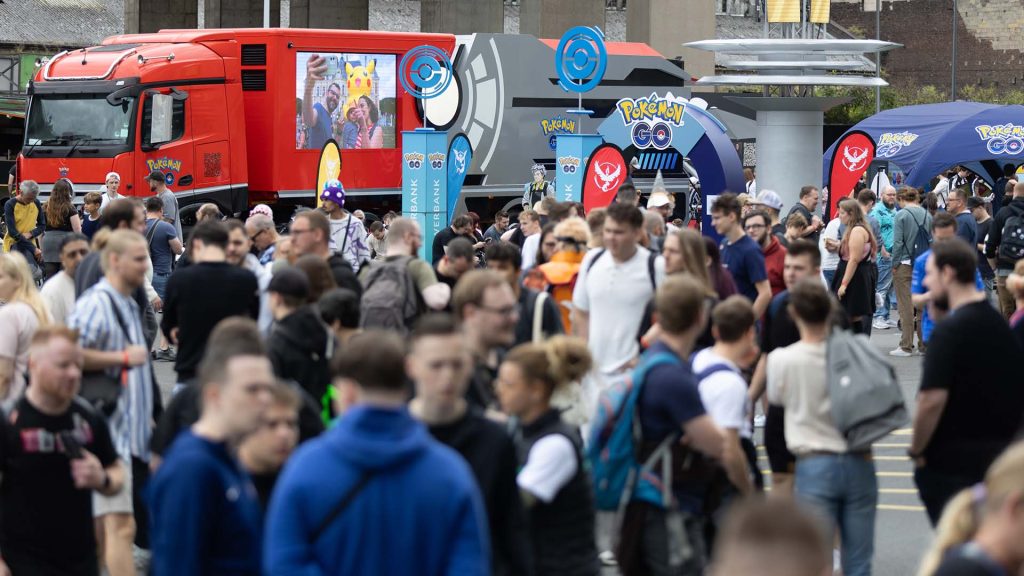
Country manager Mona Frühauf also shares: “The main thought really is to bring community feeling to all cities, including countries like the Netherlands, where we haven’t been for a long time.”
But this approach goes beyond the truck, van Lommel says: “In addition to all the official event series organized by the Pokémon GO team, we also have thousands of community ambassadors around the world who organize local meetings for community days.”
And a community ambassador is Eugen, who was also there in Cologne. He told us what his work looks like.
Campfire and community work are important for forming groups
What is a community ambassador? Often, community ambassadors are themselves fans and players who are especially committed and, for example, organize meetups via the Campfire app.
That was the case with Eugen as well: “In Cologne, we had no one who reliably created meetups. Those are events where people agree to meet for events in the game to play together. I just did that, even before I was a community ambassador,” Eugen recounts. But at some point, the idea came to apply – successfully.
“The first meetup only had three people: my wife, me, and a friend. Today, we are many more, and at large events, over 300 people,” says Eugen.
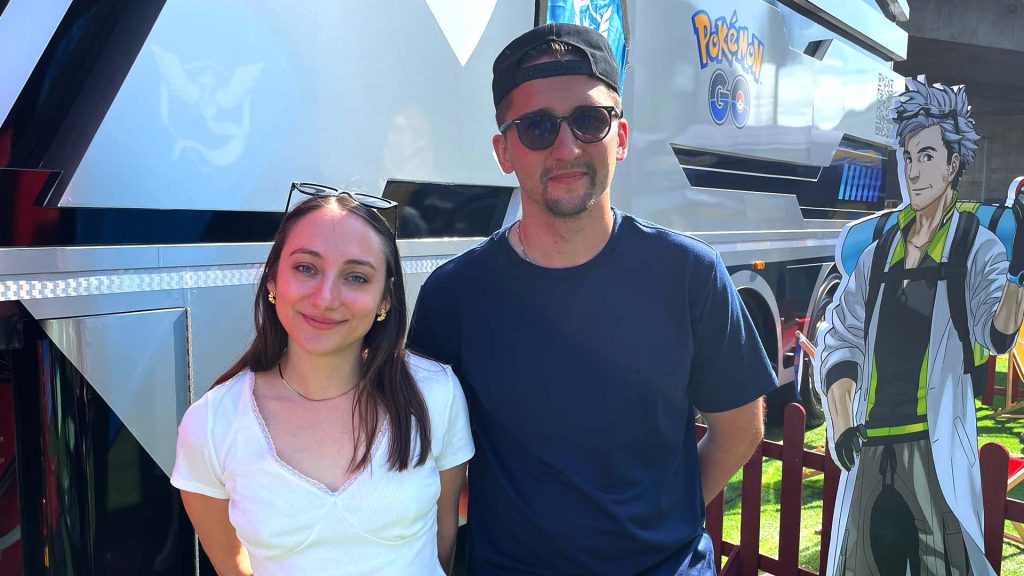
Many people establish themselves long-term and keep appearing to conquer challenging raids or even the particularly tough Gigantamax bosses: “In Cologne, three-quarters are regular players who you see more often and a quarter, I never see,” estimates Eugen.
For him, organizing his community means about ten hours of effort per month, says Eugen. His work includes creating meetups, communicating with players, and ultimately organizing the actual meeting – continuously. This creates an active community that wants to form large groups regularly.
Extra effort comes when large events are approaching: “For the GO Fest, for example, we made internal community buttons, 400 pieces. I think it took about ten to twenty hours that week, with preparation, gathering information, and informing people.”
The effort pays off, Eugen says. He is glad to have an active group that understands each other: “You feel happy to see the happy faces. From older, from younger, from all age groups, all types and characters.”
This leads to acquaintances and friendships that also make it easier to handle certain tasks like Gigantamax: “At the first Gigantamax meetup, I was surprised because the number of people was much higher. They knew that we couldn’t do this alone, in groups of four,” Eugen remembers: “People were desperate because they were surprised.” Dynamax battles require real strategies and discussions among each other: “You can’t just click along. You have to prepare for it.” But that, in turn, also fostered the exchange among each other.
Mona Frühauf agrees: “That was definitely a goal of the feature. We understand, of course, that some are frustrated if it’s a feature that might need a bit more people. But if we always do the exact same thing, it becomes boring,” says the country manager: “It’s cool that they are organizing themselves. And we have heard from many, even smaller groups, who have still organized themselves.”
But it is also clear: Not everyone has a community ambassador in the city or even an active group nearby. What do you do in such a case? “My tip would be to use Campfire, even if it’s a separate app,” says Eugen: “Use Campfire and regularly create meetups or share information. Like I said: In Cologne, we were three people at the first meetup, now we are a hundred.”



What experiences have you had with local group formation? Are there similar examples for you, or do you primarily play alone? Tell us in the comments! And otherwise, a lot is coming up in Pokémon GO: October is approaching, bringing various dates around Halloween. We will show you what to expect: All Events in Pokémon GO in October 2025.