

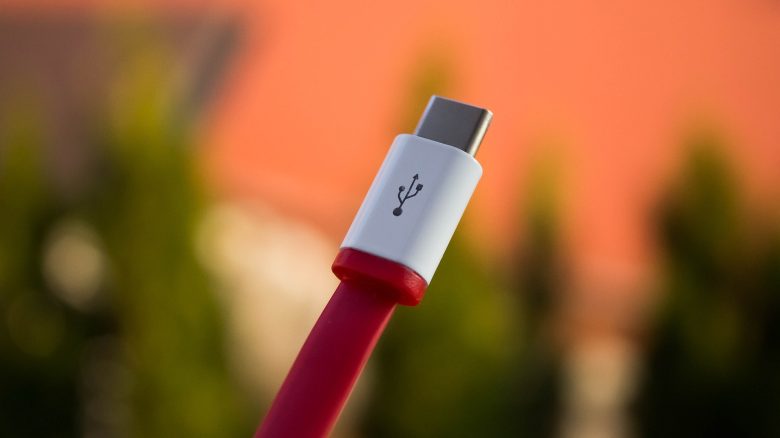
USB-C cables have long been a standard in the tech world. However, a recent study shows that they also pose a growing security risk. Hackers are embedding hidden hardware in these universal cables to steal data or manipulate devices.
Why are USB-C cables a popular weapon for hackers? USB-C has become the standard due to its versatility and speed. Whether for smartphones, laptops, or gaming consoles, almost every modern device uses this connection. Yet this widespread use makes it the perfect target for hackers.
According to reports from TechSpot and The Verge, USB-C cables can be manipulated to look like normal charging or data cables, while actually containing problematic hardware. These cables can hook into devices when connected, transfer malware, or even simulate keystrokes. Particularly alarming: The alterations are so well hidden that they are not visible to the naked eye.
How does the manipulation work? The so-called O.MG cables, which were first introduced at security conferences like DEFCON (one of the largest hacker events in the world) in 2019, are barely distinguishable from ordinary USB cables at first glance (via MG.lol). However, they conceal highly advanced technology within.
Once such a cable is connected to a device, sensitive information such as passwords or bank details can be read out. Additionally, malware can be surreptitiously installed on the system, remaining active in the background.
A test by Golem.de showed that the manipulation of the cables is so perfect that it is difficult for experts to recognize. The technology has advanced to the point where there are no visible differences from conventional cables.
A CT scan reveals what lies within
What makes the cable so dangerous? Hackers primarily exploit users’ inattention. USB-C cables are often exchanged among colleagues, friends, or even in public charging stations. This increases the likelihood that a manipulated cable comes into one’s possession or is used for a conventional data transfer.
An investigation by Lumafield, which analyzed the internal structure of O.MG cables using CT scans, confirmed that the malicious hardware is extremely compact and not visible from the outside. This makes it a genuine “invisible threat”.
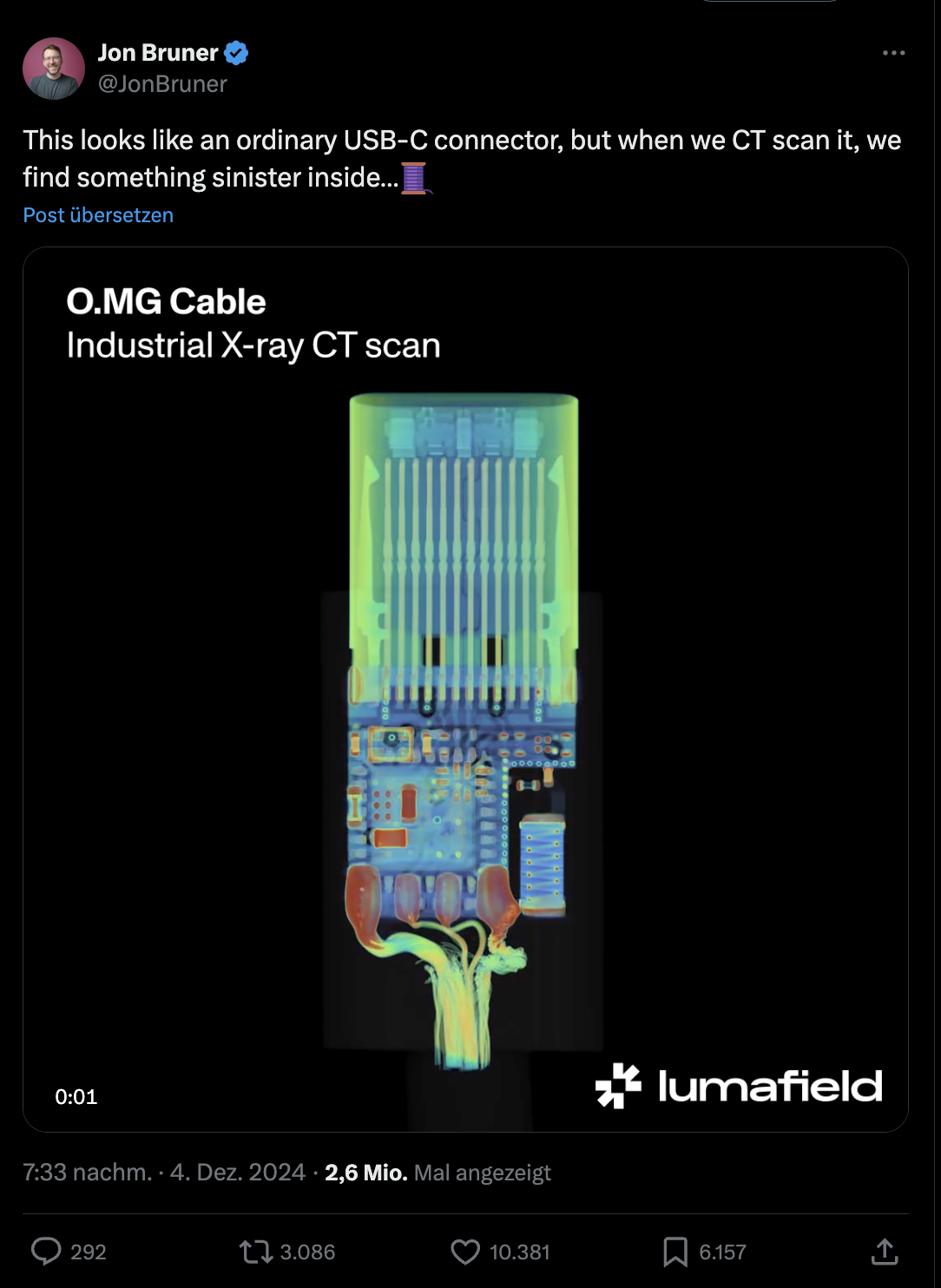
What they discovered was that the modified cables contain hidden microcontrollers, antennas, and memory chips. These components are so small and well integrated that they are not recognizable to the naked eye.
Simply put, the microcontroller controls actions such as injecting malware, the memory stores or transmits data, and the antenna allows hackers to control the cable wirelessly from a distance.
How can you protect yourself? To protect yourself from attacks through manipulated USB-C cables, users should observe some important measures:
- Only buy certified cables from trusted providers
- Avoid foreign, public, or borrowed cables
- Use USB data blockers
A USB data blocker, often referred to as a “USB condom,” is a small adapter that is inserted between the USB cable and the device. It blocks the data lines of the cable, allowing only power to be transmitted. This prevents data from being transferred or manipulated unnoticed – ideal for safe charging at public stations.


Although the examined cables are currently still relatively expensive (from €100) and therefore rarely circulate among the public, it cannot be ruled out that they will become more readily available in the future. Vigilance remains the best protection. Those who pay attention to trusted sources when buying cables and take appropriate security measures can significantly reduce the risk.
USB-C was supposed to end the cable chaos, but often causes frustration: too many differences, broken chargers, and hidden problems annoy users worldwide. Why the universal standard is anything but perfect and what you should definitely pay attention to can be read here: USB-C as a standard was supposed to make everything easier, but now it’s worse than before

Your opinion is important to us!
Do you like the article? Then let us know!