

Pathfinder
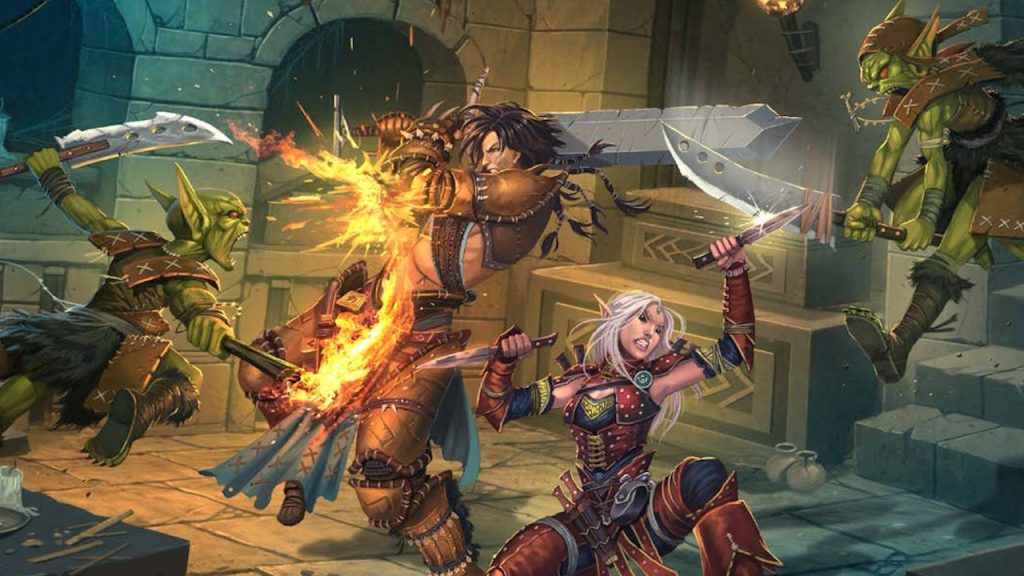
- Genre: Fantasy
- Core focus: Tactical combat, character customization
- Complexity: High
- Languages: German, English, Spanish, French, Italian, Brazilian Portuguese

Pathfinder is a pen-and-paper role-playing game that initially emerged as a development of Dungeons & Dragons 3.5. After Wizards of the Coast took a new direction with the 4th Edition of D&D, the publisher Paizo released the Pathfinder role-playing game in 2009 based on D&D 3.5’s open game license, aiming to preserve the tactical depth and complexity of this system.
What sets Pathfinder apart is its high degree of rule diversity and character customization. Players have access to a vast number of classes, talents, spells, and archetypes that allow for finely tuned and individual characters. While D&D (especially in the 5th Edition) emphasizes simplification and quick accessibility, Pathfinder is aimed more at players who enjoy detail and tactical challenges.
Through an extensive system of talents categorized by ancestry, class, and skills, each player can customize their character down to the smallest detail. No warrior is like another, and players who love tinkering with their characters and optimizing them will find a true sea of options here.

Instead of D&D’s more flexible division into action, bonus action, and movement, Pathfinder uses a clear and tactical 3-action system. Each character has exactly three actions per turn that they can freely spend on movement, attacks, casting spells, or other abilities. An attack costs one action, and a movement costs one as well. This creates a very strategic and predictable flow of combat that rewards deep tactical decisions.
In terms of content, Pathfinder offers its own extensive fantasy world called Golarion, with epic stories, political intrigues, and dark threats, similar to D&D’s Forgotten Realms, but often a bit darker and more complex.
At its core, Pathfinder, like D&D, is a high-fantasy role-playing game full of magic, monsters, and heroic adventures. However, its main appeal lies in a significantly greater depth of rules and detail, making it especially enjoyable for groups that like to delve into complex rule systems.

Your opinion is important to us!
Do you like the article? Then let us know!